THE CLASSIC COLLECTION✦The hermit of Turkey HollowCLASSIC FREE BOOKS
The hermit of Turkey Hollow
Arthur Cheney Train
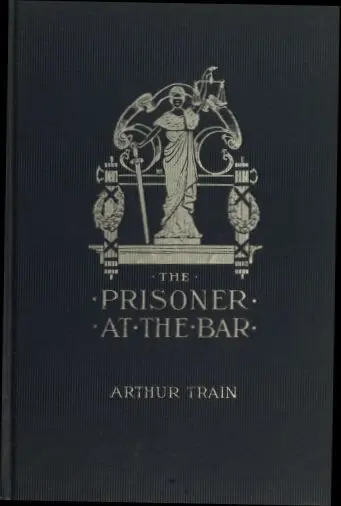
THE CLASSIC COLLECTION · 1906
"The Prisoner at the Bar: Sidelights on the Administration of Criminal Justice" by Arthur Train is a nonfiction account written in the early 20th century. The book aims to provide a detailed and engaging exploration of the criminal justice system, highlighting the processes from arrest to conviction and examining the perspectives of the various participants, including the police, lawyers, and the accused. At the start of this work, Train introduces the complexities surrounding the concept of crime, emphasizing that public perception is often shaped by sensational media coverage rather than an understanding of the legal processes involved. He argues that many commonly held beliefs about crime and criminals are oversimplified or erroneous, and he seeks to provide clarity on the administration of criminal justice. The opening discusses the definition of a crime and highlights the intricacies of legal terminology, illustrating differences between various types of crimes and their implications. Train sets the stage for a comprehensive discussion on how individuals can be categorized as criminals and the societal implications of such classifications.
Introduction adapted from the source catalogue; source summaries may be automatically generated.
Free to read · English · 111,596 words · No account needed
MAKE TIME FOR A GOOD BOOK
On by default. Untick to stop anonymous reading totals. Each page counts after 10 seconds in view. How this works.
Anonymous counting is on unless you have switched it off.
Ammon, Robert A., and "The Franklin Syndicate," 25, 26
Appeal, from magistrate's decision, 47
number of appeals so taken, 47
no appeal by aggrieved person if magistrate discharges, 47
few appeals from Special Sessions, 62
unfortunate that prosecution cannot appeal on verdict of acquittal, 186,
337
defendant has right of, 337
reversals on, 339, 340
Archer, Agnes, case of, 301
Arrest (see Chapter III), right of citizen to arrest, despite common belief, 33 right to, ordinarily left to police, 33 anyone may arrest for crime committed in his presence, 35 no one may arrest for felony without his view, unless felony committed, 35 difference in citizen's and officer's right to arrest, 35, 37 police construe their right to arrest more broadly than law permits, 35 example of above, 36 right of police to arrest at night under New York Criminal Code, 36 force permissible in making arrest, 38 cases in which the power may be abused, 38
Arrest, power to arrest to be exercised with discrimination, 40, 41 the first step in procedure toward conviction, 42 after arrest prisoner taken before magistrate, 42 on bench warrant if indicted by Grand Jury, 42 on suspicion illegal but necessary, 43 number of arrests in New York County in 1907, 46 table showing nativity of those arrested, 46
Arrest of judgment, motion for, 269
Assault, power of magistrate should be extended to punish simple
assault, 49
Autrefois Acquit. See Pleas.
Bail, in case of misdemeanor may be assessed by sergeant on duty, 42
right of accused to, except in case of murder, 85
bail cases not tried in summer, 126
forfeiture of, 127, 128
recommendation for discharge of, 170
"skipping" bail, 317
Bauman, case of, 323
Bench warrant, indicted and arrested under, 42
Blindness, "An Act for the Prevention of," 15
Branding, 266-268, 278
Breach of peace, 49
"Bridge of Sighs," 115
Capital punishment, no woman has suffered here in two decades, 299 cases of, comparatively rare, 246
Challenges, number of peremptory in homicide cases, 215
reduction to reasonable number desirable, 325, 346
in larceny cases, 346
Cherry, "Tom," 73, 74
Cignarale Chiara, case of, 299
Clancy murder case, 325
Code. See Statutes and Criminal Law
Cohalan, Daniel F., 216
Commercial Crime. See Crime
Commission, to take testimony without state, 123 application for, to take testimony for purpose of delay, 315 right to take such testimony confined to defendant, 315 motion for, 317 to determine present mental condition of an accused, 369-72 to determine mental condition at time of offense, 369-76 desirability of such being permanent and salaried, 373, 374
Commutation, of sentence for good behavior, 273
how determined, 273
periods of, (note) 273
distinguished from indeterminate sentence, 274
Complaints, in Court of Special Sessions, 63
or informations, ancient form of, 89
Confession, not sufficient to convict without corroboration, 330
Contempt of court, practical inability of New York courts to punish
editorial contempts, 347
defined in Penal Code, 348
Convictions, proof of prior, admitted for what purpose, 148, 166
table showing percentages of, 175, 176
too few, 177
of innocent men almost unknown, 247, 336
of women indicted, in same proportion as men, 299, 300
County clerk, grand jurors drawn by, 358
"County Detectives," 87
Your reading position is saved on this browser. Take it to another device with a library code. Reading pages adapt to text, rather than matching a printed edition.
Arthur Cheney Train
Arthur Cheney Train
Arthur Cheney Train
Arthur Cheney Train
BEHIND THE BOOK
This eBook is for the use of anyone anywhere in the United States and most other parts of the world at no cost and with almost no restrictions whatsoever. You may copy it, give it away or re-use it under the terms of the Project Gutenberg License included with this eBook or online at www.gutenberg.org. If you are not located in the United States, you will have to check the laws of the country where you are located before using this eBook. Read the source licence.
The original source file, including credits and licence, is retained by this library. Request an original-format copy at no charge. Please include the book title and Project Gutenberg identifier #58534.
KEEP YOUR CURIOSITY GOING

Charles G. (Charles Griffith) Ross
Hannah Webster Foster

Emily Lawless
Edwin Hamlin Carr

Charles De Lano Hine
Andrew Ure