Fortune
J. C. (John Collis) Snaith
THE CLASSIC COLLECTION · 1912
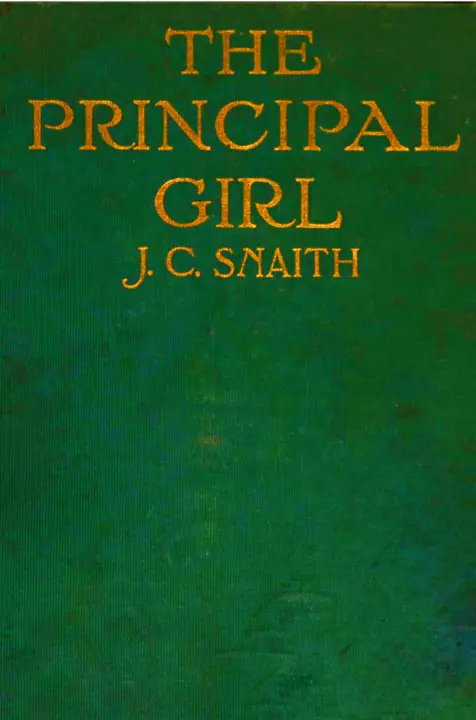
"The Principal Girl" by J. C. Snaith is a novel written in the early 20th century. The story is set in the context of British high society, focusing on themes of class distinction, societal expectations, and romantic entanglements. The narrative's primary character is the young heir to a barony, Philip Shelmerdine, who becomes entangled with the ambitious and talented actress Mary Caspar, who plays the titular role of Cinderella in a pantomime. The opening of the novel introduces readers to Philip Shelmerdine, who is described as the quintessential upper-class young gentleman, navigating the complexities of societal expectations and his own desires amidst the backdrop of London's elite circles. The first chapter establishes the setting in Grosvenor Square, introducing the character of Shelmerdine and his connection to the public through a controversial letter regarding dog privileges, which leads to his social unpopularity. As he struggles with his newfound role as a public figure and grapples with personal relationships, notably with the charismatic Mary Caspar, the stage is set for a humorous yet poignant exploration of love, social standing, and personal identity in a rapidly transforming society.
Introduction adapted from the source catalogue; source summaries may be automatically generated.
Free to read · English · 65,960 words · No account needed
MAKE TIME FOR A GOOD BOOK
On by default. Untick to stop anonymous reading totals. Each page counts after 10 seconds in view. How this works.
Anonymous counting is on unless you have switched it off.
Yes, the flat was charming, they agreed, as they walked up Piccadilly. And only a week in which to make up their minds! Still, that was rather providential, if you looked at it from Philip’s point of view.
“Wasn’t it, Polly?”
“Why do you think so, Phil-ipp?”
“We’ve got to make up our minds at once, haven’t we?”
“I’ve made up my mind already, Phil-ipp. It is the very place for you; so much moderner and pleasanter and lighter than your chambers.”
“Yes, old girl, but I shouldn’t think of it for a moment without you.”
“Why not, Phil-ipp?”
“Oh, I shouldn’t.”
A bald reason, perchance, but a manly conviction had given it currency.
“But that’s absurd, Phil-ipp. Why should a mere chorus girl--?”
“Look here, Polly,” said the fierce young man, “you mustn’t suppose I’m going to be chipped by you. If I take that flat, you’ve got to come and live in it; and, Polly”--and for all they were just opposite the Burlington Arcade, the vain young man took a firm grip of the arm of Mary the obdurate--“I’m bally well goin’ to take that flat.”
“Are you, Phil-ipp?”
“Yes, and I’m goin’ to take it now.”
“What!--now, Phil-ipp?”
“At once. Come on back to the house-agents.”
“But they are half-a-mile away, Phil-ipp.”
“Never mind; it’s a nice day for a walk.”
“But what about Granny? and what about the great Proconsul; and what about Lady Shelmerdine of Potterhanworth?”
“Oh, let ’em go to blazes--that is, old girl, I beg pardon.”
“I should just hope so. And let go my arm, Phil-ipp; people are looking
at us.”
“Well, let’s cut back again.”
“But, Phil-ipp.”
“You said yourself that it was the nicest position in London, and only nine hundred and fifty a year, which seems rather ridiculous, considerin’--”
“Considering what, Phil-ipp?”
“Considerin’ the way they stick you for three rooms and a private
bathroom.”
“Yes, Phil-ipp, but then think of the address!”
Never, however, in the whole course of his career, not even when he had scored those three goals against Scotland, had Mr. Philip shown more invincible determination than at this moment. If there was not to be a scene in Piccadilly and a paragraph in the evening papers, Mary would have to do as she was told.
“Phil-ipp, you are behaving anyhow.”
“Less of it, Polly.”
“Less of what, Phil-ipp?”
“Your cheek--you cat.”
Your reading position is saved on this browser. Take it to another device with a library code. Reading pages adapt to text, rather than matching a printed edition.
J. C. (John Collis) Snaith
J. C. (John Collis) Snaith
J. C. (John Collis) Snaith
J. C. (John Collis) Snaith
BEHIND THE BOOK
This eBook is for the use of anyone anywhere in the United States and most other parts of the world at no cost and with almost no restrictions whatsoever. You may copy it, give it away or re-use it under the terms of the Project Gutenberg License included with this eBook or online at www.gutenberg.org. If you are not located in the United States, you will have to check the laws of the country where you are located before using this eBook. Read the source licence.
The original source file, including credits and licence, is retained by this library. Request an original-format copy at no charge. Please include the book title and Project Gutenberg identifier #68069.
KEEP YOUR CURIOSITY GOING
Coulson Kernahan

Maurice Baring
Frances Wright
Cécile Tormay

Frederic Jesup Stimson

W. H. P. (William Henry Pope) Jarvis