Fortune
J. C. (John Collis) Snaith
THE CLASSIC COLLECTION · 1912
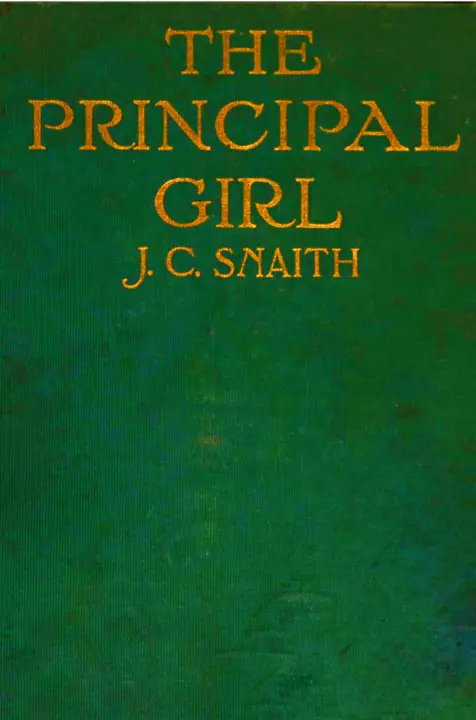
"The Principal Girl" by J. C. Snaith is a novel written in the early 20th century. The story is set in the context of British high society, focusing on themes of class distinction, societal expectations, and romantic entanglements. The narrative's primary character is the young heir to a barony, Philip Shelmerdine, who becomes entangled with the ambitious and talented actress Mary Caspar, who plays the titular role of Cinderella in a pantomime. The opening of the novel introduces readers to Philip Shelmerdine, who is described as the quintessential upper-class young gentleman, navigating the complexities of societal expectations and his own desires amidst the backdrop of London's elite circles. The first chapter establishes the setting in Grosvenor Square, introducing the character of Shelmerdine and his connection to the public through a controversial letter regarding dog privileges, which leads to his social unpopularity. As he struggles with his newfound role as a public figure and grapples with personal relationships, notably with the charismatic Mary Caspar, the stage is set for a humorous yet poignant exploration of love, social standing, and personal identity in a rapidly transforming society.
Introduction adapted from the source catalogue; source summaries may be automatically generated.
Free to read · English · 65,960 words · No account needed
MAKE TIME FOR A GOOD BOOK
On by default. Untick to stop anonymous reading totals. Each page counts after 10 seconds in view. How this works.
Anonymous counting is on unless you have switched it off.
“Philip,” said Father, in tones of deep emotion, “it seems to me that you--” And Father paused.
--Are going to the Devil as fast as you can, is really what your distinguished parent desires to say to you, but he is trying to say it without treading on your feelings, which is more consideration than you deserve, you blighter!--thus the Twin Brethren for the personal information of the Green Chartreuse.
No business of his if I am, was the very unfilial rejoinder of the
latter.
“Philip,” said Father, after a pause, “your mother is very upset.”
Young fellow was sorry to hear it--very, but the weather is always so full of surprises in February.
Mother had not yet recovered, it appeared, from the most painful scene last Sunday afternoon with the grandmother of the Person.
As the occurrence had been reported to the great Proconsul, the
Person’s venerable relative had not behaved as nicely as she might have
done.
Son was awfully cut up about it, but he didn’t quite agree. With all respect to Mother, he could not help thinking that Miss Caspar’s venerable relative had been in receipt of provocation.
White eyebrows erected themselves archwise.
“But we won’t go into That,” said Father.
Perhaps it would be better not, said the Green Chartreuse in an aside to Messrs. Crosse and Blackwell’s marmalade.
Very disagreeable, though, thought Father, and very serious, too. There was nothing more painful to a right-thinking parent than to see a son--and an Eldest Son, too--making hay of his prospects.
Didn’t quite agree again with his father. The Green Chartreuse was suffering evidently from an attack of valor this morning.
“But there are the facts, my dear boy. Let them be looked in the face.”
“I wish, father, you would consent to meet Mary. She’s an absolute
nailer, you know.”
Father was so disconcerted by the behavior of Son that he kind of began to clothe his thoughts with language. A singularly unfortunate entanglement; people would be shocked; family interests would suffer; such unions never turned out well--how could they? Besides, Warlock was so sensitive. In fact, with all the conviction of which he was capable--and a Proconsul is capable of a good deal--Father urged Son to pause and reflect.
Son had already done so.
Was it conceivable?
Oh, yes, quite, if Father didn’t mind his saying so. He had a private income, and she was the nicest girl in London; an opinion, he was sure, in which Father was bound to concur, when he’d seen her.
But...!!
Yes, but people were getting so much broader-minded, weren’t they?
Your reading position is saved on this browser. Take it to another device with a library code. Reading pages adapt to text, rather than matching a printed edition.
J. C. (John Collis) Snaith

J. C. (John Collis) Snaith
J. C. (John Collis) Snaith

J. C. (John Collis) Snaith
BEHIND THE BOOK
This eBook is for the use of anyone anywhere in the United States and most other parts of the world at no cost and with almost no restrictions whatsoever. You may copy it, give it away or re-use it under the terms of the Project Gutenberg License included with this eBook or online at www.gutenberg.org. If you are not located in the United States, you will have to check the laws of the country where you are located before using this eBook. Read the source licence.
The original source file, including credits and licence, is retained by this library. Request an original-format copy at no charge. Please include the book title and Project Gutenberg identifier #68069.
KEEP YOUR CURIOSITY GOING
Coulson Kernahan

Maurice Baring
Frances Wright
Cécile Tormay

Frederic Jesup Stimson

W. H. P. (William Henry Pope) Jarvis