Fortune
J. C. (John Collis) Snaith
THE CLASSIC COLLECTION · 1912
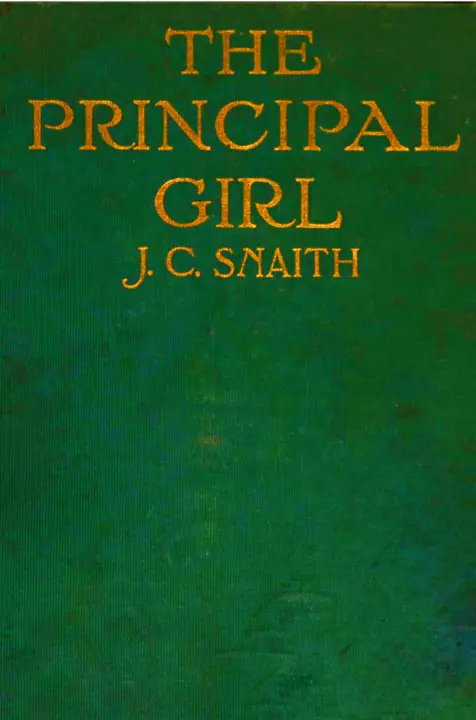
"The Principal Girl" by J. C. Snaith is a novel written in the early 20th century. The story is set in the context of British high society, focusing on themes of class distinction, societal expectations, and romantic entanglements. The narrative's primary character is the young heir to a barony, Philip Shelmerdine, who becomes entangled with the ambitious and talented actress Mary Caspar, who plays the titular role of Cinderella in a pantomime. The opening of the novel introduces readers to Philip Shelmerdine, who is described as the quintessential upper-class young gentleman, navigating the complexities of societal expectations and his own desires amidst the backdrop of London's elite circles. The first chapter establishes the setting in Grosvenor Square, introducing the character of Shelmerdine and his connection to the public through a controversial letter regarding dog privileges, which leads to his social unpopularity. As he struggles with his newfound role as a public figure and grapples with personal relationships, notably with the charismatic Mary Caspar, the stage is set for a humorous yet poignant exploration of love, social standing, and personal identity in a rapidly transforming society.
Introduction adapted from the source catalogue; source summaries may be automatically generated.
Free to read · English · 65,960 words · No account needed
MAKE TIME FOR A GOOD BOOK
On by default. Untick to stop anonymous reading totals. Each page counts after 10 seconds in view. How this works.
Anonymous counting is on unless you have switched it off.
“It is like this, you know--” The young man floundered and came down rather awkwardly at fence Number One. “Adela and I--well, fact is, we haven’t--”
The Governing Classes showed great patience.
“We haven’t sort of--you know--?”
“I am afraid we don’t, my boy,” said S. of P. with the blandness that goes so well with conscious power.
“The end of October is such a good time,” said Mother, “especially if there is to be an autumn session.”
“Oh, yes,” said the young man, “but, fact is, Adela and I have never quite hit it off from the start.”
The Governing Classes, with lowered eyelids, looked at one another across the chaste expanse of Messrs. Maple’s hearthrug. The pause was rather trying. Yes, an awful pity about that second Green Chartreuse.
At last S. of P. was sorry.
This may look a little inadequate on the part of S. of P. But it wasn’t really. Eton and Balliol, “distinguished public service,” terms of intimacy with His Majesty’s late Government are not incapable of resonance on the domestic hearth. It was already clear that the higher statesmanship might have to be tempered with a little benevolent autocracy.
“Warlock is really most liberal--that is, of course, for an Irish
peerage.”
“Most liberal, Wally,” the Suffolk Colthurst chimed.
“Isn’t October rather soon, Mater?” said Mr. Philip, beginning to shape like a tailor, at fence Number Two.
“The sooner, the better, we think.”
“I agree with you, Agatha.”
“Oh, but--” said the unfortunate heir.
The Governing Classes were to be butted no buts, however.
“Philip,” said the good old Mater, “your father has been at the trouble to draw up an announcement for the Morning Post. It will be shown to Lord Warlock this evening, and with his sanction it will be sent to the editor by the first post to-morrow.”
“I don’t think I should trouble, Mater, if I were you,” said the
unhappy young man.
Now, that really was rather ineffectual, and sounded quite as much so
as it appears.
“I think the announcement should be made at once,” said Father. “Adela is a charming girl; you are a very lucky fellow; and you are to be envied. Philip, my dear boy, I congratulate you with all my heart.”
S. of P. shook the heir to the barony warmly by the hand.
“Kiss me, dear Philip.” And Mother offered the blonde, bland
frontispiece.
Your reading position is saved on this browser. Take it to another device with a library code. Reading pages adapt to text, rather than matching a printed edition.
J. C. (John Collis) Snaith
J. C. (John Collis) Snaith
J. C. (John Collis) Snaith
J. C. (John Collis) Snaith
BEHIND THE BOOK
This eBook is for the use of anyone anywhere in the United States and most other parts of the world at no cost and with almost no restrictions whatsoever. You may copy it, give it away or re-use it under the terms of the Project Gutenberg License included with this eBook or online at www.gutenberg.org. If you are not located in the United States, you will have to check the laws of the country where you are located before using this eBook. Read the source licence.
The original source file, including credits and licence, is retained by this library. Request an original-format copy at no charge. Please include the book title and Project Gutenberg identifier #68069.
KEEP YOUR CURIOSITY GOING
Coulson Kernahan

Maurice Baring
Frances Wright
Cécile Tormay

Frederic Jesup Stimson

W. H. P. (William Henry Pope) Jarvis