Fortune
J. C. (John Collis) Snaith
THE CLASSIC COLLECTION · 1912
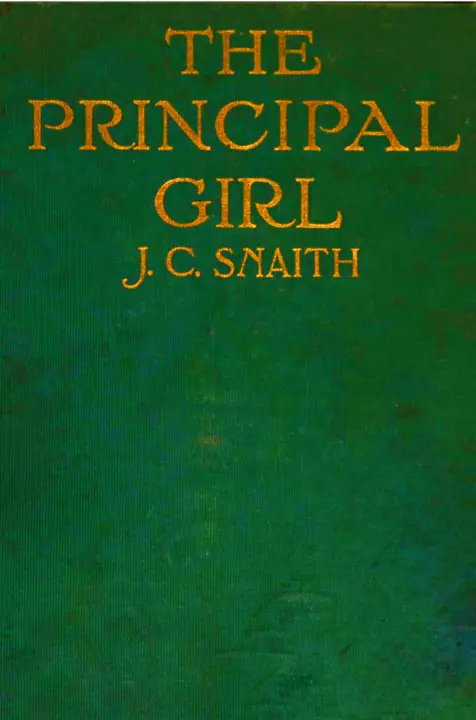
"The Principal Girl" by J. C. Snaith is a novel written in the early 20th century. The story is set in the context of British high society, focusing on themes of class distinction, societal expectations, and romantic entanglements. The narrative's primary character is the young heir to a barony, Philip Shelmerdine, who becomes entangled with the ambitious and talented actress Mary Caspar, who plays the titular role of Cinderella in a pantomime. The opening of the novel introduces readers to Philip Shelmerdine, who is described as the quintessential upper-class young gentleman, navigating the complexities of societal expectations and his own desires amidst the backdrop of London's elite circles. The first chapter establishes the setting in Grosvenor Square, introducing the character of Shelmerdine and his connection to the public through a controversial letter regarding dog privileges, which leads to his social unpopularity. As he struggles with his newfound role as a public figure and grapples with personal relationships, notably with the charismatic Mary Caspar, the stage is set for a humorous yet poignant exploration of love, social standing, and personal identity in a rapidly transforming society.
Introduction adapted from the source catalogue; source summaries may be automatically generated.
Free to read · English · 65,960 words · No account needed
MAKE TIME FOR A GOOD BOOK
On by default. Untick to stop anonymous reading totals. Each page counts after 10 seconds in view. How this works.
Anonymous counting is on unless you have switched it off.
The voice of the Suffolk Colthurst was really quite agreeable, although a little light in the upper register. You might even call it flutelike if you cared to indulge in metaphor.
“Not at all, Agatha,” said S. of P. with excellent chest resonance. “I am merely envisaging the problem of the--ah--”
“Don’t, Wally.” The voice of the Suffolk Colthurst was perhaps a shade less flutelike if history really calls for these nuances. “You are making yourself ridiculous. Please drop the subject.”
“No, Agatha.” The sun setting over Africa might be compared to the brow of the great Proconsul. “Man in The Thunderer most impertinent. Signs himself Verax. Suspect it’s that fellow--”
“Wally.” The Suffolk Colthurst roared here a little less gently than usual. “I will not uphold you! Everybody thinks it is most injudicious.”
“Everybody, Agatha?”
“Paul and Millicent consider--”
“Public health, Agatha, public dec--”
“Wally, once for all, I absolutely refuse to discuss the subject. I will not have you make yourself ridiculous.”
The Suffolk Colthurst, with an approximation to natural majesty, put on a pair of gold-rimmed eyeglasses which were suspended round her neck by a cord, and took the Leading Morning Journal off the First Baron’s table.
“Impertinent, certainly. Sarcasm, I suppose.”
“Suspect it’s that fellow Huffham, because I declined to propose him
under Rule Two.”
“Certainly you do appear to have laid yourself open, but the letter is
most ill-natured.”
“As though I should be likely to propose him. Known the man all my
life.”
The Suffolk Colthurst gathered her majestic inches for the ultimatum.
“Wally, you must listen to me. This matter has already gone too far. Let it drop. It is the first time I have known you go out of your way to make yourself ridiculous.”
“Public health, Agatha, public decency.”
“Leave it to the County Council.”
“They are not competent to envisage such a problem as this. And I am determined, in the face of that letter--”
“Paul says that no man can afford to make himself a public
laughing-stock.”
“Paul’s a coward.”
“Paul says they are certain to make you an Apostle.”
“Eh?”
“If you don’t make a fool of yourself.”
“Paul said that! Why, pray, should they make me an Apostle?”
“Because there’s nobody else; and people will say the race has already passed its zenith if the vacancy is not filled up at once.”
“I will say this for Paul--he is well-informed as a rule.”
“Wait, Wally, until you are an Apostle.”
“Very well then, with the greatest possible reluctance I yield the point for the present. Verax shall wait until--Tell me, Agatha, what have you to say to me?”
Your reading position is saved on this browser. Take it to another device with a library code. Reading pages adapt to text, rather than matching a printed edition.
J. C. (John Collis) Snaith
J. C. (John Collis) Snaith
J. C. (John Collis) Snaith
J. C. (John Collis) Snaith
BEHIND THE BOOK
This eBook is for the use of anyone anywhere in the United States and most other parts of the world at no cost and with almost no restrictions whatsoever. You may copy it, give it away or re-use it under the terms of the Project Gutenberg License included with this eBook or online at www.gutenberg.org. If you are not located in the United States, you will have to check the laws of the country where you are located before using this eBook. Read the source licence.
The original source file, including credits and licence, is retained by this library. Request an original-format copy at no charge. Please include the book title and Project Gutenberg identifier #68069.
KEEP YOUR CURIOSITY GOING
Coulson Kernahan

Maurice Baring
Frances Wright
Cécile Tormay

Frederic Jesup Stimson

W. H. P. (William Henry Pope) Jarvis