Fortune
J. C. (John Collis) Snaith
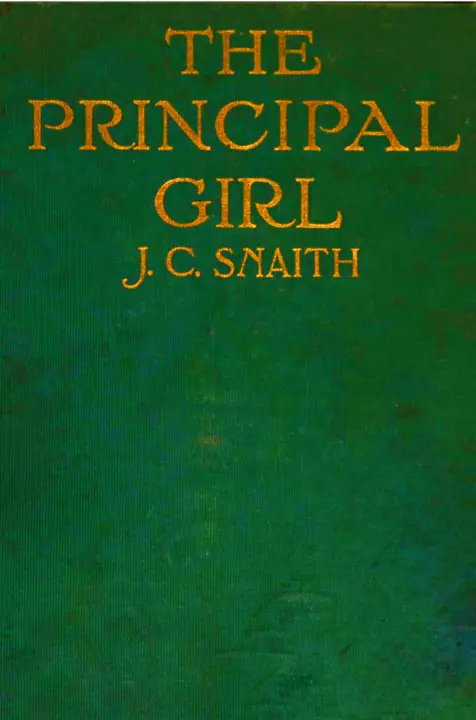
THE CLASSIC COLLECTION · 1912
"The Principal Girl" by J. C. Snaith is a novel written in the early 20th century. The story is set in the context of British high society, focusing on themes of class distinction, societal expectations, and romantic entanglements. The narrative's primary character is the young heir to a barony, Philip Shelmerdine, who becomes entangled with the ambitious and talented actress Mary Caspar, who plays the titular role of Cinderella in a pantomime. The opening of the novel introduces readers to Philip Shelmerdine, who is described as the quintessential upper-class young gentleman, navigating the complexities of societal expectations and his own desires amidst the backdrop of London's elite circles. The first chapter establishes the setting in Grosvenor Square, introducing the character of Shelmerdine and his connection to the public through a controversial letter regarding dog privileges, which leads to his social unpopularity. As he struggles with his newfound role as a public figure and grapples with personal relationships, notably with the charismatic Mary Caspar, the stage is set for a humorous yet poignant exploration of love, social standing, and personal identity in a rapidly transforming society.
Introduction adapted from the source catalogue; source summaries may be automatically generated.
Free to read · English · 65,960 words · No account needed
MAKE TIME FOR A GOOD BOOK
On by default. Untick to stop anonymous reading totals. Each page counts after 10 seconds in view. How this works.
Anonymous counting is on unless you have switched it off.
“Wally,” said the Colthurst of Suffolk at the breakfast table on the following morning, “I have given the matter most anxious consideration, and I think, having regard to everything, it is, perhaps, best left in my hands.”
The Proconsul looked just a little dubious as he removed the top of a
hard-boiled egg.
“You are quite sure, Agatha, that you feel competent?”
“Quite, Wally.”
“Well, perhaps you are right. I hope so, at all events.”
It was decided that Mother should call in Knightsbridge that afternoon upon Daughter-in-law, in spite of the Danger.
“That I will risk,” said Mother, who at heart was an Amazon. “Only once have I seen her, and that was in Bedford Gardens, and she opened the door to me holding a potato in one hand and a knife in the other.”
As the case had been represented to Father, he was quite prepared to
believe even that.
“If you would like me to accompany you, Agatha,” said the Proconsul gallantly, “I will cut the Select Committee this afternoon.”
But Mother seemed to feel quite competent to take care of herself; and, after all, Father saw no real reason to doubt her ability.
Accordingly, at the punctual hour of half-past four that afternoon, Mother entered the lift at Park Mansions, and was hoisted in a patent elevator to the threshold of the Guilty Pair.
Happily, on this occasion her ring was answered not by a damsel, a knife and a potato, but by an undeniably smart young parlor-maid, who was quite trim enough to please the most severely critical.
Was Mrs. Shelmerdine at home?
The S. Y. P., who had charming natural manners, smiled a really very
nice affirmative.
As Mother entered the domain of the Guilty Pair, it seemed to her that everything in the little vestibule, and there was hardly anything in it to speak of, was, considering all things, in surprisingly good taste.
“Why, Mater, this is awfully sweet of you,” said the manly voice of Mr.
Philip.
Salutations of a filial and unaffected character. The young man was really not deep enough to be wary. All was about to be forgiven, evidently, else the good old mater would not be calling upon ’em. Nevertheless, a little surprise was in store for this optimist. Mary, whose amiable custom it was to meet the whole world a little more than half way, did not exactly throw herself into the arms of Mother.
Mother, moreover, did not exactly cast herself upon the neck of Mary.
They chose to shake hands rather than have recourse to any less formal
style of reception.
Your reading position is saved on this browser. Take it to another device with a library code. Reading pages adapt to text, rather than matching a printed edition.
J. C. (John Collis) Snaith
J. C. (John Collis) Snaith
J. C. (John Collis) Snaith
J. C. (John Collis) Snaith
BEHIND THE BOOK
This eBook is for the use of anyone anywhere in the United States and most other parts of the world at no cost and with almost no restrictions whatsoever. You may copy it, give it away or re-use it under the terms of the Project Gutenberg License included with this eBook or online at www.gutenberg.org. If you are not located in the United States, you will have to check the laws of the country where you are located before using this eBook. Read the source licence.
The original source file, including credits and licence, is retained by this library. Request an original-format copy at no charge. Please include the book title and Project Gutenberg identifier #68069.
KEEP YOUR CURIOSITY GOING
Coulson Kernahan

Maurice Baring
Frances Wright
Cécile Tormay

Frederic Jesup Stimson

W. H. P. (William Henry Pope) Jarvis