THE CLASSIC COLLECTION✦Home Rule Second EditionCLASSIC FREE BOOKS
Home Rule Second Edition
Harold Spender
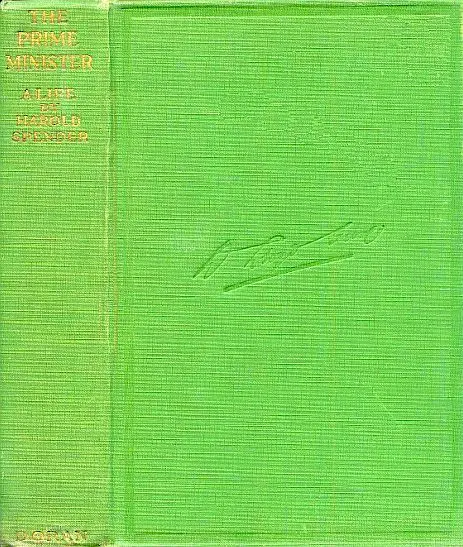
THE CLASSIC COLLECTION · 1920
"The Prime Minister" by Harold Spender is a biographical work written in the early 20th century. The book delves into the life of David Lloyd George, a significant political figure in Wales and the United Kingdom, particularly focusing on his formative years and early influences that shaped his character and leadership style. The narrative encapsulates the socio-political atmosphere of Wales during his childhood and youth, exploring themes of ambition, social justice, and national identity. The opening of the book details David Lloyd George's childhood in North Wales, surrounded by the vibrant landscapes that would instill in him a deep appreciation for his homeland. Following his father's untimely death, he and his siblings are raised by their mother and uncle Richard Lloyd, who instills values of education, hard work, and community involvement. As the story unfolds, we observe the young David’s rapid intellectual development, his experiences with local education, and his growing interest in public affairs, foreshadowing his eventual rise in politics. The detailed descriptions of his surroundings, the struggles of his family, and the vibrant village life paint a rich backdrop that explains the shaping of a man destined for political leadership.
Introduction adapted from the source catalogue; source summaries may be automatically generated.
Free to read · English · 103,885 words · No account needed
MAKE TIME FOR A GOOD BOOK
On by default. Untick to stop anonymous reading totals. Each page counts after 10 seconds in view. How this works.
Anonymous counting is on unless you have switched it off.
Macedonia, Allies to occupy, 192
Maddocks, A., 41
Manchester, birthplace, 14;
meeting of National Liberal Federation, 81;
speech (1918), 281
Manchester Guardian, Mr. Lloyd George writes for, 98
Manisty, Mr. Justice, and Llanfrothen, 68
Marconi Controversy, 169
Markham, Sir Arthur, 166
Marlborough, the Duke of, 163
Marne, the, 280
Martineau, Henry, 14
Maurice, Major-General Sir F., Letter to Press and retirement, 267
Max of Baden, Prince, overtures to President Wilson, 282;
resignation of, 284
Merchant Shipping Act (1906), 142
Meredith, George, admiration of, 339
Merionethshire, 133
Messines, 278
Metropolitan Tabernacle, speech on Welsh Disestablishment at, 26
Mezières, 274
Milan, 247, 253
Military control, effect of divided, 249;
need for unification, 250;
unity of command decided on, 254;
speech at Paris on (1917), 258
Military Service Acts (1916), effect of, 231;
(1917) introduced, 272;
raising of age, 278
Millet, Philippe, 349
Milner, Lord, 114;
attends Peace Conference, 287
Miners’ crisis, Sankey Commission appointed, 311
Minsk, 272
Mons, 175, 284
Montagu, Mr. E., Munition Statement (1916), 221, 224, 229;
joins Government (1916), 243;
attends Peace Conference, 287
Morley, Lord, 112, 149, 197
Morning Post, attacks on Government, 309;
interview with Signor Bissolati, 353
Morvin House, Criccieth, 45, 55
Moulton, Lord, and Committee on Munitions, 230
Munitions, need for, 206;
committee appointed, 213;
Mr. Lloyd George becomes Minister of, 216;
formation of Department, 218;
trades unions and “leaving certificates,” 225;
organisation of volunteer workers, 228
Mynydd Ednyfed, home of Mrs. Lloyd George, 69, 72
Nancy, 151
Nanney, Sir Ellis Hugh, opponent at election (1890), 83, 87, 105
Nantlle, Lake, prosecution of quarrymen for fishing, 64
Nansen, Dr., proposed Russian expedition, 297
Neuve Chapelle, 199
Nevin, speech on South African War, 123
Newcastle Programme (1891), 103
Newman, Cardinal, 50
Nivelle, General, 245;
Champagne attack, 252;
replaced by Pétain, 252
Norman, Sir Henry, 163
Northcliffe, Lord, and communications on, the Eastern Front, 240
North Wales Observer, article on Mr. Chamberlain, 51
Novo-Georgievsk, 200
Old Age Pensions, passing of Act, 150, 161;
increase in, 316
Orlando, Signor, and question of Fiume, 294
Owen, D. Lloyd, 42
Owen, Rev. John, 72
Owen, Miss Maggie (Mrs. Lloyd George), 59;
marriage of, 71
Owen, Mrs., of Dolgelly (Llanfrothen), 66
Owens, Rev. Owen, 25
Oxford, impressions of, 326
Palace Mansions, Kensington, second London home, 95
Paris, speech on unity of control at, 258;
German attack towards, (1918), 280;
social life during Peace Conference in, 300
Parry, John, and Anti-tithe Campaign, 62, 83
Passchendaele, 252
Patents Act, 144
Peace Conference, preliminaries, 286;
first meeting, 288;
correspondents at, 289;
proposed Bolshevist Conference, 295
Peace Treaty, presented and ratified, 303
Pedigree of Mr. Lloyd George, 13
Pencaenewydd, place of marriage, 72
Penrhyn, 55
Pétain, General, 245
Phillimore Report, basis of League of Nations, 298
Philippi, Philippo, 246
Pichon, M., 287
Platt, Colonel, opponent at election (1900), 95
Poisoned arrow incident, 324
Portmadoc, 11, 41, 46, 55, 94, 96, 122;
Debating Society, 47
Poland, surrendered to Germany, 273;
question of Peace Conference, 292, 303
Port of London Act, 145
Prime Minister, Mr. Lloyd George sent for by the King, 242
Prinkipo, 295
Puleston, Sir John, opponent at second election, 105
Pwllheli, 14, 123
Queen Victoria, 80
Your reading position is saved on this browser. Take it to another device with a library code. Reading pages adapt to text, rather than matching a printed edition.
BEHIND THE BOOK
This eBook is for the use of anyone anywhere in the United States and most other parts of the world at no cost and with almost no restrictions whatsoever. You may copy it, give it away or re-use it under the terms of the Project Gutenberg License included with this eBook or online at www.gutenberg.org. If you are not located in the United States, you will have to check the laws of the country where you are located before using this eBook. Read the source licence.
The original source file, including credits and licence, is retained by this library. Request an original-format copy at no charge. Please include the book title and Project Gutenberg identifier #60179.
KEEP YOUR CURIOSITY GOING
Cécile Tormay

Moritz Busch
John L. Ransom
Frances Wright
Cécile Tormay

Mabel Potter Daggett