THE CLASSIC COLLECTION✦Home Rule Second EditionCLASSIC FREE BOOKS
Home Rule Second Edition
Harold Spender
THE CLASSIC COLLECTION · 1920
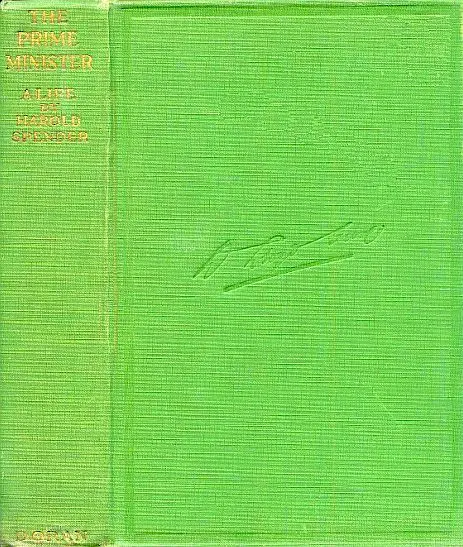
"The Prime Minister" by Harold Spender is a biographical work written in the early 20th century. The book delves into the life of David Lloyd George, a significant political figure in Wales and the United Kingdom, particularly focusing on his formative years and early influences that shaped his character and leadership style. The narrative encapsulates the socio-political atmosphere of Wales during his childhood and youth, exploring themes of ambition, social justice, and national identity. The opening of the book details David Lloyd George's childhood in North Wales, surrounded by the vibrant landscapes that would instill in him a deep appreciation for his homeland. Following his father's untimely death, he and his siblings are raised by their mother and uncle Richard Lloyd, who instills values of education, hard work, and community involvement. As the story unfolds, we observe the young David’s rapid intellectual development, his experiences with local education, and his growing interest in public affairs, foreshadowing his eventual rise in politics. The detailed descriptions of his surroundings, the struggles of his family, and the vibrant village life paint a rich backdrop that explains the shaping of a man destined for political leadership.
Introduction adapted from the source catalogue; source summaries may be automatically generated.
Free to read · English · 103,885 words · No account needed
MAKE TIME FOR A GOOD BOOK
On by default. Untick to stop anonymous reading totals. Each page counts after 10 seconds in view. How this works.
Anonymous counting is on unless you have switched it off.
Haig, F.-M. Lord, agreement with Foch, 275
Hamburg, visit to, 156
Handel, 339
Hankey, Sir M., at Peace Conference, 289
Harcourt, Sir Wm., approval of maiden speech, 91;
leader of House of Commons, 105
Health Ministry Bill, introduced and passed 315
Henry, Sir Charles, 150
Henry of Prussia, Prince, criticism of estimates providing for and
expenditure on, 92
Hertling, Count, resignation of, 273
Hervier, Paul Louis, in Je Sais Tout, 352
“Highgate,” 18, 36, 40
Hobhouse Miss E. and South African Concentration Camps, 120
Home Rule (1885-6), 52, 84, 103;
speech to exclude Ulster (1910), 351;
for Wales, 82, 101, 106
House, Colonel, 287;
and Bullitt Mission, 296
House of Commons, suspension from, 111;
scene over Defaulting Authorities Bill, 133
Housing Bill introduced and passed, 314
Hughes, Mr., at Peace Conference, 288
Indemnities, telegram from M.P.’s, 300
India, extension of self-government, 316
Indian Patriot, article in, 357
Industrial Courts Act passed, 316
Insurance, National, investigation of German system, 150;
preparation of Bill, 167;
passing of Bill, 168;
inspiration of, 332
Ireland, conscription extended to, 279;
outline of new proposals, 316
Isonzo, 246, 253
Italian Press, opinions of, 352
Italy, declares war on Austria, 200;
situation (in 1917), 245;
German advance (1917), 252;
British reinforcements for, 255
Ivangorod, 200
Johnson, Dr., 50
Jones, “Bobby,” 20
Jones, J. R., of Ramoth, 17
Jones, Miss, niece of Richard Lloyd, 21
Jones, Michael of Bala, 59
Jones, Rev. Richard, Llanfrothen, 68
Journal de Genève, 358
Kaiser, the, part played in politics by (1908), 156;
abdication of, 284
Kavalla, fear of Bulgarians seizing, 189
Kemmel, 278
Kerensky, M., destroyed by Lenin, 272
Kieff, 272
King Edward VII, 149;
visit to Czar, 154;
death of, 164
King George V, Conference of Party Leaders (1910), 164;
formation of Government of Mr. Lloyd George, 242;
friendship of, 343
Kitchener, Lord, view of length of war, 172, 178;
troops for Greece, 185;
at the War Office, 210;
Munition Committee, 213;
shell crisis (1915), 214;
death, 232, 262, 265
Koltchak, Admiral, 297
Kovno, 200
Kropotkin, Prince, 346
Kruger, President, 114
Labour Conference, Central Hall, 309
Labour Party, joins Government, 243;
leaves Coalition, 307;
in opposition, 309
Land Acquisition Act passed, 316
Land, appointment of Committee of Inquiry, 168;
preparation of Bills (1914), 170
Lansdowne, Lord, 163
Lansing, Mr., and Committee of League of Nations, 298
Laurier, Sir Wilfrid, 356
League of Nations, conception of scheme, 298
Lemnos, 295
Lenin, destroys Kerensky Government, 272, 279
Lens, 252
Le Journal, 351
L’Œuvre, 349
Le Temps, 349
Lewis, Mr. Herbert, 98, 110, 111
Leygues, Georges, in Evènement, 347
Licensing Act (1905), 136
Lithuania, surrendered to Germany, 272
Llanystumdwy, 11, 20, 23, 39, 42, 169
Llanfrothen, 66
Lloyd, Richard (uncle), 24, 31, 35, 39, 45, 72, 93, 101
Lloyd, David (grandfather), 20
Local Veto, resolution at meeting of National Liberal Federation, 81
London, first visit, 49;
commencement of practice, 97
Loucheur, M., 287
Lowther, Right Hon. J. W., 133
Ludendorff, General, attack on Italy, 252, 270;
waning of hopes of, 278;
suggestion for armistice by, 281
Your reading position is saved on this browser. Take it to another device with a library code. Reading pages adapt to text, rather than matching a printed edition.
BEHIND THE BOOK
This eBook is for the use of anyone anywhere in the United States and most other parts of the world at no cost and with almost no restrictions whatsoever. You may copy it, give it away or re-use it under the terms of the Project Gutenberg License included with this eBook or online at www.gutenberg.org. If you are not located in the United States, you will have to check the laws of the country where you are located before using this eBook. Read the source licence.
The original source file, including credits and licence, is retained by this library. Request an original-format copy at no charge. Please include the book title and Project Gutenberg identifier #60179.
KEEP YOUR CURIOSITY GOING
Cécile Tormay

Moritz Busch
John L. Ransom
Frances Wright
Cécile Tormay

Mabel Potter Daggett