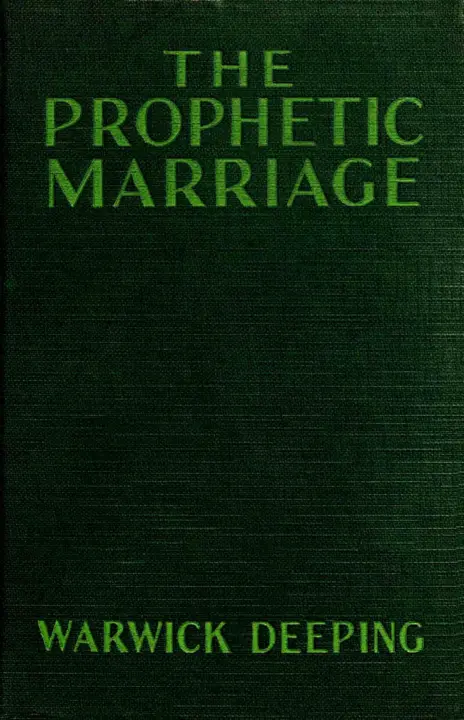
The prophetic marriage
Warwick Deeping
THE CLASSIC COLLECTION · 1928
"The Pride of Eve" by Warwick Deeping is a novel written in the early 20th century. The story centers around the lives of James Canterton, a talented rose breeder, and his wife, Gertrude, who is preoccupied with social ambitions and community projects. Their contrasting interests highlight themes of artistic passion and the struggles of domestic life, setting the stage for tensions that may arise in their marriage. The opening of the novel introduces James Canterton as he eagerly awaits the blooming of his newly created rose, named "Guinevere," in his beautiful garden at Fernhill. As he sits in the serene rosery, his character is depicted as a patient and meditative artist, deeply connected to nature. The narrative shifts when his wife, Gertrude, interrupts his tranquil moment, revealing the strain in their relationship—while he finds joy in the subtle wonders of life, she is caught up in her social endeavors, often to the detriment of their domestic harmony. The contrast between their lives is further emphasized through the playful interactions with their daughter, Lynette, suggesting a familial bond that may serve as a counterbalance to the couple's disconnection.
Introduction adapted from the source catalogue; source summaries may be automatically generated.
Free to read · English · 106,423 words · No account needed
MAKE TIME FOR A GOOD BOOK
On by default. Untick to stop anonymous reading totals. Each page counts after 10 seconds in view. How this works.
Anonymous counting is on unless you have switched it off.
Canterton took the rose to Lavender, who was working through some of the stock lists in the office.
“Nearly lost, but not quite, Lavender.”
The foreman looked cynical, but said nothing.
“Wire it up, and have it packed and sent off to Mr. Woolridge to-night. And, by the way, I have told Mrs. Brocklebank that if she wants any flowers in the future, she must apply to you.”
“I shan’t forget that little trowel of hers, sir, and our Alpines.”
“Put up a notice, ‘Trowels not admitted.’ I am writing to Mr. Woolridge. Oh, and there are those American people coming to-morrow, who want to be shown roses, and flowering shrubs. Will you take them round? I fancy I shall be busy.”
Canterton returned to the rosery, and, picking up a stray chair in one of the main paths, joined Eve Carfax, who had a little green Japanese tea-tray on her lap. She was pouring out tea from a tiny brown teapot, her wrist making a white arch, her lashes sweeping her cheek.
“They have brought your tea all right?”
“Yes.”
“What about cakes?”
She bent down and picked up a plate from the path.
“Someone must fancy me a hungry schoolgirl.”
“It looks rather like it. How is the painting going?”
“I am rather pleased with it.”
“Good. On show soon?”
“I have only to put in a few touches.”
He swung his chair round, and sat down as though it were the most natural thing in the world for him to come and talk to her. Her curious resemblance to Lynette may have tricked him into a mood that was partly that of the playmate, partly that of the father. Lynette, the child, had set him an impetuous example. “Miss Eve feels the fairies in the wood, daddy. She feels them there, just like me.” That was it. Eve spoke and understood the same language as he and the child.
“I overtook Mrs. Brocklebank.”
“And rescued Guinevere?”
“Yes, and the good dragon pretended to be very innocent. I did not drag your name in, though I was reproved for not labelling things properly, and so inviting innocent old ladies to purloin flowers.”
“But you got the rose back?”
“Yes, and she managed to break the stalk off short in pulling it out of her belt. I wonder if you can tell me why the average woman is built on such mean lines?”
She gave him a sudden questioning glance which said, “Do you realise that you are going beneath the surface—that the real you in you is calling to the real me in me?”
Your reading position is saved on this browser. Take it to another device with a library code. Reading pages adapt to text, rather than matching a printed edition.
Warwick Deeping
Warwick Deeping
Warwick Deeping
Warwick Deeping
BEHIND THE BOOK
This eBook is for the use of anyone anywhere in the United States and most other parts of the world at no cost and with almost no restrictions whatsoever. You may copy it, give it away or re-use it under the terms of the Project Gutenberg License included with this eBook or online at www.gutenberg.org. If you are not located in the United States, you will have to check the laws of the country where you are located before using this eBook. Read the source licence.
The original source file, including credits and licence, is retained by this library. Request an original-format copy at no charge. Please include the book title and Project Gutenberg identifier #50176.
KEEP YOUR CURIOSITY GOING
Coulson Kernahan

Maurice Baring
Frances Wright
Cécile Tormay

Frederic Jesup Stimson

W. H. P. (William Henry Pope) Jarvis