
The spider’s web
St. George Rathborne
THE CLASSIC COLLECTION · 1912
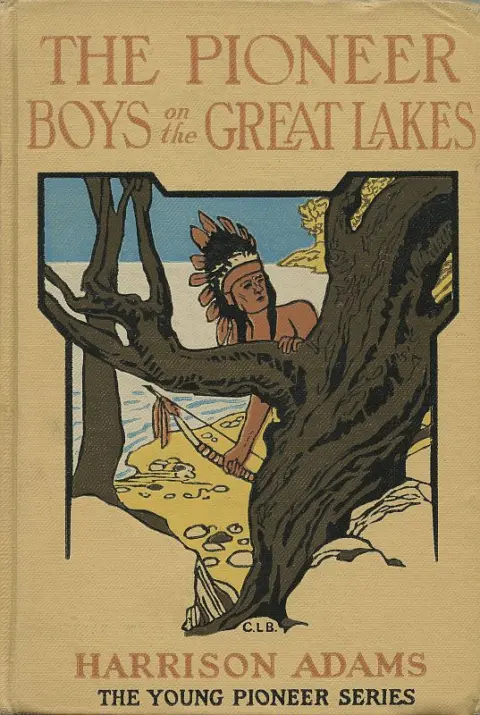
"The Pioneer Boys on the Great Lakes; or, On the Trail of the Iroquois" by Harrison Adams is a historical adventure written in the early 20th century. The story follows young pioneers Bob and Sandy Armstrong as they navigate life and dangers on the Ohio frontier, all while dealing with tensions between settlers and Native Americans. The narrative promises thrilling encounters, personal bravery, and insights into pioneer life during a tumultuous period in American history. The opening of the narrative introduces Bob and Sandy, who are deeply concerned by alarming shouts that break the tranquility of their settlement, signaling potential trouble. As they rush toward home, they prepare for the possibility of an Indian attack, reflecting the constant tension and fear of their time. The story establishes their family dynamics, including their father's injury and their mother's anxieties, while hinting at a broader conflict involving Native tribes emerging from the political climate of the era. The boys' burgeoning skills as woodsmen and their relationships with local figures, such as the legendary Daniel Boone and the Irish trapper Pat O'Mara, set the stage for their forthcoming adventures and challenges as they strive to protect their community.
Introduction adapted from the source catalogue; source summaries may be automatically generated.
Free to read · English · 69,870 words · No account needed
MAKE TIME FOR A GOOD BOOK
On by default. Untick to stop anonymous reading totals. Each page counts after 10 seconds in view. How this works.
Anonymous counting is on unless you have switched it off.
"OH! it must be a terrible mistake; you can't mean it, Mr. Harkness!" cried Sandy, white of face, and trembling like a leaf.
Bob, however, understood. He knew the settler would never have sought them out simply to carry an idle rumor. And probably, in that moment of acute pain, the young pioneer once again saw those beady black eyes of the Seneca chief, Black Beaver, as they fastened greedily upon the pretty face of little Kate. He, too, was thrilled with horror when he heard those terrible words; but, fortunately, he could control himself much better than his younger brother.
"Tell us, Mr. Harkness; is Kate lost; and do they only believe she has been carried off, or is it proved?" he asked, his voice hoarse with suffering.
"I am afraid it is but too true, my lad," replied the settler, as he laid his hand on the shoulder of the Armstrong boy.
"Did any one see it done?" continued Bob, between his set teeth; for he could not believe that any neighbor would have stood idly by, and witnessed such an abduction, without doing everything in his power to thwart the evil designs of the prowling red men.
"No. Kate went to the spring for water. Her mother thought once she heard a little cry, and was worried; but, stepping out of doors, she looked that way, and believed she saw Kate's shawl moving among the trees, as though she were stooping down to pick some late wild flower. Reassured, she returned to her work indoors. An hour passed. Then, suddenly she remembered the circumstance and, alarmed, she hurried to the spring."
"And Kate had disappeared?" exclaimed Bob, in dismay.
"Yes," replied the man. "Your mother called aloud again and again, her alarm increasing each moment as no answer came. Wildly she ran across to the cabin of Mr. Brewster, which was the nearest of all the neighbors. He happened to be at home, and, seizing his gun, immediately hurried to aid her, meanwhile sending his boy to sound the alarm."
"Yes, yes, and when they arrived what did they learn?" demanded Sandy.
"They had hardly reached the cabin when who should appear from the woods but your old friend, Pat O'Mara, returned unexpectedly from his last scout."
Both Bob and his brother gave utterance to a cry of joy when the
settler uttered these words.
"How fortunate we are to have him with us now!" exclaimed Bob.
"So we all thought," went on Mr. Harkness. "When he had learned what was the trouble, O'Mara immediately made us all keep back until he could closely examine the vicinity of the spring."
Your reading position is saved on this browser. Take it to another device with a library code. Reading pages adapt to text, rather than matching a printed edition.
St. George Rathborne
St. George Rathborne & Charles L. (Charles Lewis) Wrenn
St. George Rathborne
St. George Rathborne
BEHIND THE BOOK
This eBook is for the use of anyone anywhere in the United States and most other parts of the world at no cost and with almost no restrictions whatsoever. You may copy it, give it away or re-use it under the terms of the Project Gutenberg License included with this eBook or online at www.gutenberg.org. If you are not located in the United States, you will have to check the laws of the country where you are located before using this eBook. Read the source licence.
The original source file, including credits and licence, is retained by this library. Request an original-format copy at no charge. Please include the book title and Project Gutenberg identifier #46795.
KEEP YOUR CURIOSITY GOING
Cécile Tormay

Moritz Busch
Coulson Kernahan
John L. Ransom

Maurice Baring
Frances Wright