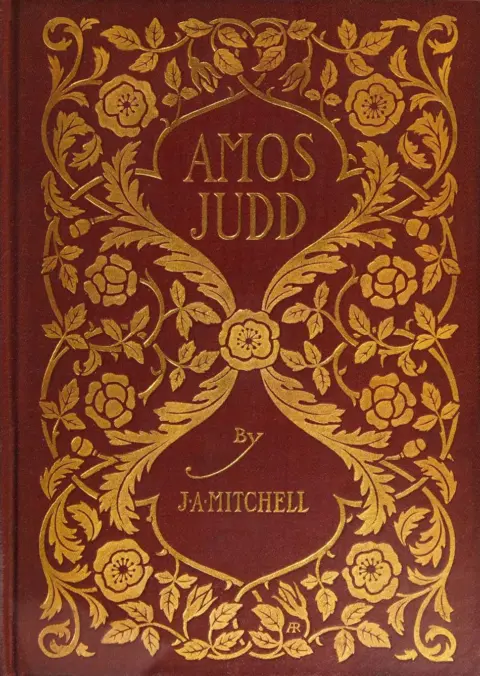
Amos Judd
John Ames Mitchell
THE CLASSIC COLLECTION · 1901
"The Pines of Lory" by John Ames Mitchell is a novel written in the early 20th century. The story introduces an intriguing connection between two main characters, Patrick Boyd, a man returning from Africa, and Elinor Marshall, an orphan with a generous heart. Their adventure begins when they find themselves passengers on a steamer bound for Boyd's Island, but soon they encounter unexpected circumstances that challenge their understanding of each other and compel them to confront deeper themes of love, virtue, and destiny. At the start of the novel, readers are introduced to the atmosphere aboard the steamer as the characters prepare for their journey. Boyd bears the scars of his recent past, still recovering physically and emotionally from his experiences in Africa. The narrative invites readers to witness his playful banter with his friend Billy Townsend, as well as the magnetic charm of Elinor, who is set to visit the Boyds’ house. Tension escalates amidst the humorous and social exchanges when the steamer unexpectedly lands at the wrong location, leaving both characters stranded in an isolated wilderness without someone to guide them. The initial light-heartedness gives way to a gripping tale intertwined with themes of romance and existential contemplation, as both characters are forced to confront their own vulnerabilities amidst unforeseen trials.
Introduction adapted from the source catalogue; source summaries may be automatically generated.
Free to read · English · 39,693 words · No account needed
MAKE TIME FOR A GOOD BOOK
On by default. Untick to stop anonymous reading totals. Each page counts after 10 seconds in view. How this works.
Anonymous counting is on unless you have switched it off.
Half-way to the cottage he stopped, wrenched his arm from her grasp and demanded, with a frown: "I say; you expect decent things of a woman, don't you?"
"Yes, of course." And she nodded assent, trying to lead him on again. But he pushed her away and would have fallen with the effort had she not caught him in time.
"Well, there's this about it," he continued, trying feebly to shake his arm from her hands yet staggering along where she led, "I'm not stuck on that woman or any other. I'm not in that line of business. Do I look like a one-eyed ass?"
"No, no, not at all!" And, gently, she urged him forward.
"Because three or four fools are gone over her, she thinks everybody else--oh! who cares, anyway? Let her think!"
It was a zigzag journey. He reeled and plunged, dragging her in all directions; and so yielding were his knees that she doubted if they could bear him to the house. Once, when seemingly on the point of a collapse, he muttered, in a confidential tone: "This hauling guns under a frying sun does give you a thirst, hey? Say, am I right, or not?"
"Yes, yes, you are right. Come along: just a little farther."
"Did you ever swim in champagne with your mouth open?"
"No."
"What a fool!"
Then he stopped, straightened up and sang, in a die-away, broken voice,
with chattering teeth:
"See the Britons, Bloody Britons,
Millions of 'em doncherknow,
All a swarming up the kopje--
Just to turn about an hopje!
O, where in hell to go!
Bloody Britons!"
Grasping her roughly by the shoulder, he exclaimed: "Why don't you join in the chorus, you blithering idiot?"
This song, in fragments and with variations, he sang--or rather tried to sing--repeatedly. At the edge of the woods he seemed to shrink from the fury of the storm which drove, in cutting blasts, against their faces. And on the threshold of the cottage he again held back. In the doorway, leaning against the jamb, he said, solemnly:
"Look here, young feller, just mark my words, women are devils. The less you have to do with them the better for you. D--n the whole tribe! That's what I say!"
But she dragged him in and supported him to a chair before the fire. He sat shivering with cold, his chin upon his breast, apparently exhausted by the walk. The water dripping from his saturated garments formed puddles on the floor.
Your reading position is saved on this browser. Take it to another device with a library code. Reading pages adapt to text, rather than matching a printed edition.
John Ames Mitchell
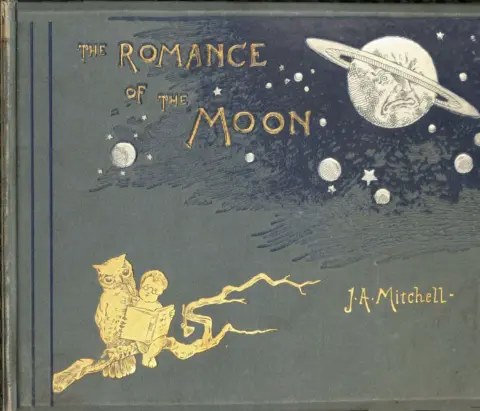
John Ames Mitchell

Francis Davis Millet & W. Hamilton (William Hamilton) Gibson & Will H. (Will Hicok) Low & John Ames Mitchell & Francis Hopkinson Smith
John Ames Mitchell
BEHIND THE BOOK
This eBook is for the use of anyone anywhere in the United States and most other parts of the world at no cost and with almost no restrictions whatsoever. You may copy it, give it away or re-use it under the terms of the Project Gutenberg License included with this eBook or online at www.gutenberg.org. If you are not located in the United States, you will have to check the laws of the country where you are located before using this eBook. Read the source licence.
The original source file, including credits and licence, is retained by this library. Request an original-format copy at no charge. Please include the book title and Project Gutenberg identifier #30600.
KEEP YOUR CURIOSITY GOING
Coulson Kernahan

Maurice Baring
Frances Wright
Cécile Tormay

Frederic Jesup Stimson

W. H. P. (William Henry Pope) Jarvis