
Amos Judd
John Ames Mitchell
THE CLASSIC COLLECTION · 1901
"The Pines of Lory" by John Ames Mitchell is a novel written in the early 20th century. The story introduces an intriguing connection between two main characters, Patrick Boyd, a man returning from Africa, and Elinor Marshall, an orphan with a generous heart. Their adventure begins when they find themselves passengers on a steamer bound for Boyd's Island, but soon they encounter unexpected circumstances that challenge their understanding of each other and compel them to confront deeper themes of love, virtue, and destiny. At the start of the novel, readers are introduced to the atmosphere aboard the steamer as the characters prepare for their journey. Boyd bears the scars of his recent past, still recovering physically and emotionally from his experiences in Africa. The narrative invites readers to witness his playful banter with his friend Billy Townsend, as well as the magnetic charm of Elinor, who is set to visit the Boyds’ house. Tension escalates amidst the humorous and social exchanges when the steamer unexpectedly lands at the wrong location, leaving both characters stranded in an isolated wilderness without someone to guide them. The initial light-heartedness gives way to a gripping tale intertwined with themes of romance and existential contemplation, as both characters are forced to confront their own vulnerabilities amidst unforeseen trials.
Introduction adapted from the source catalogue; source summaries may be automatically generated.
Free to read · English · 39,693 words · No account needed
MAKE TIME FOR A GOOD BOOK
On by default. Untick to stop anonymous reading totals. Each page counts after 10 seconds in view. How this works.
Anonymous counting is on unless you have switched it off.
"He is a most lovable man," she said, "of fine character, and with a splendid mind. You would like him if you knew him better."
Here was his opportunity; his chance for a rescue. He would snatch her from the clutches of the Romish Brute. A few stabs in the monster's vitals might accomplish wonders. So he answered, sadly, in a tone of brotherly affection:
"I like him now. That is why I regret that he should devote himself to such a questionable enterprise."
"What enterprise?"
"His Church."
With a forced calmness she replied, "This is the only time I ever heard the first religion of Christendom called a 'questionable enterprise.'"
"Leo X. spoke of it as a 'profitable fable.' Perhaps that was better."
"Did Leo X. say that of the Catholic Church?"
"Yes."
"I don't believe it."
"Because you have too high an opinion of Leo?"
"No; but he was a Pope of Rome, and I simply cannot believe it."
"Some popes of Rome have been awful examples for the young."
"So have men in all positions."
He smiled and shook his head. "Yes, but when they set up as Christ's apostles, they really should not indulge too freely in assassination and torture: at least, not out of business hours."
Then in a reflective, somewhat sorrowful manner, he continued, "But the Roman Enterprise has two enemies that are thorns in the flesh, the bath-tub and the printing-press. Wherever they march in, she marches out. The three can't live together."
Of this statement there was no recognition, except a straightening up in
the steamer-chair.
He continued pleasantly, "In England, Germany, and America, for instance, where these adversaries are in vogue, Catholicism quits. As the devil shrinks from the sign of the Cross, so does the Holy Enterprise gather up its bloody skirts and decamp."
"Perhaps you forget that in the United States alone there are more than seven million Catholics."
"But they are not victims of the bath-tub habit."
"That is not true! There are thousands of exceptions!"
He laughed--an amiable, jolly, yet triumphant laugh--as he retorted, "You admit the truth of it when you call them exceptions."
In the dim light which had gathered over everything, he could see the delicate eyebrows drawing together in a frown. But he went on, cheerfully, as if giving offence had not occurred to him, "Now Spain is enthusiastically Catholic. And for ignorance,--solid, comprehensive, reliable ignorance,--there is nothing like it in the solar system. You can't hurt it with a hammer. It defies competition. If a Spaniard were to meet a bath-tub on a lonely highway, he would cross himself and run."
Your reading position is saved on this browser. Take it to another device with a library code. Reading pages adapt to text, rather than matching a printed edition.
John Ames Mitchell
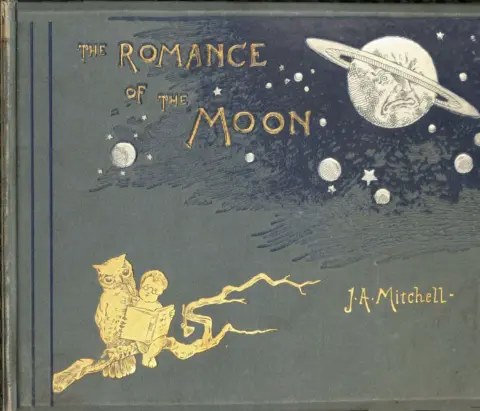
John Ames Mitchell

Francis Davis Millet & W. Hamilton (William Hamilton) Gibson & Will H. (Will Hicok) Low & John Ames Mitchell & Francis Hopkinson Smith
John Ames Mitchell
BEHIND THE BOOK
This eBook is for the use of anyone anywhere in the United States and most other parts of the world at no cost and with almost no restrictions whatsoever. You may copy it, give it away or re-use it under the terms of the Project Gutenberg License included with this eBook or online at www.gutenberg.org. If you are not located in the United States, you will have to check the laws of the country where you are located before using this eBook. Read the source licence.
The original source file, including credits and licence, is retained by this library. Request an original-format copy at no charge. Please include the book title and Project Gutenberg identifier #30600.
KEEP YOUR CURIOSITY GOING
Coulson Kernahan

Maurice Baring
Frances Wright
Cécile Tormay

Frederic Jesup Stimson

W. H. P. (William Henry Pope) Jarvis