THE CLASSIC COLLECTION✦Karl GrierCLASSIC FREE BOOKS
Karl Grier
Louis Tracy
THE CLASSIC COLLECTION · 1904
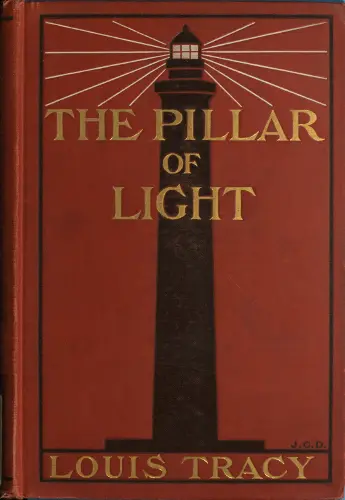
"The Pillar of Light" by Louis Tracy is a novel written in the early 20th century. The story is centered around the Gulf Rock lighthouse, focusing on its keeper, Stephen Brand, and his companions as they navigate the challenges of life at sea, including a dramatic rescue that intertwines their fates with an abandoned baby. The book explores themes of duty, adventure, and the complexity of human relationships, promising both suspense and emotional depth as the characters confront the mysteries of the ocean and their own pasts. At the start of the narrative, we are introduced to the solitary yet vital life of the lighthouse keeper, Stephen Brand, watching over the treacherous waters and responding to the foggy night. The atmosphere is heavy with suspense as Brand spots a drifting lifeboat, leading to the discovery of a baby hidden beneath a sail, representing both a miracle and a mystery. As Brand grapples with the potential tragedy surrounding the lifeboat, he is drawn into a life-altering event that forces him to confront his own past. The chapters unfold amidst vivid descriptions of the sea, revealing not only the dangers of the environment but also the characters' connections to one another as they face impending storms, both literal and metaphorical.
Introduction adapted from the source catalogue; source summaries may be automatically generated.
Free to read · English · 80,398 words · No account needed
MAKE TIME FOR A GOOD BOOK
On by default. Untick to stop anonymous reading totals. Each page counts after 10 seconds in view. How this works.
Anonymous counting is on unless you have switched it off.
"Dad," she cried, "did not Mr. Pyne tell you of my threat?"
"No, dear one. I am not living in terror of you, to my knowledge."
"You must please go to sleep, both of you, at least until ten or eleven o'clock. Mr. Emmett is sending a man to keep watch here. He will not disturb you. He is bringing some rugs and pillows which you can arrange on the floor. I have collected them for your special benefit."
"At this hour! Impossible, Connie."
"But it is not impossible, and this is the best hour available. You know quite well that the Falcon will return at high water. And you must rest, you know."
She bustled about, with the busy air of a house-wife who understood the whole art of looking after her family. But something puzzled her.
"Mr. Pyne," she inquired, "where is your cup?"
"I--er--took it down," he explained.
For some reason, Constance felt instantly that she had turned the tables on him since their last rencontre. She did not know why. He looked confused, for one thing: he was not so glib in speech, for another.
"Down where?" she demanded. "Not to the kitchen. I have been there since you brought up your breakfast and dad's on the same tray."
"I breakfasted alone," remarked Brand calmly. "Mr. Pyne had feasted
earlier."
"But he had not," persisted Constance. "I wanted him to--"
She stopped. This impudent American had actually dared to wink at her, a confidential, appealing wink which said plainly: "Please don't trouble about me."
"You gave your tea and biscuit to somebody," she cried suddenly. "Now,
who was it? Confess!"
"Well," he said weakly, "I did not feel--er--particularly hungry, so, when I met those two little girls foolin' round for an extra supply, I--er--thought nobody would mind if--er--"
"Father!" said Constance. "He has not had a mouthful."
"Then take him downstairs and give him one. You must have found my conversation interesting, Mr. Pyne, whilst I was eating. But, before you go, let me add a word in season. There must be no further discrimination between persons. Stand or fall, each must abide by the common rule."
Pyne, with the guilty feeling of a detected villian, explained to Constance how the cup might be rescued.
"I shall keep a close eye on you in future," she announced as they went
below.
"Do," he said. "That is all I ask for."
"I am a very strict person," she went on. "Dad always encouraged us in the sailor's idea of implicit obedience."
"Kick me. It will make me feel good," he answered.
Your reading position is saved on this browser. Take it to another device with a library code. Reading pages adapt to text, rather than matching a printed edition.
Louis Tracy
Louis Tracy
Louis Tracy
Louis Tracy
BEHIND THE BOOK
This eBook is for the use of anyone anywhere in the United States and most other parts of the world at no cost and with almost no restrictions whatsoever. You may copy it, give it away or re-use it under the terms of the Project Gutenberg License included with this eBook or online at www.gutenberg.org. If you are not located in the United States, you will have to check the laws of the country where you are located before using this eBook. Read the source licence.
The original source file, including credits and licence, is retained by this library. Request an original-format copy at no charge. Please include the book title and Project Gutenberg identifier #40912.
KEEP YOUR CURIOSITY GOING
Coulson Kernahan

Maurice Baring
Frances Wright
Cécile Tormay

Frederic Jesup Stimson

W. H. P. (William Henry Pope) Jarvis