THE CLASSIC COLLECTION✦Karl GrierCLASSIC FREE BOOKS
Karl Grier
Louis Tracy
THE CLASSIC COLLECTION · 1904
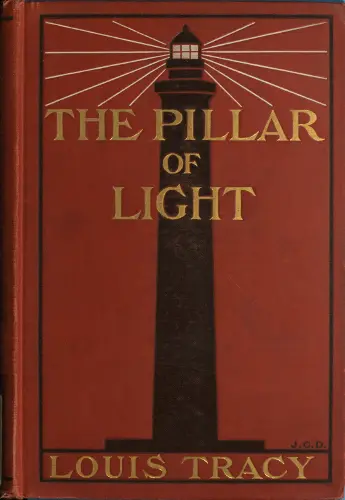
"The Pillar of Light" by Louis Tracy is a novel written in the early 20th century. The story is centered around the Gulf Rock lighthouse, focusing on its keeper, Stephen Brand, and his companions as they navigate the challenges of life at sea, including a dramatic rescue that intertwines their fates with an abandoned baby. The book explores themes of duty, adventure, and the complexity of human relationships, promising both suspense and emotional depth as the characters confront the mysteries of the ocean and their own pasts. At the start of the narrative, we are introduced to the solitary yet vital life of the lighthouse keeper, Stephen Brand, watching over the treacherous waters and responding to the foggy night. The atmosphere is heavy with suspense as Brand spots a drifting lifeboat, leading to the discovery of a baby hidden beneath a sail, representing both a miracle and a mystery. As Brand grapples with the potential tragedy surrounding the lifeboat, he is drawn into a life-altering event that forces him to confront his own past. The chapters unfold amidst vivid descriptions of the sea, revealing not only the dangers of the environment but also the characters' connections to one another as they face impending storms, both literal and metaphorical.
Introduction adapted from the source catalogue; source summaries may be automatically generated.
Free to read · English · 80,398 words · No account needed
MAKE TIME FOR A GOOD BOOK
On by default. Untick to stop anonymous reading totals. Each page counts after 10 seconds in view. How this works.
Anonymous counting is on unless you have switched it off.
"I don't deny," admitted Pyne, "that the idea of a steak sounds good. That is, you know," he went on languidly, "it might sort of appeal to me about one o'clock."
"I should have thought you could do with one now, especially after the hard night we have gone through. Perhaps you are a believer in the French system, and prefer a light breakfast."
Brand finished the last morsel of biscuit and drank the cup dry.
"It's a first-rate proposition--when you are accustomed to it," said Pyne. "But talking about eating when there's little to eat is a poor business, anyway. Don't you find that?"
"I do indeed."
Brand rose and tapped the barometer, adjusting the sliding scale to read
the tenths.
"Slightly better," he announced. "If only the wind would go down, or even change to the norrard!"
"What good would a change of wind do?" inquired Pyne, greatly relieved himself by the change of topic.
"It would beat down the sea to some extent and then they might be able to drift a buoy, with a rope attached, close enough to the rock at low tide to enable us to reach it with a cast of a grappling iron."
"Do you mean that we could be ferried to the steamer by that means?"
"That is absolutely out of the question until the weather moderates to a far greater extent than I dare hope at present. But, once we had the line, we could rig up a running tackle and obtain some stores."
"Is it as bad as all that?" said the younger man, after a pause.
They looked at each other. The knowledge that all true men have of their kind leaped from eye to eye.
"Quite that bad," answered Brand.
Pyne moistened his lips. He produced a case containing two cigars. He
held it out.
"Let us go shares in consolation," he said.
Brand accepted the gift, and affected a livelier mood.
"By lucky chance I have an ample supply of tobacco. It will keep the men quiet," he said. "By the way," and he lifted a quick glance at Pyne, "do you know anything about chemistry?"
"Well--er--I went through a course at Yale."
"Can colza oil be converted into a food."
"It contains certain fats," admitted Pyne, taking dubious stock of the
question.
"But the process of conversion, the chemical reaction, that is the
difficulty."
"Bi-sulphide of carbon is a solvent, and the fatty acids of most vegetable oils can be isolated by treatment with steam super-heated to about 600° Fahrenheit."
Brand threw out his hands with a little gesture of helplessness; just
then Constance appeared.
Your reading position is saved on this browser. Take it to another device with a library code. Reading pages adapt to text, rather than matching a printed edition.
Louis Tracy
Louis Tracy
Louis Tracy
Louis Tracy
BEHIND THE BOOK
This eBook is for the use of anyone anywhere in the United States and most other parts of the world at no cost and with almost no restrictions whatsoever. You may copy it, give it away or re-use it under the terms of the Project Gutenberg License included with this eBook or online at www.gutenberg.org. If you are not located in the United States, you will have to check the laws of the country where you are located before using this eBook. Read the source licence.
The original source file, including credits and licence, is retained by this library. Request an original-format copy at no charge. Please include the book title and Project Gutenberg identifier #40912.
KEEP YOUR CURIOSITY GOING
Coulson Kernahan

Maurice Baring
Frances Wright
Cécile Tormay

Frederic Jesup Stimson

W. H. P. (William Henry Pope) Jarvis