THE CLASSIC COLLECTION✦The Jerusalem Sinner Saved; or, Good News for the Vilest of MenCLASSIC FREE BOOKS
The Jerusalem Sinner Saved; or, Good News for the Vilest of Men
John Bunyan
THE CLASSIC COLLECTION · 1909
"The Pilgrim's Progress" by John Bunyan is a religious allegory written in the late 17th century. The narrative chronicles the journey of a character named Christian as he seeks salvation and navigates the challenges of life, symbolized by his passage from the City of Destruction to the Celestial City. This work serves as a discourse on the Christian faith, presenting themes such as redemption, perseverance, and the struggle against sin. The opening of the story introduces us to Christian, who is depicted as a man in turmoil, burdened by the weight of sin and the fear of impending judgment. As he reads a book, presumably the Bible, he becomes increasingly distressed about his fate and confides in his family, who largely regard his concerns with disbelief. As Christian sets out on his pilgrimage, he encounters a character named Evangelist, who guides him towards the wicket gate, marking the beginning of his journey to seek salvation. This portion effectively sets the stage for Christian's struggles and the allegorical nature of his quest as he faces various temptations and obstacles along his path.
Introduction adapted from the source catalogue; source summaries may be automatically generated.
Free to read · English · 99,876 words · No account needed
MAKE TIME FOR A GOOD BOOK
On by default. Untick to stop anonymous reading totals. Each page counts after 10 seconds in view. How this works.
Anonymous counting is on unless you have switched it off.
Now, these pilgrims, as I said, must needs go through this fair. Well, so they did; but, behold, even as they entered into the fair, all the people in the fair were moved and the town itself, as it were, in a hubbub about them, and that for several reasons; for,
First,--The pilgrims were clothed with such kind of garments as were different from the raiment of any that traded in that fair. The people, therefore, of the fair, made a great gazing upon them: some said they were fools; some, they were bedlams; and some, they were outlandish men.
Secondly,--And, as they wondered at their apparel, so they did likewise at their speech; for few could understand what they said. They naturally spoke the language of Canaan; but they that kept the fair were the men of this world. So that from one end of the fair to the other, they seemed barbarians each to the other.
Thirdly,--But that which did not a little amuse the store-keepers was, that these pilgrims set very light by all their wares. They cared not so much as to look upon them; and if they called upon them to buy, they would put their fingers in their ears, and cry, "Turn away mine eyes from beholding vanity," and look upwards, signifying that their trade and traffic were in heaven.
One chanced, mockingly, beholding the actions of the men, to say unto them, "What will you buy?" But they, looking gravely upon him, said, "We buy the truth." At that there was an occasion taken to despise the men the more: some mocking, some taunting, some speaking reproachfully, and some calling on others to smite them. At last things came to a hubbub and great stir in the fair, insomuch that all order was confounded. Now was word presently brought to the great one of the fair, who quickly came down, and deputed some of his most trusty friends to take these men for trial about whom the fair was almost overturned. So the men were brought to trial, and they that sat upon them asked them whence they came, whither they went, and what they did there in such an unusual garb. The men told them that they were pilgrims and strangers in the world, and that they were going to their own country, which was the heavenly Jerusalem, and that they had given no occasion to the men of the town, nor yet to the merchants, thus to abuse them, and to hinder them in their journey, except it was for that, when one asked them what they would buy, they said they would buy the truth. But they that were appointed to examine them did not believe them to be any other than crazy people and mad, or else such as came to put all things into a confusion in the fair. Therefore they took them and beat them, and besmeared them with dirt, and then put them into the cage, that they might be made a spectacle to all the men of the fair. There, therefore, they lay for some time, and were made the objects of any man's sport, or malice, or revenge; the great one of the fair laughing still at all that befell them. But, the men being patient, and "not rendering railing for railing, but contrariwise blessing," and giving good words for bad, and kindness for injuries done, some men in the fair that were more observing and less opposed than the rest, began to check and blame the baser sort for their continual abuses done by them to the men. They, therefore, in an angry manner, let fly at them again, counting them as bad as the men in the cage, and telling them that they seemed to be in league with them, and should be made partakers of their misfortunes. The others replied, that, for aught they could see, the men were quiet and sober, and intended nobody any harm; and that there were many that traded in their fair that were more worthy to be put into the cage, yea, and pillory too, than were the men that they had abused. Thus, after divers words had passed on both sides (the men behaving themselves all the while very wisely and soberly before them,) they fell to some blows, and did harm to one another. Then were these two poor men brought before the court again, and there charged as being guilty of the late hubbub that had been in the fair. So they beat them pitifully, and hanged irons upon them, and led them in chains up and down the fair, for an example and terror to others, lest any should speak in their behalf, or join themselves unto them. But Christian and Faithful behaved themselves yet more wisely, and received the wrongs and shame that were cast upon them with so much meekness and patience, that it won to their side (though but few in comparison of the rest) several of the men in the fair. This put the other party in yet a greater rage, insomuch that they resolved upon the death of these two men. Wherefore they threatened that neither cage nor irons should serve their turn, but that they should die for the abuse they had done, and for deceiving the men of the fair.
Your reading position is saved on this browser. Take it to another device with a library code. Reading pages adapt to text, rather than matching a printed edition.
John Bunyan
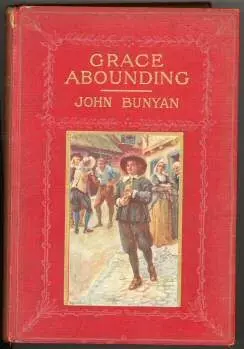
John Bunyan
John Bunyan
BEHIND THE BOOK
This eBook is for the use of anyone anywhere in the United States and most other parts of the world at no cost and with almost no restrictions whatsoever. You may copy it, give it away or re-use it under the terms of the Project Gutenberg License included with this eBook or online at www.gutenberg.org. If you are not located in the United States, you will have to check the laws of the country where you are located before using this eBook. Read the source licence.
The original source file, including credits and licence, is retained by this library. Request an original-format copy at no charge. Please include the book title and Project Gutenberg identifier #39452.
KEEP YOUR CURIOSITY GOING

David Patterson (Spirit) Hatch

David Patterson (Spirit) Hatch

David Patterson (Spirit) Hatch
Coulson Kernahan

Maurice Baring
Frances Wright