THE CLASSIC COLLECTION✦The Jerusalem Sinner Saved; or, Good News for the Vilest of MenCLASSIC FREE BOOKS
The Jerusalem Sinner Saved; or, Good News for the Vilest of Men
John Bunyan
THE CLASSIC COLLECTION · 1909
"The Pilgrim's Progress" by John Bunyan is a religious allegory written in the late 17th century. The narrative chronicles the journey of a character named Christian as he seeks salvation and navigates the challenges of life, symbolized by his passage from the City of Destruction to the Celestial City. This work serves as a discourse on the Christian faith, presenting themes such as redemption, perseverance, and the struggle against sin. The opening of the story introduces us to Christian, who is depicted as a man in turmoil, burdened by the weight of sin and the fear of impending judgment. As he reads a book, presumably the Bible, he becomes increasingly distressed about his fate and confides in his family, who largely regard his concerns with disbelief. As Christian sets out on his pilgrimage, he encounters a character named Evangelist, who guides him towards the wicket gate, marking the beginning of his journey to seek salvation. This portion effectively sets the stage for Christian's struggles and the allegorical nature of his quest as he faces various temptations and obstacles along his path.
Introduction adapted from the source catalogue; source summaries may be automatically generated.
Free to read · English · 99,876 words · No account needed
MAKE TIME FOR A GOOD BOOK
On by default. Untick to stop anonymous reading totals. Each page counts after 10 seconds in view. How this works.
Anonymous counting is on unless you have switched it off.
"I'll take my Bible," said the child,
"And seek the road to heaven;
I'll try to find the Wicket Gate,
And hope to be forgiven.
I wish my aunts would go with me,
But 'tis in vain to ask;
They are so deaf and rather lame,
They'd think it quite a task.
"No! I must go alone, I see,
So I'll not let them know;
Or, like poor Christian's friends, they'll say,
'My dear, you must not go.'
"But I must wait till some grand scheme
Can all their thoughts engage;
And then I'll leave my pleasant home,
And go on pilgrimage."
She had not waited long, before,
One fine autumnal day,
She saw the large old coach arrive,
To take her aunts away.
"We're going out to spend the day,"
The two old ladies said;
"We mean to visit Mrs. Blair--
Poor soul!--she's ill in bed.
"But, Marian, you must stay at home,
For the lady's ill, you see;
You can have your dinner, if you like,
In the large old apple-tree,
And play in the garden all the day,
Quite happy and content."
A few more parting words were said,
And off the ladies went.
The servants, too, were all engaged;
"The day is come at last,"
Said Marian, "but oh, I wish,
My pilgrimage was past."
She knelt beside the apple-tree,
And for God's assistance prayed;
Then, with her basket in her hand,
Forth tripped the little maid.
Behind the house where Marian dwelt,
Far off in the distance, lay
A high steep hill, which the sun at morn
Tinged with its earliest ray.
"Difficulty" was its rightful name,
The child had often thought;
Towards this hill she turned her steps,
With hopeful visions fraught.
The flowers seemed to welcome her,
'Twas a lovely autumn morn,
The little lark sang merrily,
Above the waving corn.
"Ah, little lark, you sing," said she,
"On your early pilgrimage;
I, too, will sing, for pleasant thoughts
Should now my mind engage."
In clear, sweet strains she sang a hymn,
And tripped lightly on her way;
Until a pool of soft, thick mud
Across her pathway lay.
"This is the Slough of Despond," she cried,
But she bravely ventured through;
And safely reached the other side,
But she lost one little shoe.
On an old gray stone she sat her down,
To eat some fruit and bread;
Then took her little Bible out,
And a cheering psalm she read.
Then with fresh hope she journeyed on,
For many miles away;
And she reached the bottom of the hill,
Before the close of day.
Your reading position is saved on this browser. Take it to another device with a library code. Reading pages adapt to text, rather than matching a printed edition.
John Bunyan
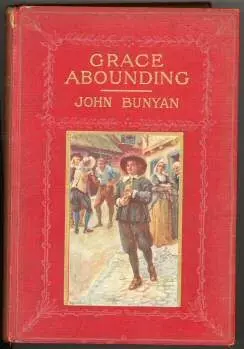
John Bunyan
John Bunyan
BEHIND THE BOOK
This eBook is for the use of anyone anywhere in the United States and most other parts of the world at no cost and with almost no restrictions whatsoever. You may copy it, give it away or re-use it under the terms of the Project Gutenberg License included with this eBook or online at www.gutenberg.org. If you are not located in the United States, you will have to check the laws of the country where you are located before using this eBook. Read the source licence.
The original source file, including credits and licence, is retained by this library. Request an original-format copy at no charge. Please include the book title and Project Gutenberg identifier #39452.
KEEP YOUR CURIOSITY GOING

David Patterson (Spirit) Hatch

David Patterson (Spirit) Hatch

David Patterson (Spirit) Hatch
Coulson Kernahan

Maurice Baring
Frances Wright