THE CLASSIC COLLECTION✦The Jerusalem Sinner Saved; or, Good News for the Vilest of MenCLASSIC FREE BOOKS
The Jerusalem Sinner Saved; or, Good News for the Vilest of Men
John Bunyan
THE CLASSIC COLLECTION · 1909
"The Pilgrim's Progress" by John Bunyan is a religious allegory written in the late 17th century. The narrative chronicles the journey of a character named Christian as he seeks salvation and navigates the challenges of life, symbolized by his passage from the City of Destruction to the Celestial City. This work serves as a discourse on the Christian faith, presenting themes such as redemption, perseverance, and the struggle against sin. The opening of the story introduces us to Christian, who is depicted as a man in turmoil, burdened by the weight of sin and the fear of impending judgment. As he reads a book, presumably the Bible, he becomes increasingly distressed about his fate and confides in his family, who largely regard his concerns with disbelief. As Christian sets out on his pilgrimage, he encounters a character named Evangelist, who guides him towards the wicket gate, marking the beginning of his journey to seek salvation. This portion effectively sets the stage for Christian's struggles and the allegorical nature of his quest as he faces various temptations and obstacles along his path.
Introduction adapted from the source catalogue; source summaries may be automatically generated.
Free to read · English · 99,876 words · No account needed
MAKE TIME FOR A GOOD BOOK
On by default. Untick to stop anonymous reading totals. Each page counts after 10 seconds in view. How this works.
Anonymous counting is on unless you have switched it off.
"Content," said old Honest; "Content," said Christiana; "Content," said Mr. Feeble-mind; and so they said all. Now, you must think it was eventide by that they got to the outside of the town; but Mr. Great-heart knew the way to the old man's house. So thither they came, and he called at the door; and the old man within knew his tongue so soon as ever he heard it; so he opened the door, and they all came in. Then said Mnason, their host, "How far have ye come to-day?"
So they said, "From the house of Gaius, our friend."
"I promise you," said he, "you have come a good stitch: you may well be weary. Sit down." So they sat down.
GREAT. Then said their guide, "Come, what cheer, sirs? I dare say you
are welcome to my friend."
MNAS. "I also," said Mr. Mnason, "do bid you welcome; and whatever you want, do but say, and we will do what we can to get it for you."
HON. Our great want a while since was a resting-place and good company, and now I hope we have both.
MNAS. For resting-place, you see what it is; but for good company, that will appear in the trial.
GREAT. "Well," said Great-heart, "will you have the pilgrims up into
their lodging?"
MNAS. "I will," said Mr. Mnason. So he had them up to their several places, and also showed them a very fair dining-room, where they might be, and sup together, until time should come to go to rest.
Now, when they were set in their places, and were a little cheery after their journey, Mr. Honest asked his landlord if there were any store of good people in the town.
MNAS. We have a few; for, indeed, they are but a few when compared with
them on the other side.
HON. But how shall we do to see some of them? for the sight of good men to them that are going on pilgrimage is like the appearing of the moon and stars to them that are sailing upon the seas.
[Sidenote: FRIENDS CALL ON THE PILGRIMS]
MNAS. Then Mr. Mnason stamped with his foot, and his daughter Grace came up. So he said unto her, "Grace, go you, tell my friends, Mr. Contrite, Mr. Holy-man, Mr. Love-saint, Mr. Dare-not-lie, and Mr. Penitent, that I have a friend or two at my house who have a mind this evening to see them." So Grace went to call them, and they came; and, after salutation made, they sat down together at the table.
Your reading position is saved on this browser. Take it to another device with a library code. Reading pages adapt to text, rather than matching a printed edition.
John Bunyan
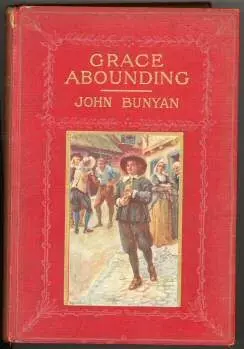
John Bunyan
John Bunyan
BEHIND THE BOOK
This eBook is for the use of anyone anywhere in the United States and most other parts of the world at no cost and with almost no restrictions whatsoever. You may copy it, give it away or re-use it under the terms of the Project Gutenberg License included with this eBook or online at www.gutenberg.org. If you are not located in the United States, you will have to check the laws of the country where you are located before using this eBook. Read the source licence.
The original source file, including credits and licence, is retained by this library. Request an original-format copy at no charge. Please include the book title and Project Gutenberg identifier #39452.
KEEP YOUR CURIOSITY GOING

David Patterson (Spirit) Hatch

David Patterson (Spirit) Hatch

David Patterson (Spirit) Hatch
Coulson Kernahan

Maurice Baring
Frances Wright