THE CLASSIC COLLECTION✦The Jerusalem Sinner Saved; or, Good News for the Vilest of MenCLASSIC FREE BOOKS
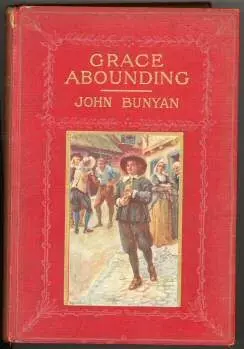
The Jerusalem Sinner Saved; or, Good News for the Vilest of Men
John Bunyan
THE CLASSIC COLLECTION · 1909
"The Pilgrim's Progress" by John Bunyan is a religious allegory written in the late 17th century. The narrative chronicles the journey of a character named Christian as he seeks salvation and navigates the challenges of life, symbolized by his passage from the City of Destruction to the Celestial City. This work serves as a discourse on the Christian faith, presenting themes such as redemption, perseverance, and the struggle against sin. The opening of the story introduces us to Christian, who is depicted as a man in turmoil, burdened by the weight of sin and the fear of impending judgment. As he reads a book, presumably the Bible, he becomes increasingly distressed about his fate and confides in his family, who largely regard his concerns with disbelief. As Christian sets out on his pilgrimage, he encounters a character named Evangelist, who guides him towards the wicket gate, marking the beginning of his journey to seek salvation. This portion effectively sets the stage for Christian's struggles and the allegorical nature of his quest as he faces various temptations and obstacles along his path.
Introduction adapted from the source catalogue; source summaries may be automatically generated.
Free to read · English · 99,876 words · No account needed
MAKE TIME FOR A GOOD BOOK
On by default. Untick to stop anonymous reading totals. Each page counts after 10 seconds in view. How this works.
Anonymous counting is on unless you have switched it off.
GREAT. "But, brother," said Mr. Great-heart, "I have it in my work to comfort the feeble-minded and to support the weak. You must needs go along with us: we will wait for you; we will lend you our help; we will deny ourselves of some things, for your sake; we will not enter into doubtful questions before you! we will be made all things to you, rather than you shall be left behind."
Now, all this while they were at Gaius's door, and, behold, as they were thus in the heat of their discourse, Mr. Ready-to-halt came by, with his crutches in his hands; and he also was going on pilgrimage.
FEEBLE. Then said Mr. Feeble-mind to him, "How camest thou hither? I was but now complaining that I had not a suitable companion, but thou art according to my wish. Welcome, welcome, good Mr. Ready-to-halt; I hope thou and I may be some help."
READY. "I shall be glad of thy company," said the other; "and, good Mr. Feeble-mind, rather than we will part, since we are thus happily met, I will lend thee one of my crutches."
FEEBLE. "Nay," said he, "though I thank thee for thy good-will, I am not inclined to halt before I am lame. Howbeit, I think, when occasion is, it may help me against a dog."
READY. If either myself or my crutches can do thee a pleasure, we are both at thy command, good Mr. Feeble-mind.
Thus, therefore, they went on. Mr. Great-heart and Mr. Honest went before, Christiana and her children went next, and Mr. Feeble-mind came behind, and Mr. Ready-to-halt with his crutches. Then said Mr. Honest,
HON. Pray, sir, now that we are upon the road, tell us some profitable things of some that have gone on pilgrimage before us.
[Sidenote: REVIEWS OTHER PILGRIMAGES]
GREAT. With a good will. I suppose you have heard how Christian of old did meet with Apollyon in the Valley of Humiliation, and also what hard work he had to go through the Valley of the Shadow of Death. Also I think you cannot but have heard how Faithful was put to it by Madam Wanton, with Adam the first, with one Discontent, and Shame; four as deceitful villains as a man can meet with upon the road.
HON. Yes, I believe I have heard of all this; but, indeed, good Faithful was hardest put to it with Shame: he was an unwearied one.
GREAT. Ay; for, as the pilgrim well said, he of all men had the wrong
name.
HON. But pray, sir, where was it that Christian and Faithful met Talkative? That same was also a notable one.
Your reading position is saved on this browser. Take it to another device with a library code. Reading pages adapt to text, rather than matching a printed edition.
John Bunyan
John Bunyan
John Bunyan
BEHIND THE BOOK
This eBook is for the use of anyone anywhere in the United States and most other parts of the world at no cost and with almost no restrictions whatsoever. You may copy it, give it away or re-use it under the terms of the Project Gutenberg License included with this eBook or online at www.gutenberg.org. If you are not located in the United States, you will have to check the laws of the country where you are located before using this eBook. Read the source licence.
The original source file, including credits and licence, is retained by this library. Request an original-format copy at no charge. Please include the book title and Project Gutenberg identifier #39452.
KEEP YOUR CURIOSITY GOING

David Patterson (Spirit) Hatch

David Patterson (Spirit) Hatch

David Patterson (Spirit) Hatch
Coulson Kernahan

Maurice Baring
Frances Wright