THE CLASSIC COLLECTION✦The Jerusalem Sinner Saved; or, Good News for the Vilest of MenCLASSIC FREE BOOKS
The Jerusalem Sinner Saved; or, Good News for the Vilest of Men
John Bunyan
THE CLASSIC COLLECTION · 1909
"The Pilgrim's Progress" by John Bunyan is a religious allegory written in the late 17th century. The narrative chronicles the journey of a character named Christian as he seeks salvation and navigates the challenges of life, symbolized by his passage from the City of Destruction to the Celestial City. This work serves as a discourse on the Christian faith, presenting themes such as redemption, perseverance, and the struggle against sin. The opening of the story introduces us to Christian, who is depicted as a man in turmoil, burdened by the weight of sin and the fear of impending judgment. As he reads a book, presumably the Bible, he becomes increasingly distressed about his fate and confides in his family, who largely regard his concerns with disbelief. As Christian sets out on his pilgrimage, he encounters a character named Evangelist, who guides him towards the wicket gate, marking the beginning of his journey to seek salvation. This portion effectively sets the stage for Christian's struggles and the allegorical nature of his quest as he faces various temptations and obstacles along his path.
Introduction adapted from the source catalogue; source summaries may be automatically generated.
Free to read · English · 99,876 words · No account needed
MAKE TIME FOR A GOOD BOOK
On by default. Untick to stop anonymous reading totals. Each page counts after 10 seconds in view. How this works.
Anonymous counting is on unless you have switched it off.
GREAT. I did so; but I could very well bear it, for men of my calling are oftentimes entrusted with the conduct of such as he was.
HON. Well, then, pray let us hear a little of him, and how he managed himself under your conduct.
GREAT. Why, he was always afraid that he should come short of whither he had a desire to go. Everything frightened him that he heard anybody speak of, if it had but the least appearance of opposition in it. I hear that he lay roaring at the Slough of Despond for above a month together; nor durst he, for all he saw several go over before him, venture, though they, many of them, offered to lend him their hand. He would not go back again neither. The Celestial City, he said, he should die if he came not to it; and yet was discouraged at every difficulty, and stumbled at every straw that anybody cast in his way. Well, after he had lain at the Slough of Despond a great while, as I have told you, one sunshine morning, I don't know how, he ventured, and so got over; but, when he was over, he would scarce believe it. He had, I think, a Slough of Despond in his mind, a slough that he carried everywhere with him, or else he could never have been as he was. So he came up to the gate (you know what I mean) that stands at the head of this way, and here also he stood a good while before he would venture to knock. When the gate was opened, he would give back, and give place to others, and say that he was not worthy. For, for all he got before some to the gate, yet many of them went in before him. There the poor man would stand shaking and shrinking: I dare say it would have pitied one's heart to have seen him. Nor would he go back again. At last, he took the hammer that hanged on the gate in his hand, and gave a small rap or two; then One opened to him, but he shrank back as before. He that opened stepped out after him, and said, "Thou trembling one, what wantest thou?" With that, he fell down to the ground. He that spoke to him wondered to see him so faint; so He said to him, "Peace be to thee: up, for I have set open the door to thee; come in, for thou are blessed." With that, he got up, and went in trembling; and when he was in, he was ashamed to show his face. Well, after he had been entertained there a while, as you know how the manner is, he was bid go on his way, and also told the way he should take. So he came till he came to our house; but as he behaved himself at the gate, so he did at my master the Interpreter's door. He lay thereabout in the cold a good while before he would venture to call: yet he would not go back; and the nights were long and cold then. Nay, he had a note of need in his bosom to my master, to receive him and grant him the comfort of his house, and also to allow him a stout and valiant conductor, because he was himself so chicken-hearted a man; and yet, for all that, he was afraid to call at the door. So he lay up and down thereabouts, till, poor man, he was almost starved; yea, so great was his fear, though he had seen several others for knocking get in, yet he was afraid to venture. At last, I think I looked out of the window, and perceiving a man to be up and down about the door, I went out to him, and asked what he was; but, poor man, the water stood in his eyes; so I perceived what he wanted. I went therefore in, and told it in the house, and we showed the things to our Lord: so he sent me out again, to entreat him to come in; but I dare say I had hard work to do it. At last he came in; and I will say that for my Lord, he carried it wonderful lovingly to him. There were but few good bits at the table, but some of it was laid upon his trencher. Then he presented the note; and my Lord looked thereon, and said his desire should be granted. So, when he had been there a good while, he seemed to get some heart, and to be a little more comfortable. For my master, you must know, is one of very tender heart, specially to them that are afraid; wherefore he carried it so towards him as might tend most to his encouragement. Well, when he had a sight of the things of the place, and was ready to take his journey to go to the City, my Lord, as he did to Christian before, gave him a bottle of spirits, and some comfortable things to eat. Thus we set forward, and I went before him; but the man was but of few words, only he would sigh aloud.
Your reading position is saved on this browser. Take it to another device with a library code. Reading pages adapt to text, rather than matching a printed edition.
John Bunyan
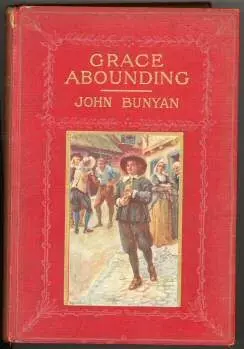
John Bunyan
John Bunyan
BEHIND THE BOOK
This eBook is for the use of anyone anywhere in the United States and most other parts of the world at no cost and with almost no restrictions whatsoever. You may copy it, give it away or re-use it under the terms of the Project Gutenberg License included with this eBook or online at www.gutenberg.org. If you are not located in the United States, you will have to check the laws of the country where you are located before using this eBook. Read the source licence.
The original source file, including credits and licence, is retained by this library. Request an original-format copy at no charge. Please include the book title and Project Gutenberg identifier #39452.
KEEP YOUR CURIOSITY GOING

David Patterson (Spirit) Hatch

David Patterson (Spirit) Hatch

David Patterson (Spirit) Hatch
Coulson Kernahan

Maurice Baring
Frances Wright