THE CLASSIC COLLECTION✦An outlaw’s diary: the CommuneCLASSIC FREE BOOKS
An outlaw’s diary: the Commune
Cécile Tormay
THE CLASSIC COLLECTION · 1866
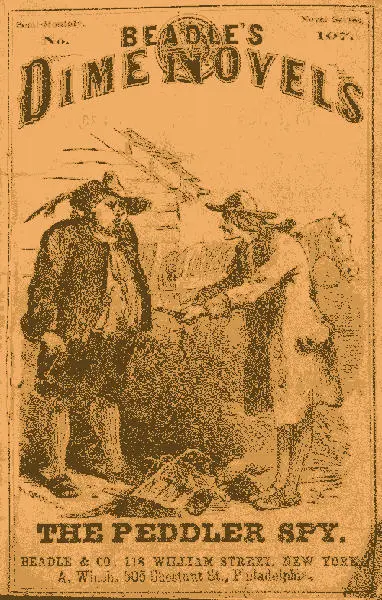
"The Peddler Spy; or, Dutchmen and Yankees. A Tale of the Capture of Good Hope" by W. J. Hamilton is a historical novel written in the mid-19th century. The story explores early colonial tensions between Dutch settlers and English Yankees along the Connecticut River, particularly surrounding a fort known as "The House of Good Hope." The main character, Boston Bainbridge, is a crafty hawker who navigates these cultural clashes, engaging in clever trades while collecting intel that could have deeper implications for the conflict between the two groups. The opening of the narrative introduces readers to the historical setting and the rivalry between the Dutch and the Yankees through a blend of humor and sharp observation of character traits. Bainbridge arrives at Good Hope, eager to peddle his wares to the unsuspecting Dutchmen, who are easily outsmarted in their dealings with him. The narrative describes various interactions showcasing Bainbridge's shrewdness as he sells subpar merchandise while hinting at underlying tensions that could lead to conflict. This backdrop sets the stage for the unfolding drama as tensions escalate and alliances are tested, particularly through romantic entanglements involving female characters, suggesting the personal stakes amidst the larger cultural clash.
Introduction adapted from the source catalogue; source summaries may be automatically generated.
Free to read · English · 33,688 words · No account needed
MAKE TIME FOR A GOOD BOOK
On by default. Untick to stop anonymous reading totals. Each page counts after 10 seconds in view. How this works.
Anonymous counting is on unless you have switched it off.
“You look a little out,” said Hans, “unt see if dem Yankees out dar’, Paul Swedlepipe.” The Dutchmen, as if the occasion called for it, now talked in English.
“Vat you dink, Hans Drinker? You dells me vas I must do? No. You go look mit your own eyes, schoost like pung in a peer barrel.”
“I pe de oldest; I commands dis house,” said Ten Eyck.
“Don’t you vant to puy a horse?” demanded Paul, in a threatening tone, by way of reminding his adversary of the battle they had fought in the horse-corral. Ten Eyck subsided instanter.
“I commands dish house,” asserted Drinker, “by orders mit te commandant.”
“You’s a liar,” said Ten Eyck.
“So he is,” said Paul, “and you’s a pigger liar.”
At this moment a sound was heard like the ripping up of a bark roof. All three cast their eyes upward.
“Vat’s dat?” asked Ten Eyck.
“You go and see,” replied Paul.
“I’ll see you in—Amsterdam first,” answered the other, stoutly. “You go, Hans Drinker.”
“I won’t,” said Hans. He lighted his pipe, and sat down to smoke. Paul and Ten Eyck followed his example.
The ripping of boards continued, and something could be heard dropping
upon the floor above.
“Something cooms into dis ’ous’,” quoth Hans, taking his pipe from his
mouth to say it.
“Dink so myself,” rejoined Paul.
“Yaw, den vas shall happen?”
“You go see.”
“Nix—nay—no! You go, Ten Eyck.”
“Nein!” thundered Ten Eyck, puffing away with great vigor at the long pipe. As he spoke, the doorway was darkened, and four of the detested Windsor men sprung into the room. They had mounted the roof, torn off the bark roofing, and dropped into the garret.
“Surrender!” cried the foremost, as he drew near. “No use of fighting. Who commands here?”
“Me!” burst simultaneously from three pair of lips.
“All of you, eh? A corporate body, this. Come, boys, let’s bind these fellows fast and leave them.”
With this benevolent intention he approached Hans Drinker. When he came near enough, it suddenly occurred to the Dutchman that it would be no more than his duty to fight a little. Accordingly, he unexpectedly let go his right fist, taking the Yankee under the ear. This prowess excited the others to feats of valor. Paul seized a stool upon which he had been seated, and hurled it at the head of his adversary. Ten Eyck grabbed the poker from the wide fireplace, and attacked his adversary with great zeal.
Your reading position is saved on this browser. Take it to another device with a library code. Reading pages adapt to text, rather than matching a printed edition.
BEHIND THE BOOK
This eBook is for the use of anyone anywhere in the United States and most other parts of the world at no cost and with almost no restrictions whatsoever. You may copy it, give it away or re-use it under the terms of the Project Gutenberg License included with this eBook or online at www.gutenberg.org. If you are not located in the United States, you will have to check the laws of the country where you are located before using this eBook. Read the source licence.
The original source file, including credits and licence, is retained by this library. Request an original-format copy at no charge. Please include the book title and Project Gutenberg identifier #55772.
KEEP YOUR CURIOSITY GOING
Cécile Tormay

Moritz Busch
Coulson Kernahan
John L. Ransom

Maurice Baring
Frances Wright