THE CLASSIC COLLECTION✦An outlaw’s diary: the CommuneCLASSIC FREE BOOKS
An outlaw’s diary: the Commune
Cécile Tormay
THE CLASSIC COLLECTION · 1907
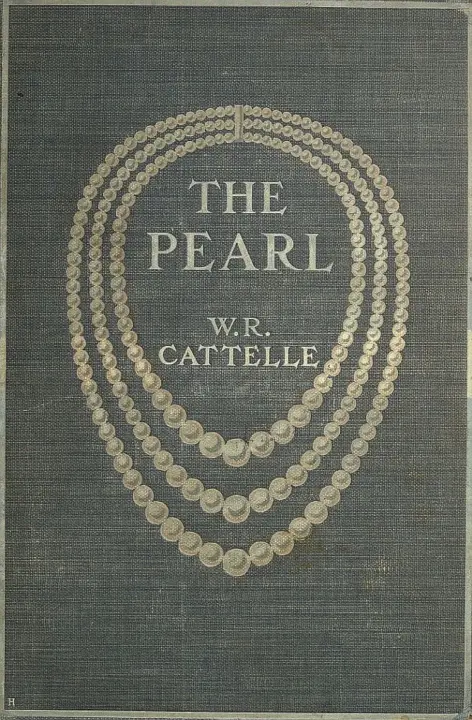
"The Pearl, its story, its charm, and its value" by Wallis Richard Cattelle is a comprehensive exploration of pearls written in the early 20th century. This work delves into the history, allure, and valuation of pearls, exploring their significance across cultures and their journey from the depths of the ocean to becoming coveted treasures. The text combines historical accounts with practical information on pearl quality and market trends, making it appealing to gem enthusiasts and historians alike. At the start of the book, Cattelle paints a vivid picture of the sea's mysterious beauty and the fascinating world of pearls beneath its surface. He introduces readers to the symbolic relationship between pearls and wealth, emphasizing the allure they have held throughout history, especially among royalty and the wealthy. The opening remarks on the natural origins of pearls set the stage for the detailed examination of their value, craftsmanship, and the intricacies involved in pearl diving and trading that unfolds throughout the subsequent chapters.
Introduction adapted from the source catalogue; source summaries may be automatically generated.
Free to read · English · 59,546 words · No account needed
MAKE TIME FOR A GOOD BOOK
On by default. Untick to stop anonymous reading totals. Each page counts after 10 seconds in view. How this works.
Anonymous counting is on unless you have switched it off.
In "King John" Elinor speaking to Constance of Arthur, says, "Draw those heaven moving pearls from his poor eyes;" and in "King Lear," one of the gentlemen, speaking of the Queen of France when she received the news he carried, describes her mood thus:
Those happy smilets,
That played on her ripe lip, seemed not to know
What guests were in her eyes, which parted thence,
As pearls from diamonds dropp'd.
In "Midsummer Night's Dream," Lysander says to Helen:
To-morrow night, when Phœbe doth behold
Her silver visage in the wat'ry glass,
Decking with liquid pearl the bladed grass.
Among his recognitions of pearls as a sign of the luxury of wealth and high position, he makes a lord say, in the "Taming of the Shrew,"
Or wilt thou ride? Thy horses shall be trapp'd Their harness studded all with gold and pearl.
And in "King Henry V," the King while deploring the sorrows incident to
kingship, says:
'Tis not
The intertissued robe of gold and pearl
That beats upon the high shore of this world.
These two quotations indicate that the Roman custom of decorating robes and even the harness of horses with pearls was followed in Shakespeare's day by the nobles.
A line suggestive of the high-esteem in which the pearl was held in his day, and often quoted, occurs in Othello's grand but heart-broken self-denunciation just before he stabs himself:
Of one, whose hand
Like the base Indian, threw a pearl away,
Richer than all his tribe.
It is evident also that stories were current then of the western Indian's ignorant prodigality in the disposition of things common to him but very precious among more enlightened people.
In "King Richard III," Duke Clarence sees in his dream of drowning, "Wedges of gold, great anchors, heaps of pearl."
Several times the great dramatist puts the gem in somewhat grewsome setting. In "A Sea Dirge" however, the bare horror of the idea which grins at one in similar connections, is transformed by the poetry in which it is draped:
These are pearls that were his eyes:
Nothing of him that doth fade,
But doth suffer a sea-change
Into something rich and strange.
A favorite use of the sea-gem by the lighter poets is to adorn their images of physical beauty. In "Don Juan," Byron, describing one of the Turk's houris in the harem, says:
Was slumbering with soft breath,
And lips apart, which show'd the pearls beneath,
and another poet writes similarly:
Those cherries fairly do enclose
Of orient pearls a double row.
Shelley confines his references to pearls almost entirely to descriptions of Nature dew-bedecked, as in the "Revolt of Islam,"
Your reading position is saved on this browser. Take it to another device with a library code. Reading pages adapt to text, rather than matching a printed edition.
BEHIND THE BOOK
This eBook is for the use of anyone anywhere in the United States and most other parts of the world at no cost and with almost no restrictions whatsoever. You may copy it, give it away or re-use it under the terms of the Project Gutenberg License included with this eBook or online at www.gutenberg.org. If you are not located in the United States, you will have to check the laws of the country where you are located before using this eBook. Read the source licence.
The original source file, including credits and licence, is retained by this library. Request an original-format copy at no charge. Please include the book title and Project Gutenberg identifier #63623.
KEEP YOUR CURIOSITY GOING
Cécile Tormay

Moritz Busch
John L. Ransom
Frances Wright
Cécile Tormay

Mabel Potter Daggett