THE CLASSIC COLLECTION✦An outlaw’s diary: the CommuneCLASSIC FREE BOOKS
An outlaw’s diary: the Commune
Cécile Tormay
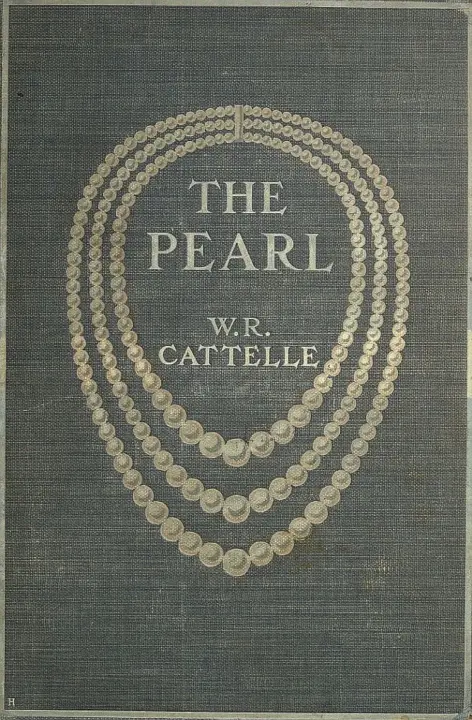
THE CLASSIC COLLECTION · 1907
"The Pearl, its story, its charm, and its value" by Wallis Richard Cattelle is a comprehensive exploration of pearls written in the early 20th century. This work delves into the history, allure, and valuation of pearls, exploring their significance across cultures and their journey from the depths of the ocean to becoming coveted treasures. The text combines historical accounts with practical information on pearl quality and market trends, making it appealing to gem enthusiasts and historians alike. At the start of the book, Cattelle paints a vivid picture of the sea's mysterious beauty and the fascinating world of pearls beneath its surface. He introduces readers to the symbolic relationship between pearls and wealth, emphasizing the allure they have held throughout history, especially among royalty and the wealthy. The opening remarks on the natural origins of pearls set the stage for the detailed examination of their value, craftsmanship, and the intricacies involved in pearl diving and trading that unfolds throughout the subsequent chapters.
Introduction adapted from the source catalogue; source summaries may be automatically generated.
Free to read · English · 59,546 words · No account needed
MAKE TIME FOR A GOOD BOOK
On by default. Untick to stop anonymous reading totals. Each page counts after 10 seconds in view. How this works.
Anonymous counting is on unless you have switched it off.
Some of the great poets, notably Tennyson, apparently confuse the gem with its mother-of-pearl, or refer to the latter only when they speak of pearl. In his "Recollections of the Arabian Nights," however, Tennyson in describing one of his beauties evidently refers to the gem:
And a brow of pearl
Tressed with redolent ebony.
Writing of the mermaid, the lines are more suggestive of the shell
nacre:
Combing her hair
Under the sea,
In a golden curl
With a comb of pearl.
Again in a sonnet, he evidently refers to mother-of-pearl when he says:
All night through archways of the bridgèd pearl, And portals of pure silver, walks the moon.
This indiscriminate use of the gem's name to appropriate its pearly characteristics is a common poetic license. In Ben Jonson's "Hymn to Diana," he bids her,
Lay thy bow of pearl apart.
Sometimes metaphor is worse mixed, as when Milton in "Paradise Lost" describes the waters above the firmament about the gate of Heaven thus:
And underneath a bright sea flowed
Of jasper, or of liquid pearl.
In this poem of gorgeous description, the author makes several allusions to the gem and some of them, especially those in his word paintings of scenes in Eden, are poetically beautiful and true. One delightful to the eye of the mind,
How from that sapphire fount the crispèd brooks
Rolling on orient pearls and sands of gold,
and another in the description of morning in Eden, equally beautiful though it takes more license:
Now Morn, her rosy steps in th' eastern clime
Advancing, sow'd the earth with orient pearl.
In his "Epitaph on the Marchioness of Winchester," a couplet shows that he was familiar with the superstition of sorrow connected with them:
And those pearls of dew she wears,
Proove to be presaging tears.
Herrick also associated pearls and tears though more happily as in
"Corinna's Maying."
Besides, the childhood of the day has kept,
Against you come, some orient pearls unwept.
The same poet makes charming reference to pearls in his poem entitled:
"To Daffodils."
Or as the pearls of morning dew
Ne'er to be found again.
Shakespeare made frequent reference to the gem, sometimes to illustrate the magnificence of wealth and station but more frequently in connection with dew and tears. Oberon says:
And that same dew, which some time on the buds Was wont to swell like round and orient pearls.
King Richard III. when he argues with Queen Elizabeth for her daughter's hand in marriage, promises with smooth and brazen villainy to so offset the wrongs he had done her, that:
The liquid drops of tears that you have shed
Shall come again, transformed to orient pearls.
Your reading position is saved on this browser. Take it to another device with a library code. Reading pages adapt to text, rather than matching a printed edition.
BEHIND THE BOOK
This eBook is for the use of anyone anywhere in the United States and most other parts of the world at no cost and with almost no restrictions whatsoever. You may copy it, give it away or re-use it under the terms of the Project Gutenberg License included with this eBook or online at www.gutenberg.org. If you are not located in the United States, you will have to check the laws of the country where you are located before using this eBook. Read the source licence.
The original source file, including credits and licence, is retained by this library. Request an original-format copy at no charge. Please include the book title and Project Gutenberg identifier #63623.
KEEP YOUR CURIOSITY GOING
Cécile Tormay

Moritz Busch
John L. Ransom
Frances Wright
Cécile Tormay

Mabel Potter Daggett