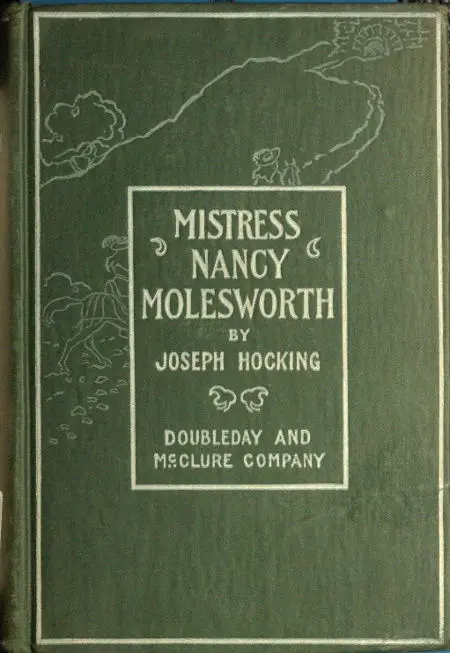
Mistress Nancy Molesworth: A Tale of Adventure
Joseph Hocking
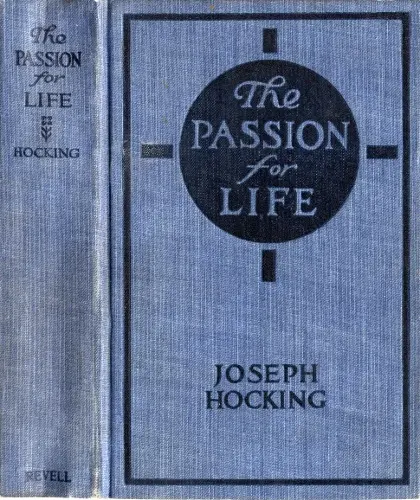
THE CLASSIC COLLECTION · 1916
"The Passion for Life" by Joseph Hocking is a novel written in the early 20th century. The story revolves around Francis Erskine, a barrister who, after receiving a terminal diagnosis, decides to retreat to a wooden hut in the seaside village of St. Issey, Cornwall, to live out his last days. Throughout the book, themes of life and death, the search for meaning, and the contrast between light and shadow in existence are explored. The opening of the novel introduces us to Francis Erskine's restless state of mind as he contemplates his life and impending death. After receiving the distressing news from his doctor, he resolves to abandon his London life and relocate to Cornwall for a more peaceful existence. Accompanied by his loyal servant, Simpson, he arrives at St. Issey, where he begins to reflect on his thoughts and encounters the local atmosphere. As he explores his new surroundings and wrestles with profound questions about life and spirituality, a series of visitors—local residents and a vicar—bring him into the fold of village life while hinting at an intriguing mystery surrounding the place he now calls home.
Introduction adapted from the source catalogue; source summaries may be automatically generated.
Free to read · English · 111,335 words · No account needed
MAKE TIME FOR A GOOD BOOK
On by default. Untick to stop anonymous reading totals. Each page counts after 10 seconds in view. How this works.
Anonymous counting is on unless you have switched it off.
"Is that altogether true?" was my reply, for I was led to take up an attitude of the soundness of which I was far from being convinced. "Is not France literally sick and tired of the atheism which surged over the nation at the time of the Revolution? France no longer glories in hard unbelief, and, as far as I know, the French people are simply longing for faith, and, for that matter, are going back to faith. Not, perhaps, the faith which the Revolution destroyed, but to something deeper, diviner."
She seemed thoughtful, and for some time neither of us spoke. Then she burst out laughing merrily.
"Don't things seem reversed?" she said. "Here are you, a scholar of Oxford, and a clever lawyer, upholding tradition, imagination, intuition, superstition, while I, an ignorant girl, am discarding it all."
"Perhaps," I replied, "that is because life is long to you, short to me. When one comes to what seems the end of things, one looks at life differently. There," I went on, for at that moment we had passed a lad with his arm round a girl's waist, "that boy lives in heaven. He is with the girl he loves. Suppose you tried to convince that boy and girl there was no such thing as romance, would they believe you?"
"Perhaps not," she replied; "but I could take you down the village yonder, and show you men and women who, twenty years ago, were just as romantic as those two cooing doves; and to-day the men loaf round the village lanes, smoking, or, perhaps, are in the public-house drinking; while the women are slatternly, discontented, standing at the wash-tub, or scrubbing out cottages. Where now is the romance, or, for that matter, the love?"
"Then you don't believe in love either?"
She was silent, and I watched her face closely, and again I was struck by her appearance. Yes, no doubt, Isabella Lethbridge was more than ordinarily handsome. Her features, without being beautiful, were fine. The flash of her eyes betokened intelligence beyond the ordinary. At that moment, too, there was a look in them which I had not seen before--a kind of longing, a sense of unsatisfaction, something wistful.
"Love?" she repeated. "No, I don't think I believe in it."
"Surely," I said, "that is going a little bit too far."
"Yes, perhaps it is," was her answer. "There is love--the love of a mother for her child. You see it everywhere. A lion will fight for her whelps, a hen will protect her chickens. But I suppose you were meaning the love which man has for a woman, and woman for man?"
Your reading position is saved on this browser. Take it to another device with a library code. Reading pages adapt to text, rather than matching a printed edition.
Joseph Hocking
Joseph Hocking
Joseph Hocking
Joseph Hocking
BEHIND THE BOOK
This eBook is for the use of anyone anywhere in the United States and most other parts of the world at no cost and with almost no restrictions whatsoever. You may copy it, give it away or re-use it under the terms of the Project Gutenberg License included with this eBook or online at www.gutenberg.org. If you are not located in the United States, you will have to check the laws of the country where you are located before using this eBook. Read the source licence.
The original source file, including credits and licence, is retained by this library. Request an original-format copy at no charge. Please include the book title and Project Gutenberg identifier #40102.
KEEP YOUR CURIOSITY GOING
Coulson Kernahan

Maurice Baring
Frances Wright
Cécile Tormay

Frederic Jesup Stimson

W. H. P. (William Henry Pope) Jarvis