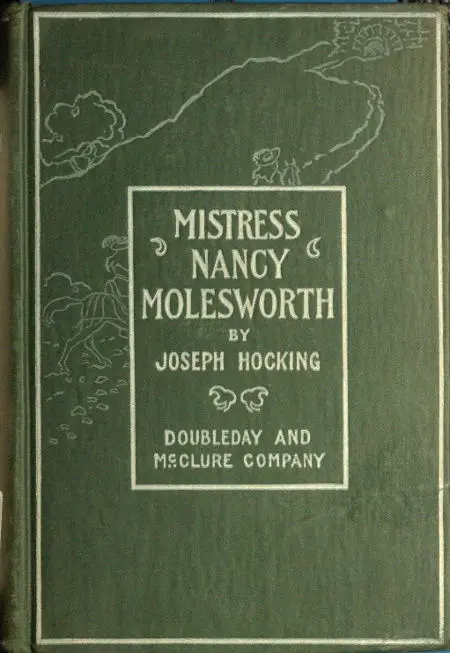
Mistress Nancy Molesworth: A Tale of Adventure
Joseph Hocking
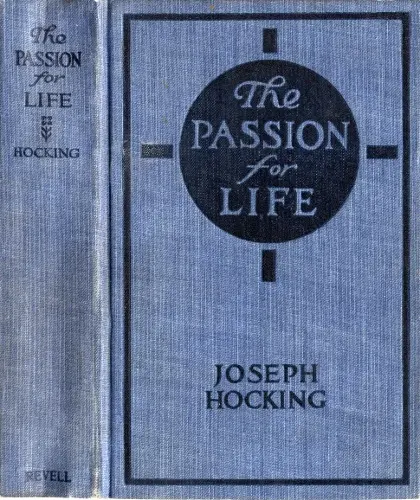
THE CLASSIC COLLECTION · 1916
"The Passion for Life" by Joseph Hocking is a novel written in the early 20th century. The story revolves around Francis Erskine, a barrister who, after receiving a terminal diagnosis, decides to retreat to a wooden hut in the seaside village of St. Issey, Cornwall, to live out his last days. Throughout the book, themes of life and death, the search for meaning, and the contrast between light and shadow in existence are explored. The opening of the novel introduces us to Francis Erskine's restless state of mind as he contemplates his life and impending death. After receiving the distressing news from his doctor, he resolves to abandon his London life and relocate to Cornwall for a more peaceful existence. Accompanied by his loyal servant, Simpson, he arrives at St. Issey, where he begins to reflect on his thoughts and encounters the local atmosphere. As he explores his new surroundings and wrestles with profound questions about life and spirituality, a series of visitors—local residents and a vicar—bring him into the fold of village life while hinting at an intriguing mystery surrounding the place he now calls home.
Introduction adapted from the source catalogue; source summaries may be automatically generated.
Free to read · English · 111,335 words · No account needed
MAKE TIME FOR A GOOD BOOK
On by default. Untick to stop anonymous reading totals. Each page counts after 10 seconds in view. How this works.
Anonymous counting is on unless you have switched it off.
Next morning I took a walk into the village, and just as I was entering it saw a group of youths reading a placard on the wall. It was headed by the British Coat of Arms, and contained an appeal from Lord Kitchener for five hundred thousand men. The youths looked at it stolidly. They did not seem to think that it affected them. Farther on I saw a woman brushing the little pathway which led to the front door of her cottage. By this time I had become on friendly terms with many of the people in the village, who spoke of me as "the poor young man, staying up to Father Abraham's hut." They evidently knew why I had come to Cornwall, and looked on me pityingly as I passed by.
"Mornin', sur."
"Good-morning, Mrs. Crantock."
"This es ter'ble news, sur."
"Yes, very terrible."
"I d' think et es judgment from God."
"Why do you think that, Mrs. Crantock?"
"Ah, sur, w've a forgot God, sur. Things be'ant what they used to be, and God's goin' to teach us a lesson."
She was a woman perhaps sixty years of age, and had a patient, kindly face, even although it was not without signs of determination and vigor.
"What reason have you for saying that we have forgotten God?" I asked. I reflected that she was an intelligent woman, and represented the class to which she belonged.
"Ah, sur, I've lived in Cornwall all my life, and I ca'ant 'elp seein' the deffurence between things now and what they used to be."
"Oh," I said, "and how is that?"
"Ah, sur, the young people be'ant the same. Why, sur, when I was a young woman, we didn't spend all our time gaddin' about, like young people do nowadays. We wad'n all for pleasure then. Why, sur, every Sunday mornin' I used to go to seven o'clock prayer-meetin', and there would be thirty or forty of us. The people had'n forgot 'ow to pray then, sur."
"And have they now?" I asked.
"Why, sur, there ed'n no seven o'clock meetin'; we d'ardly ever 'ave prayer-meetin' like we used to. There ed'n nobody to pray, so to speak, and when they do pray, 'tis deffurent. Ah, sur, we 'ad power then. We felt the power, too. As for the Chapel, it was full nearly every Sunday, and nearly everybody went."
"And they don't go now?" I suggested.
"No, sur, they do'ant go now. That is, nothin' like they used to. Young people do'ant seem to have no relish for the House of God."
"What is the reason of it?" I asked.
Your reading position is saved on this browser. Take it to another device with a library code. Reading pages adapt to text, rather than matching a printed edition.
Joseph Hocking
Joseph Hocking
Joseph Hocking
Joseph Hocking
BEHIND THE BOOK
This eBook is for the use of anyone anywhere in the United States and most other parts of the world at no cost and with almost no restrictions whatsoever. You may copy it, give it away or re-use it under the terms of the Project Gutenberg License included with this eBook or online at www.gutenberg.org. If you are not located in the United States, you will have to check the laws of the country where you are located before using this eBook. Read the source licence.
The original source file, including credits and licence, is retained by this library. Request an original-format copy at no charge. Please include the book title and Project Gutenberg identifier #40102.
KEEP YOUR CURIOSITY GOING
Coulson Kernahan

Maurice Baring
Frances Wright
Cécile Tormay

Frederic Jesup Stimson

W. H. P. (William Henry Pope) Jarvis