Mistress Nancy Molesworth: A Tale of Adventure
Joseph Hocking
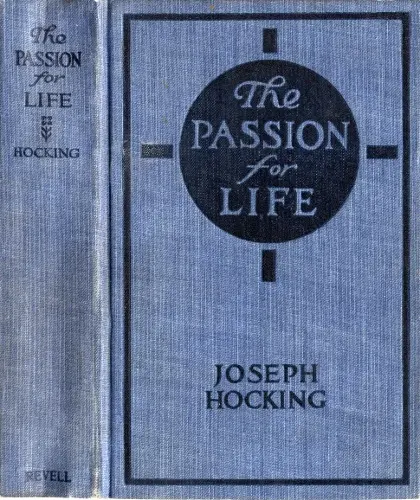
THE CLASSIC COLLECTION · 1916
"The Passion for Life" by Joseph Hocking is a novel written in the early 20th century. The story revolves around Francis Erskine, a barrister who, after receiving a terminal diagnosis, decides to retreat to a wooden hut in the seaside village of St. Issey, Cornwall, to live out his last days. Throughout the book, themes of life and death, the search for meaning, and the contrast between light and shadow in existence are explored. The opening of the novel introduces us to Francis Erskine's restless state of mind as he contemplates his life and impending death. After receiving the distressing news from his doctor, he resolves to abandon his London life and relocate to Cornwall for a more peaceful existence. Accompanied by his loyal servant, Simpson, he arrives at St. Issey, where he begins to reflect on his thoughts and encounters the local atmosphere. As he explores his new surroundings and wrestles with profound questions about life and spirituality, a series of visitors—local residents and a vicar—bring him into the fold of village life while hinting at an intriguing mystery surrounding the place he now calls home.
Introduction adapted from the source catalogue; source summaries may be automatically generated.
Free to read · English · 111,335 words · No account needed
MAKE TIME FOR A GOOD BOOK
On by default. Untick to stop anonymous reading totals. Each page counts after 10 seconds in view. How this works.
Anonymous counting is on unless you have switched it off.
"If you had married, sir--at least, if you had married the woman I did--you would never have had any time for your work."
Next morning I found that all my bags were packed, while a taxi stood at the door. I made no inquiries as to Simpson's intentions or plans. When he went to the booking-office at Paddington I did not even ask him the name of the station for which he was booking. I remember entering a first-class carriage, where Simpson made me as comfortable as possible, after which I saw him talking to the guard, and heard him tell that worthy official that I must not be disturbed if it could possibly be helped.
Of my journey to Cornwall I remember practically nothing. I think I slept a great part of the distance. Towards evening we stopped at a little wayside station, where Simpson appeared and told me I was to alight.
"Have we come to our journey's end?" I asked.
"To the end of the railway journey," was his reply.
"I seem to smell the sea, Simpson," I said.
"Yes, sir, we are close to the sea."
He led the way to the station-yard, where a carriage stood, evidently waiting for me. This I entered, while Simpson, after attending to the luggage, and expressing the hope that he was not inconveniencing me, took his seat by my side. Once in the carriage I began to take more interest in my surroundings. I saw that we were in a beautifully wooded country, while away in the distance rose giant hills and rocky tors. I heard the roll of the waves, too, while the air was like some life-giving elixir. Presently we entered a village, which nestled among the trees.
"Simpson," I asked, "what is the name of this village?"
"This is St. Issey, sir."
"It is a very pretty place."
"Yes, sir; thank you, sir."
I saw a number of cottages, built in higgledy-piggledy fashion, each surrounded by its own garden. I saw the villagers standing gossiping with each other, heard the laughter of little children as they played in the lane, smelt the sweetness and purity of the air. After all, it was good to live.
"Is there no hotel here?" I asked.
"No, sir; no hotel, sir."
I did not ask him where we were going, or how I was to be accommodated. After all, it was not worth while. One place was as good as another. We passed some lodge gates, which evidently appertained to a big house, and I noted the great granite pillars and the heavy palisading.
"The Squire of the parish lives there, I suppose?"
Your reading position is saved on this browser. Take it to another device with a library code. Reading pages adapt to text, rather than matching a printed edition.
Joseph Hocking
Joseph Hocking
Joseph Hocking
Joseph Hocking
BEHIND THE BOOK
This eBook is for the use of anyone anywhere in the United States and most other parts of the world at no cost and with almost no restrictions whatsoever. You may copy it, give it away or re-use it under the terms of the Project Gutenberg License included with this eBook or online at www.gutenberg.org. If you are not located in the United States, you will have to check the laws of the country where you are located before using this eBook. Read the source licence.
The original source file, including credits and licence, is retained by this library. Request an original-format copy at no charge. Please include the book title and Project Gutenberg identifier #40102.
KEEP YOUR CURIOSITY GOING
Coulson Kernahan

Maurice Baring
Frances Wright
Cécile Tormay

Frederic Jesup Stimson

W. H. P. (William Henry Pope) Jarvis