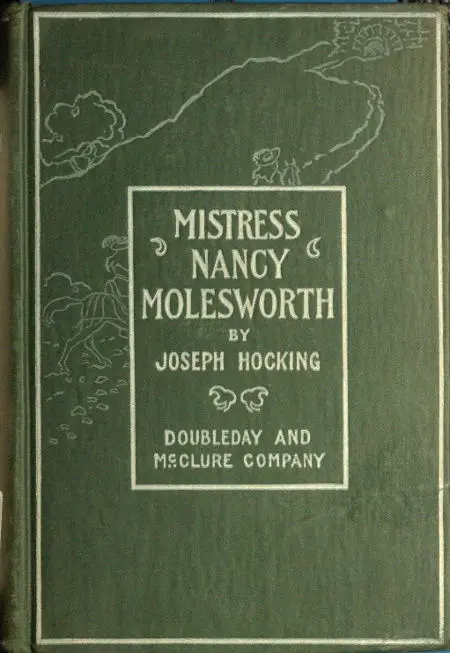
Mistress Nancy Molesworth: A Tale of Adventure
Joseph Hocking
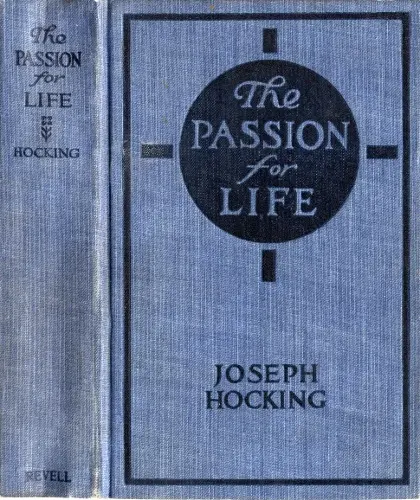
THE CLASSIC COLLECTION · 1916
"The Passion for Life" by Joseph Hocking is a novel written in the early 20th century. The story revolves around Francis Erskine, a barrister who, after receiving a terminal diagnosis, decides to retreat to a wooden hut in the seaside village of St. Issey, Cornwall, to live out his last days. Throughout the book, themes of life and death, the search for meaning, and the contrast between light and shadow in existence are explored. The opening of the novel introduces us to Francis Erskine's restless state of mind as he contemplates his life and impending death. After receiving the distressing news from his doctor, he resolves to abandon his London life and relocate to Cornwall for a more peaceful existence. Accompanied by his loyal servant, Simpson, he arrives at St. Issey, where he begins to reflect on his thoughts and encounters the local atmosphere. As he explores his new surroundings and wrestles with profound questions about life and spirituality, a series of visitors—local residents and a vicar—bring him into the fold of village life while hinting at an intriguing mystery surrounding the place he now calls home.
Introduction adapted from the source catalogue; source summaries may be automatically generated.
Free to read · English · 111,335 words · No account needed
MAKE TIME FOR A GOOD BOOK
On by default. Untick to stop anonymous reading totals. Each page counts after 10 seconds in view. How this works.
Anonymous counting is on unless you have switched it off.
The room in which I had been sitting was about fifteen feet square--it might be a little more--and looked out upon the veranda, beyond which stretched the great Atlantic. It was comfortably furnished, and possessed an old-fashioned fireplace, evidently intended for logs of wood, and revealed the fact that the builder was not only ingenious in the matter of house-building, but that he possessed a good deal of taste. The whole apartment was carefully match-boarded, and was, as I said, snug and comfortable.
"This, sir, is the bedroom," said Simpson, opening the door at the end
of the living apartment.
It was much smaller than the other, but quite big enough for a single bed, together with the simple necessities of a man living alone.
"And did he die here?" I asked.
"Yes, sir; no, sir--that is--I don't know, sir."
"What do you mean, Simpson?"
"Well, sir, that is why I didn't want to tell you about him; but there are all sorts of stories afloat. You don't mind, do you, sir?"
"Not a bit," I replied. "Whatever my ailments are, nerves don't trouble
me."
"Well, sir," went on Simpson, "the fact that he lived here all alone caused people to talk about him--especially the women. You know what women are, sir, and people used to come and look from the hill above and see what he was doing. One day two women were bold enough to come close to the place, and they knocked at the door. There was no answer, sir. They knocked again and again and made a great noise. Still there was no answer. Then they rushed away to St. Issey and gave it as their opinion that something had happened to him. They hadn't been back in the village more than half an hour when Fever Lurgy came, pale as a ghost, and trembling like a leaf. He had gone to inquire whether he was needed for errands, and, on being unable to make any one hear, had burst open the door. In this bedroom he found evidences of a great struggle. He found blood, too, but the man was nowhere to be seen."
"That's interesting," I said. "What was the name by which this old
fellow was known?"
"Fever Lurgy called him Father Abraham," was Simpson's reply.
"Well, go on," I urged.
"There's nothing more to tell you, sir. From that day he has never been seen. People believe, however, he was murdered here; that some tramps came and found him alone, stole his money, killed him, and threw his body over the cliff."
"And how long was this ago?"
"About four months, sir."
"And since that time no one has lived here?"
Your reading position is saved on this browser. Take it to another device with a library code. Reading pages adapt to text, rather than matching a printed edition.
Joseph Hocking
Joseph Hocking
Joseph Hocking
Joseph Hocking
BEHIND THE BOOK
This eBook is for the use of anyone anywhere in the United States and most other parts of the world at no cost and with almost no restrictions whatsoever. You may copy it, give it away or re-use it under the terms of the Project Gutenberg License included with this eBook or online at www.gutenberg.org. If you are not located in the United States, you will have to check the laws of the country where you are located before using this eBook. Read the source licence.
The original source file, including credits and licence, is retained by this library. Request an original-format copy at no charge. Please include the book title and Project Gutenberg identifier #40102.
KEEP YOUR CURIOSITY GOING
Coulson Kernahan

Maurice Baring
Frances Wright
Cécile Tormay

Frederic Jesup Stimson

W. H. P. (William Henry Pope) Jarvis