THE CLASSIC COLLECTION✦My diaries, being a personal narrative of events 1888-1914, Part 2 (1900-1914)CLASSIC FREE BOOKS
My diaries, being a personal narrative of events 1888-1914, Part 2 (1900-1914)
Wilfrid Scawen Blunt
THE CLASSIC COLLECTION · 1904
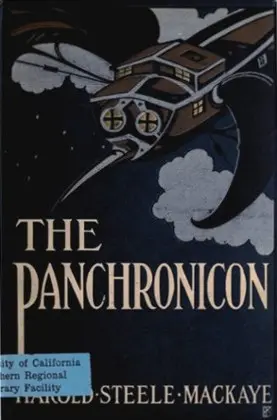
"The Panchronicon" by Harold Steele MacKaye is a fictional novel written in the early 20th century. The story revolves around two sisters, Rebecca and Phoebe Wise, who find themselves entangled in the eccentric ideas of Copernicus Droop, a village reprobate with a fantastical theory about time travel. As the narrative unfolds, the characters explore themes of ambition, the passage of time, and the desire for second chances, set against the backdrop of whimsical science fiction. The opening portion of the book introduces the two sisters at their home in Peltonville Center, New Hampshire, where they engage in ordinary tasks and daily life. Rebecca, the older sister, is practical and nurturing, while Phoebe, the younger, is filled with curiosity and ambition, especially regarding her Shakespeare class. Their interactions are light yet revealing, setting the stage for the arrival of Copernicus Droop, who proposes a ludicrous plan to travel back in time using a machine he calls the Panchronicon. As their conversation unfolds, humor and absurdity intertwine, foreshadowing the extraordinary journey the characters are about to embark on. The combination of everyday life with the extraordinary speed of time travel creates a fascinating tension right from the start.
Introduction adapted from the source catalogue; source summaries may be automatically generated.
Free to read · English · 76,361 words · No account needed
MAKE TIME FOR A GOOD BOOK
On by default. Untick to stop anonymous reading totals. Each page counts after 10 seconds in view. How this works.
Anonymous counting is on unless you have switched it off.
"Good my persuasion!" she rippled. "See how thou art shaken into thyself, man. What! No phrase of lackadaisical rapture! Why, I looked to see thee invert thine incorporate satin in an airy rhapsody--upheld and kept unruffled by some fantastical twist of thine imagination. Oh, Fancy--Fancy! Couldst not e'en sustain thy knight cap-a-pie!" and she laughed the harder as she saw her lover's face grow longer and longer.
"Why, mistress," he began, soberly, "these quips and jests ill become a lover's tryst, methinks----"
"As ill as paint and scent and ear-rings--as foppish attire and fantastical phrases do become an honest lover," said Phoebe, indignantly. "Dost think that Mary Burton prizes these weary labyrinthine sentences--all hay and wool, like the monstrous swelling of trunk hose? Far better can I read in Master Lilly's books. Thinkest thou I came hither to smell civet? Nay--I love better the honest odor of cabbages in mine aunt's kitchen! And all this finery--this lace--this satin and this pearl embroidery----"
"In God His name!" the knight broke in, stamping his foot. "Dost take me for a little half-weaned knave, that I'll learn how to dress me of a woman? An you like not my speech, mistress----"
Phoebe cut him short, putting her hand on his mouth.
Then she leaned her shoulder against a tree, and looking up saucily into
his face:
"Now, don't get mad!" she said.
"Mad--mad!" said Sir Guy, with a puzzled look. "An this be madness, mistress, then is her Majesty's whole court a madhouse."
"Well, young man," Phoebe replied, with her prim New England manner, "if you want to marry me, you'll have to come and live in a country where they don't have queens, and you'll work in your shirt-sleeves like an honest man. You might just's well understand that first as last."
The knight moved back a step, with an injured expression on his face.
"Nay, then," he said, "an thou mock me with uncouth phrases, Mary, I'd
best be going."
"Perhaps you'd better, Guy."
With a reproachful glance, but holding his head proudly, the young man
mounted his horse.
"He hath a noble air on horseback," Phoebe said to herself, and she
smiled.
The young man saw the smile and took courage.
He urged his horse forward to her side.
"Mary!" he exclaimed, tenderly.
"Fare thee well!" she replied, coolly, and turned her back.
He bit his lip, clinched his hand, and without another word, struck fiercely with his spurs. With a snort of pain, the horse bounded forward, and Phoebe found herself alone in the grove.
Your reading position is saved on this browser. Take it to another device with a library code. Reading pages adapt to text, rather than matching a printed edition.
BEHIND THE BOOK
This eBook is for the use of anyone anywhere in the United States and most other parts of the world at no cost and with almost no restrictions whatsoever. You may copy it, give it away or re-use it under the terms of the Project Gutenberg License included with this eBook or online at www.gutenberg.org. If you are not located in the United States, you will have to check the laws of the country where you are located before using this eBook. Read the source licence.
The original source file, including credits and licence, is retained by this library. Request an original-format copy at no charge. Please include the book title and Project Gutenberg identifier #27682.
KEEP YOUR CURIOSITY GOING
Wilfrid Scawen Blunt
Wilfrid Scawen Blunt

E. W. (Edgar Watson) Howe
Coulson Kernahan

Maurice Baring
Frances Wright