THE CLASSIC COLLECTION✦My diaries, being a personal narrative of events 1888-1914, Part 2 (1900-1914)CLASSIC FREE BOOKS
My diaries, being a personal narrative of events 1888-1914, Part 2 (1900-1914)
Wilfrid Scawen Blunt
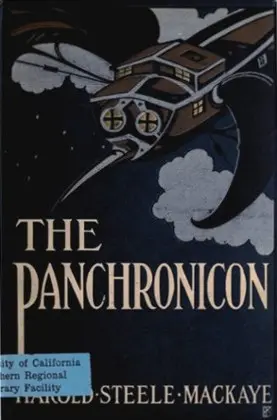
THE CLASSIC COLLECTION · 1904
"The Panchronicon" by Harold Steele MacKaye is a fictional novel written in the early 20th century. The story revolves around two sisters, Rebecca and Phoebe Wise, who find themselves entangled in the eccentric ideas of Copernicus Droop, a village reprobate with a fantastical theory about time travel. As the narrative unfolds, the characters explore themes of ambition, the passage of time, and the desire for second chances, set against the backdrop of whimsical science fiction. The opening portion of the book introduces the two sisters at their home in Peltonville Center, New Hampshire, where they engage in ordinary tasks and daily life. Rebecca, the older sister, is practical and nurturing, while Phoebe, the younger, is filled with curiosity and ambition, especially regarding her Shakespeare class. Their interactions are light yet revealing, setting the stage for the arrival of Copernicus Droop, who proposes a ludicrous plan to travel back in time using a machine he calls the Panchronicon. As their conversation unfolds, humor and absurdity intertwine, foreshadowing the extraordinary journey the characters are about to embark on. The combination of everyday life with the extraordinary speed of time travel creates a fascinating tension right from the start.
Introduction adapted from the source catalogue; source summaries may be automatically generated.
Free to read · English · 76,361 words · No account needed
MAKE TIME FOR A GOOD BOOK
On by default. Untick to stop anonymous reading totals. Each page counts after 10 seconds in view. How this works.
Anonymous counting is on unless you have switched it off.
"Yes--say it so an thou wilt," said Phoebe, shyly.
"Why, ef you're goin' to keep comp'ny with him 'tall, I sh'd think ye'd go off with him by yerself. Thet's the way sensible folks do--at least, I b'lieve so," she added, blushing.
"Aunt Martha hath given me free permission to see Sir Guy when I will," Phoebe continued. "But she hath been full circumspect, and ever keepeth within ear-shot."
"Humph!" snapped Rebecca. "Y'ain't got any Aunt Martha's fur's I know, but ef ye mean that fat, beer-drinkin' woman downstairs, why, 'tain't any of her concern, an' I'd tell her so, too."
Phoebe twirled her letter between her fingers and gazed pensively smiling out of the window. There was a long pause, which was finally broken by Rebecca.
"What's the letter 'bout, anyway?" she said. "Is it from the guy?"
"You mean Sir Guy," said Phoebe, in injured tones.
"Oh, well, sir or ma'am! Did he write it?"
"Why, truth to tell," said Phoebe, slipping the note into her bosom,
"'Tis but one of the letters I read to thee from yon carved box,
Rebecca."
"My sakes--that!" cried her sister. "How'd the butcher's boy find it? You don't s'pose he stole it out o' the Panchronicle, do ye?"
"Lord warrant us, sis, no! 'Twas writ this very day. What o'clock is
it?"
She ran to the window and looked down the street toward the clock on the
Royal Exchange.
"Three i' the afternoon," she muttered. "The time is short. Shall I?
Shall I not?"
"Talkin' o' letters," said Rebecca, suddenly, "I wish'd you take one down to the Post-Office fer me, Phoebe." She rose and went to a drawer in the dressing-table. "Here's one 't I wrote to Cousin Jane in Keene. I thought she might be worried about where we'd got to, an' so I've written an' told her we're in London."
"The Post-Office--" Phoebe began, laughingly. Then she checked
herself. Why undeceive her sister? Here was the excuse she had been
seeking.
"Yes; an' I told her more'n that," Rebecca continued. "I told her that jest's soon as the Panchronicle hed got rested and got its breath, we'd set off quick fer home--you an' me. Thet's so, ain't it, Phoebe?" she concluded, with plaintive anxiety in her voice.
"I'll take the letter right along," said Phoebe, with sudden
determination.
But Rebecca would not at once relax her hold on the envelope.
"That's so, ain't it, dearie?" she insisted. "Won't we make fer home as
soon's we can?"
"Sis," said Phoebe, gravely, "an I be not deeply in error, thou art right. Now give me the letter."
Your reading position is saved on this browser. Take it to another device with a library code. Reading pages adapt to text, rather than matching a printed edition.
BEHIND THE BOOK
This eBook is for the use of anyone anywhere in the United States and most other parts of the world at no cost and with almost no restrictions whatsoever. You may copy it, give it away or re-use it under the terms of the Project Gutenberg License included with this eBook or online at www.gutenberg.org. If you are not located in the United States, you will have to check the laws of the country where you are located before using this eBook. Read the source licence.
The original source file, including credits and licence, is retained by this library. Request an original-format copy at no charge. Please include the book title and Project Gutenberg identifier #27682.
KEEP YOUR CURIOSITY GOING
Wilfrid Scawen Blunt
Wilfrid Scawen Blunt

E. W. (Edgar Watson) Howe
Coulson Kernahan

Maurice Baring
Frances Wright