THE CLASSIC COLLECTION✦My diaries, being a personal narrative of events 1888-1914, Part 2 (1900-1914)CLASSIC FREE BOOKS
My diaries, being a personal narrative of events 1888-1914, Part 2 (1900-1914)
Wilfrid Scawen Blunt
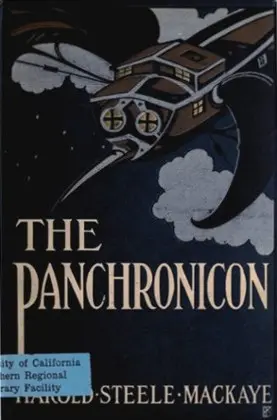
THE CLASSIC COLLECTION · 1904
"The Panchronicon" by Harold Steele MacKaye is a fictional novel written in the early 20th century. The story revolves around two sisters, Rebecca and Phoebe Wise, who find themselves entangled in the eccentric ideas of Copernicus Droop, a village reprobate with a fantastical theory about time travel. As the narrative unfolds, the characters explore themes of ambition, the passage of time, and the desire for second chances, set against the backdrop of whimsical science fiction. The opening portion of the book introduces the two sisters at their home in Peltonville Center, New Hampshire, where they engage in ordinary tasks and daily life. Rebecca, the older sister, is practical and nurturing, while Phoebe, the younger, is filled with curiosity and ambition, especially regarding her Shakespeare class. Their interactions are light yet revealing, setting the stage for the arrival of Copernicus Droop, who proposes a ludicrous plan to travel back in time using a machine he calls the Panchronicon. As their conversation unfolds, humor and absurdity intertwine, foreshadowing the extraordinary journey the characters are about to embark on. The combination of everyday life with the extraordinary speed of time travel creates a fascinating tension right from the start.
Introduction adapted from the source catalogue; source summaries may be automatically generated.
Free to read · English · 76,361 words · No account needed
MAKE TIME FOR A GOOD BOOK
On by default. Untick to stop anonymous reading totals. Each page counts after 10 seconds in view. How this works.
Anonymous counting is on unless you have switched it off.
"A long tale of politics, friend. A speech made by me in Parliament in
opposing monopolies."
"Oh!" said Droop, dismally. "You're down on monopolies, air ye?"
Bacon turned a wary eye upon his companion.
"Why ask you this?" he said.
"Why, only to--" He paused. "To say sooth," he continued, with sudden resolution, "I want to get a monopoly myself--two or three of 'em. I've got some A1 inventions here, an' I want to get 'em patented. I thought, perhaps, you or your friends might help me."
"Ah!" Bacon exclaimed, with awakening interest. "You seek my influence in furtherance of these designs. Do I apprehend you?"
"That's jest it," said Droop.
"And what would be the--ahem--the recognition which----"
"Why, you'd git a quarter interest in the hull business," said Droop, hopefully. "That is, provided you've got the inflooence, ye know."
"Too slight--too slight for Francis Bacon, Master Droop."
Copernicus thought rapidly for a minute or two. Then he pretended
indifference.
"Oh, very good!" he said. "I'll take up with Sir Thomas
Thingumbob--What's-'is-name."
Bacon pretended to accept the decision and changed the subject.
"Now permit me to approach the theme of my immediate need," he said. "These bailiffs without--they must be evaded. May I have your assistance, friend, in this matter?"
"Why--what can I do?"
"Pray observe me with all attention," Bacon began. "These my habiliments are of the latest fashion and of rich texture. Your habit is, if I may so speak, of inferior fashion and substance. I will exchange my habit for yours on this condition--that you mount my horse forthwith and ride away. The moon is bright and you will be pursued at once by these scurvy bailiffs. Lead them astray, Master Droop, to the southward, whilst I slip away to London in your attire, wherein I feel sure no man will recognize me. Once in London, there is a friend of mine--one Master Isaac Burton--who is hourly expected and from whom I count upon having some advances to stand me in present stead. What say you? Will you accept new clothing and rich--for old and worn?"
Droop approached his visitor and slowly examined his clothing, gravely feeling the stuff between thumb and finger and even putting his hand inside the doublet to feel the lining. Bacon's outraged dignity struggled within him with the sense of his necessity. Finally, just as he was about to give violent expression to his impatience, Droop stepped back and took in the general effect with one eye closed and his head cocked on one side.
"Jest turn round, will ye?" he said, with a whirling movement of the hand, "an' let me see how it looks in the back?"
Your reading position is saved on this browser. Take it to another device with a library code. Reading pages adapt to text, rather than matching a printed edition.
BEHIND THE BOOK
This eBook is for the use of anyone anywhere in the United States and most other parts of the world at no cost and with almost no restrictions whatsoever. You may copy it, give it away or re-use it under the terms of the Project Gutenberg License included with this eBook or online at www.gutenberg.org. If you are not located in the United States, you will have to check the laws of the country where you are located before using this eBook. Read the source licence.
The original source file, including credits and licence, is retained by this library. Request an original-format copy at no charge. Please include the book title and Project Gutenberg identifier #27682.
KEEP YOUR CURIOSITY GOING
Wilfrid Scawen Blunt
Wilfrid Scawen Blunt

E. W. (Edgar Watson) Howe
Coulson Kernahan

Maurice Baring
Frances Wright