THE CLASSIC COLLECTION✦My diaries, being a personal narrative of events 1888-1914, Part 2 (1900-1914)CLASSIC FREE BOOKS
My diaries, being a personal narrative of events 1888-1914, Part 2 (1900-1914)
Wilfrid Scawen Blunt
THE CLASSIC COLLECTION · 1904
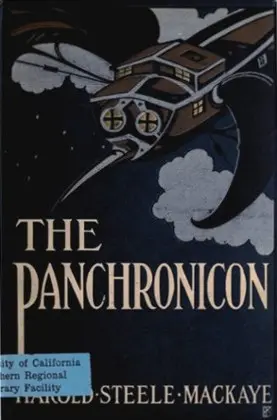
"The Panchronicon" by Harold Steele MacKaye is a fictional novel written in the early 20th century. The story revolves around two sisters, Rebecca and Phoebe Wise, who find themselves entangled in the eccentric ideas of Copernicus Droop, a village reprobate with a fantastical theory about time travel. As the narrative unfolds, the characters explore themes of ambition, the passage of time, and the desire for second chances, set against the backdrop of whimsical science fiction. The opening portion of the book introduces the two sisters at their home in Peltonville Center, New Hampshire, where they engage in ordinary tasks and daily life. Rebecca, the older sister, is practical and nurturing, while Phoebe, the younger, is filled with curiosity and ambition, especially regarding her Shakespeare class. Their interactions are light yet revealing, setting the stage for the arrival of Copernicus Droop, who proposes a ludicrous plan to travel back in time using a machine he calls the Panchronicon. As their conversation unfolds, humor and absurdity intertwine, foreshadowing the extraordinary journey the characters are about to embark on. The combination of everyday life with the extraordinary speed of time travel creates a fascinating tension right from the start.
Introduction adapted from the source catalogue; source summaries may be automatically generated.
Free to read · English · 76,361 words · No account needed
MAKE TIME FOR A GOOD BOOK
On by default. Untick to stop anonymous reading totals. Each page counts after 10 seconds in view. How this works.
Anonymous counting is on unless you have switched it off.
Droop followed him closely, rubbing his hand through his hair in perplexity. This intrusion threatened to spoil his plans. It would never do to have the neighbors swarming around the Panchronicon.
The stranger threw off his cloak on entering the upper room and turned
to face his host.
"I owe you sincere acknowledgment of thanks, good sir," he said,
gravely.
He appeared to be about thirty-five years of age, a man of medium stature, dark of hair and eyes, with a pale, intellectual face and a close-clipped beard. His entire apparel was black, save for his well-starched ruff of moderate depth and the lace ruffles at his wrists.
"Wal, I dunno," Droop retorted. "Marry, an I hed known as thou wast not
an acquaintance----"
"You would not have given me admittance?"
The calm, dark eyes gazed with disconcerting steadiness into Droop's
face.
"Oh--well--I ain't sayin'----"
"I hope I have not intruded to your hurt or serious confusion, friend," said the stranger, glancing about him. "To tell the very truth, your hospitable shelter hath offered itself in the hour of need."
"What--doth it raineth--eh?"
"Oh, no!"
"What can I do fer ye? Take a seat," said Droop, as the stranger dropped into a chair. "Thou knowest, forsooth, that I don't take photygraphs at night--marry, no!"
"Are you, then, the new limner who makes pictures by aid of the box and
glass?"
"Yea--that's what I am," said Droop.
"I was ignorant of the location of your dwelling. Indeed, it is pure
accident--a trick of Fortune that hath brought me to your door
to-night."
Droop seated himself and directed an interrogative gaze at his visitor.
"My name's Droop--Copernicus Droop," he said. "An' you----"
"My name is Francis Bacon, Master Droop--your servitor," he bowed
slightly.
Droop started up stiff and straight in his chair.
"Francis Bacon!" he exclaimed. "What! Not the one as wrote Shakespeare?"
"Shakespeare--Shakespeare!" said the stranger, in a slow, puzzled tone. "I do admit having made some humble essays in writing--certain modest commentaries upon human motives and relations--but, in good sooth, the title you have named, Master Droop, is unknown to me. Shakespeare--Shakespeare. Pray, sir, is it a homily or an essay?"
"Why, ye see, et's--as fur's I know it's a man--a sorter poet or genius or play-writin' man," said Droop, somewhat confused.
"A man--a poet--a genius?" Bacon repeated, gravely. "Then, prithee, friend, how meant you in saying you thought me him who had written Shakespeare? Can a man--a poet--be written?"
"Nay--verily--in good sooth--marry, no!" stuttered Droop. "What they mean is thet 'twas you wrote the things Shakespeare put his name to--you did, didn't you?"
Your reading position is saved on this browser. Take it to another device with a library code. Reading pages adapt to text, rather than matching a printed edition.
BEHIND THE BOOK
This eBook is for the use of anyone anywhere in the United States and most other parts of the world at no cost and with almost no restrictions whatsoever. You may copy it, give it away or re-use it under the terms of the Project Gutenberg License included with this eBook or online at www.gutenberg.org. If you are not located in the United States, you will have to check the laws of the country where you are located before using this eBook. Read the source licence.
The original source file, including credits and licence, is retained by this library. Request an original-format copy at no charge. Please include the book title and Project Gutenberg identifier #27682.
KEEP YOUR CURIOSITY GOING
Wilfrid Scawen Blunt
Wilfrid Scawen Blunt

E. W. (Edgar Watson) Howe
Coulson Kernahan

Maurice Baring
Frances Wright