THE CLASSIC COLLECTION✦My diaries, being a personal narrative of events 1888-1914, Part 2 (1900-1914)CLASSIC FREE BOOKS
My diaries, being a personal narrative of events 1888-1914, Part 2 (1900-1914)
Wilfrid Scawen Blunt
THE CLASSIC COLLECTION · 1904
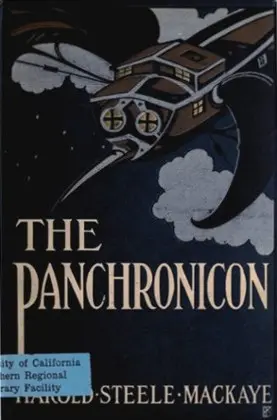
"The Panchronicon" by Harold Steele MacKaye is a fictional novel written in the early 20th century. The story revolves around two sisters, Rebecca and Phoebe Wise, who find themselves entangled in the eccentric ideas of Copernicus Droop, a village reprobate with a fantastical theory about time travel. As the narrative unfolds, the characters explore themes of ambition, the passage of time, and the desire for second chances, set against the backdrop of whimsical science fiction. The opening portion of the book introduces the two sisters at their home in Peltonville Center, New Hampshire, where they engage in ordinary tasks and daily life. Rebecca, the older sister, is practical and nurturing, while Phoebe, the younger, is filled with curiosity and ambition, especially regarding her Shakespeare class. Their interactions are light yet revealing, setting the stage for the arrival of Copernicus Droop, who proposes a ludicrous plan to travel back in time using a machine he calls the Panchronicon. As their conversation unfolds, humor and absurdity intertwine, foreshadowing the extraordinary journey the characters are about to embark on. The combination of everyday life with the extraordinary speed of time travel creates a fascinating tension right from the start.
Introduction adapted from the source catalogue; source summaries may be automatically generated.
Free to read · English · 76,361 words · No account needed
MAKE TIME FOR A GOOD BOOK
On by default. Untick to stop anonymous reading totals. Each page counts after 10 seconds in view. How this works.
Anonymous counting is on unless you have switched it off.
"In very sooth, most fair, most mellific damsel, your unworthy servitor was erring enchanted in the paradise of your divine idea when that the horrific alarum did wend its fear-begetting course through the labyrinthine corridors of his auricular sensories."
Phoebe laughed, half in amusement half in soft content. Then she turned to Rebecca, who stood with wide-open eyes and mouth contemplating this strange apparition.
"Be not confounded, sweetheart," she said. "Have I not told thee I have ta'en on another's self. Come--thou art none the less dear, nor I less thine own."
She stepped forward and put her hand gently on her sister's.
Rebecca looked with troubled eyes into Phoebe's face and said,
timidly:
"Won't ye go to a doctor's with me, Phoebe?"
There was a rude clatter of hoofs as the elder of the new-comers trotted past the two women and, with his whip drove back the advancing crowd, which had begun to close in upon them again.
"You were best mount and away with the ladies, Sir Guy," he said. "Yon scurvy loons are in poor humor for dalliance."
With a graceful gesture, Sir Guy invited Phoebe to approach his horse. She obeyed, and stepping upon his hand found herself instantly seated before his saddle. She seemed to find the seat familiar, and her heart beat with a pleasure she could scarce explain when, a moment later, the handsome cavalier swung into place behind her and put one arm about her waist to steady her.
Rebecca started forward, terror-stricken.
"Phoebe--Phoebe!" she cried. "Ye wouldn't leave me here!"
"Nay--nay!" said a gruff but kindly voice at her side. "Here, gi'e us your hand, dame, step on my foot, and up behind you go."
Sir Guy's horse was turning to go, and in her panic Rebecca awaited no second bidding, but scrambled quickly though clumsily to a seat behind the serving-man.
They were all four soon free of the crowd and out of danger, thanks to the universal respect for rank and the essential good nature of the May-day gathering.
The horses assumed an easy ambling gait, a sort of single step which was far more comfortable than Rebecca had feared she would find it.
The relief of deliverance from the rude mob behind her gave Rebecca courage, and she gazed about with some interest.
On either side of the street the houses, which hitherto had stood apart with gardens and orchards between them, were now set close together, with the wide eaves of their sharp gables touching over narrow and dark alleyways. The architecture was unlike anything she had ever seen, the walls being built with the beams showing outside and the windows of many small diamond-shaped panes.
Your reading position is saved on this browser. Take it to another device with a library code. Reading pages adapt to text, rather than matching a printed edition.
BEHIND THE BOOK
This eBook is for the use of anyone anywhere in the United States and most other parts of the world at no cost and with almost no restrictions whatsoever. You may copy it, give it away or re-use it under the terms of the Project Gutenberg License included with this eBook or online at www.gutenberg.org. If you are not located in the United States, you will have to check the laws of the country where you are located before using this eBook. Read the source licence.
The original source file, including credits and licence, is retained by this library. Request an original-format copy at no charge. Please include the book title and Project Gutenberg identifier #27682.
KEEP YOUR CURIOSITY GOING
Wilfrid Scawen Blunt
Wilfrid Scawen Blunt

E. W. (Edgar Watson) Howe
Coulson Kernahan

Maurice Baring
Frances Wright