THE CLASSIC COLLECTION✦My diaries, being a personal narrative of events 1888-1914, Part 2 (1900-1914)CLASSIC FREE BOOKS
My diaries, being a personal narrative of events 1888-1914, Part 2 (1900-1914)
Wilfrid Scawen Blunt
THE CLASSIC COLLECTION · 1904
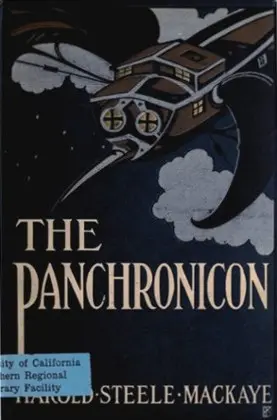
"The Panchronicon" by Harold Steele MacKaye is a fictional novel written in the early 20th century. The story revolves around two sisters, Rebecca and Phoebe Wise, who find themselves entangled in the eccentric ideas of Copernicus Droop, a village reprobate with a fantastical theory about time travel. As the narrative unfolds, the characters explore themes of ambition, the passage of time, and the desire for second chances, set against the backdrop of whimsical science fiction. The opening portion of the book introduces the two sisters at their home in Peltonville Center, New Hampshire, where they engage in ordinary tasks and daily life. Rebecca, the older sister, is practical and nurturing, while Phoebe, the younger, is filled with curiosity and ambition, especially regarding her Shakespeare class. Their interactions are light yet revealing, setting the stage for the arrival of Copernicus Droop, who proposes a ludicrous plan to travel back in time using a machine he calls the Panchronicon. As their conversation unfolds, humor and absurdity intertwine, foreshadowing the extraordinary journey the characters are about to embark on. The combination of everyday life with the extraordinary speed of time travel creates a fascinating tension right from the start.
Introduction adapted from the source catalogue; source summaries may be automatically generated.
Free to read · English · 76,361 words · No account needed
MAKE TIME FOR A GOOD BOOK
On by default. Untick to stop anonymous reading totals. Each page counts after 10 seconds in view. How this works.
Anonymous counting is on unless you have switched it off.
Outside of the brick wall she paused and opened the box. It was empty.
"I thought so!" she said.
"Why, ye've brought the box 'thout the letters, Phoebe," said Rebecca. "You're not agoin' back for them, air ye?"
"No," Phoebe replied, "'twouldn't do any good. Rebecca. They aren't
there."
She dropped the box in the grass and looked wistfully about her.
"Not there!" said Rebecca, nonplussed. "Why, who'd take 'em?"
"Nobody. They haven't been written yet."
"Not--not--" Rebecca gasped for a moment and then hurried toward the
road. "Come on!" she cried.
Surely, she thought--surely they must find a doctor without delay.
But before they reached the road, Rebecca was glad to pause again and take advantage of a friendly bush from whose cover she might gaze without being herself observed.
The broad highway which but so short a time ago was quite deserted, was now occupied by a double line of bustling people--young and old--men, women, and children. Those travelling toward their left, to the north, were principally men and boys, although now and then a pair of loud-voiced girls passed northward with male companions. Those who were travelling southward were the younger ones, and often whole families together. Among these the women predominated.
All of these people were laughing--calling rough jokes back and forth--singing, running, jumping, and dancing, till the whole roadway appeared a merry Bedlam.
"Must be a county fair near here!" exclaimed Rebecca. "But will ye listen to the gibberish an' see their clothes!"
Indeed, the language and the costumes were most perplexing to good New England ears and eyes, and Rebecca knew not whether to advance or to retreat.
The women all wore very wide and rather short skirts, the petticoat worn exposed up to where a full over-skirt or flounce gave emphasis to their hips. The elder ones wore long-sleeved jackets and high-crowned hats, while the young ones wore what looked like low-necked jerseys tied together in front and their braided hair hung from uncovered crowns.
The men wore short breeches, some full trunk hose, some tighter but puffed; their jackets were of many fashions, from the long-skirted open coats of the elders to the smart doublets or shirts of the young men.
The children were dressed like the adults, and most of them wore wreaths and garlands of flowers, while in the hands of many were baskets full of posies.
Phoebe gazed from her sister's side with the keenest delight, saying nothing, but turning her eyes hither and thither as though afraid of losing the least detail of the scene.
Your reading position is saved on this browser. Take it to another device with a library code. Reading pages adapt to text, rather than matching a printed edition.
BEHIND THE BOOK
This eBook is for the use of anyone anywhere in the United States and most other parts of the world at no cost and with almost no restrictions whatsoever. You may copy it, give it away or re-use it under the terms of the Project Gutenberg License included with this eBook or online at www.gutenberg.org. If you are not located in the United States, you will have to check the laws of the country where you are located before using this eBook. Read the source licence.
The original source file, including credits and licence, is retained by this library. Request an original-format copy at no charge. Please include the book title and Project Gutenberg identifier #27682.
KEEP YOUR CURIOSITY GOING
Wilfrid Scawen Blunt
Wilfrid Scawen Blunt

E. W. (Edgar Watson) Howe
Coulson Kernahan

Maurice Baring
Frances Wright