THE CLASSIC COLLECTION✦My diaries, being a personal narrative of events 1888-1914, Part 2 (1900-1914)CLASSIC FREE BOOKS
My diaries, being a personal narrative of events 1888-1914, Part 2 (1900-1914)
Wilfrid Scawen Blunt
THE CLASSIC COLLECTION · 1904
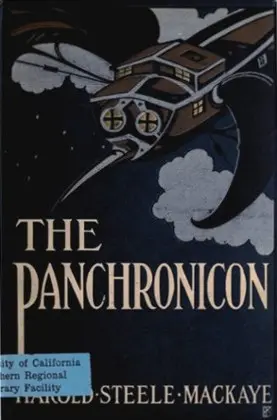
"The Panchronicon" by Harold Steele MacKaye is a fictional novel written in the early 20th century. The story revolves around two sisters, Rebecca and Phoebe Wise, who find themselves entangled in the eccentric ideas of Copernicus Droop, a village reprobate with a fantastical theory about time travel. As the narrative unfolds, the characters explore themes of ambition, the passage of time, and the desire for second chances, set against the backdrop of whimsical science fiction. The opening portion of the book introduces the two sisters at their home in Peltonville Center, New Hampshire, where they engage in ordinary tasks and daily life. Rebecca, the older sister, is practical and nurturing, while Phoebe, the younger, is filled with curiosity and ambition, especially regarding her Shakespeare class. Their interactions are light yet revealing, setting the stage for the arrival of Copernicus Droop, who proposes a ludicrous plan to travel back in time using a machine he calls the Panchronicon. As their conversation unfolds, humor and absurdity intertwine, foreshadowing the extraordinary journey the characters are about to embark on. The combination of everyday life with the extraordinary speed of time travel creates a fascinating tension right from the start.
Introduction adapted from the source catalogue; source summaries may be automatically generated.
Free to read · English · 76,361 words · No account needed
MAKE TIME FOR A GOOD BOOK
On by default. Untick to stop anonymous reading totals. Each page counts after 10 seconds in view. How this works.
Anonymous counting is on unless you have switched it off.
"What d'ye think o' this little phonograph, Cousin Phoebe?" he said.
One of Droop's boxes stood open and beside it Phoebe saw a phonograph with the usual spring motor and brass megaphone.
"I paid twenty-five fer that, secon' hand, down to Keene," said the
proud owner.
"There!" exclaimed Phoebe. "I've always wanted to know how those things worked. I've heard 'em, you know, but I've never worked one."
"It's real easy," said Droop, quite delighted to find Phoebe so interested. "Ye see, when it's wound up, all ye hev to do is to slip one o' these wax cylinders on here--so."
He adjusted the cylinder, dropped the stylus and pushed the starting
lever.
Instantly the stentorian announcement rang out from the megaphone.
"The Last Rose of Summer--Sola--Sung by Signora Casta Diva--Edison
Record!"
"Goodness gracious sakes alive!" cried Rebecca, turning in affright.
"Who's that?"
Her two companions raised their right hands in a simultaneous appeal for silence. Then the song began.
With open eyes and mouth, the amazed Rebecca drew slowly nearer, and finally took her stand directly in front of the megaphone.
The song ended and Copernicus stopped the motor.
"Oh, ain't it lovely!" Phoebe cried.
"Well--I'll--be--switched!" Rebecca exclaimed, with slow emphasis. "Can
it sing anythin' else?"
"Didn't you never hear one afore, Cousin Rebecca?" Droop asked.
"I never did," she replied. "What on the face of the green airth does
it?"
"Have ye any funny ones?" Phoebe asked, quickly, fearful of receiving
a long scientific lecture.
"Yes," said Droop. "Here's a nigger minstrels. The's some jokes in it."
The loud preliminary announcement made Rebecca jump again, but while the music and the songs and jokes were delivered, she stood earnestly attentive throughout, while her companions grinned and giggled alternately.
"Is thet all?" she asked at the conclusion.
"Thet's all," said Droop, as he removed the cylinder.
"Well, I don't see nothin' funny 'bout it," she said, plaintively.
Droop's pride was touched.
"Ah, but that ain't all it can do!" he cried. "Here's a blank cylinder. You jest talk at the machine while it's runnin', an' it'll talk back all you say."
This was too much for Rebecca's credulity, and Droop could not induce her to talk into the trumpet.
"You can't make a fool o' me, Copernicus Droop," she exclaimed.
"You try, Cousin Phoebe," he said at last.
Phoebe looked dubiously at her sister as though half of opinion that her shrewd example should be followed.
"You sure it'll do it?" she asked.
"Certain!" cried Copernicus, nodding his head with violence.
She stood a moment leaning over with her pretty lips close to the
trumpet.
Then she straightened up with a face of comical despair.
Your reading position is saved on this browser. Take it to another device with a library code. Reading pages adapt to text, rather than matching a printed edition.
BEHIND THE BOOK
This eBook is for the use of anyone anywhere in the United States and most other parts of the world at no cost and with almost no restrictions whatsoever. You may copy it, give it away or re-use it under the terms of the Project Gutenberg License included with this eBook or online at www.gutenberg.org. If you are not located in the United States, you will have to check the laws of the country where you are located before using this eBook. Read the source licence.
The original source file, including credits and licence, is retained by this library. Request an original-format copy at no charge. Please include the book title and Project Gutenberg identifier #27682.
KEEP YOUR CURIOSITY GOING
Wilfrid Scawen Blunt
Wilfrid Scawen Blunt

E. W. (Edgar Watson) Howe
Coulson Kernahan

Maurice Baring
Frances Wright