THE CLASSIC COLLECTION✦My diaries, being a personal narrative of events 1888-1914, Part 2 (1900-1914)CLASSIC FREE BOOKS
My diaries, being a personal narrative of events 1888-1914, Part 2 (1900-1914)
Wilfrid Scawen Blunt
THE CLASSIC COLLECTION · 1904
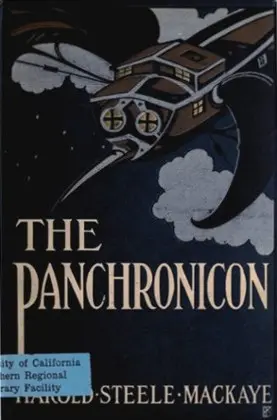
"The Panchronicon" by Harold Steele MacKaye is a fictional novel written in the early 20th century. The story revolves around two sisters, Rebecca and Phoebe Wise, who find themselves entangled in the eccentric ideas of Copernicus Droop, a village reprobate with a fantastical theory about time travel. As the narrative unfolds, the characters explore themes of ambition, the passage of time, and the desire for second chances, set against the backdrop of whimsical science fiction. The opening portion of the book introduces the two sisters at their home in Peltonville Center, New Hampshire, where they engage in ordinary tasks and daily life. Rebecca, the older sister, is practical and nurturing, while Phoebe, the younger, is filled with curiosity and ambition, especially regarding her Shakespeare class. Their interactions are light yet revealing, setting the stage for the arrival of Copernicus Droop, who proposes a ludicrous plan to travel back in time using a machine he calls the Panchronicon. As their conversation unfolds, humor and absurdity intertwine, foreshadowing the extraordinary journey the characters are about to embark on. The combination of everyday life with the extraordinary speed of time travel creates a fascinating tension right from the start.
Introduction adapted from the source catalogue; source summaries may be automatically generated.
Free to read · English · 76,361 words · No account needed
MAKE TIME FOR A GOOD BOOK
On by default. Untick to stop anonymous reading totals. Each page counts after 10 seconds in view. How this works.
Anonymous counting is on unless you have switched it off.
He disappeared. Phoebe gave the last of the dishes a brief touch of the dish-towel and then ran into the main room to watch the barometer.
She was much interested to observe a gradual but continual decrease in their altitude. She walked to the window but could see no apparent change, save that they had now passed the sea and only the blue land with silver streaks of river and indigo hill shadows was beneath them.
"How fast do you s'pose we're flyin', Mr. Droop?" she asked.
"There's the speed indicator," he said, pointing to one of the dials on the wall. "Ye see it says we're a-hummin' along at about one hundred an' thirty miles an hour."
"My gracious!" cried Phoebe. "What if we was to hit something!"
"Nothin' to hit," said Droop, with a smile. "Ye see, the's no sort o' use goin' any slower, an' besides, this quick travellin' keeps us warm."
"Why, how's that?"
"The sides o' the machine rubbin' on the air," said Droop.
"That's so," Phoebe replied. "That's what heats up meteors so awful
hot, ain't it?"
Rebecca came out of the kitchen at this moment.
"I must say ye wasn't particler about gettin' all the pans to rights 'fore ye left the kitchen, Phoebe. Ben makin' the beds?"
"Land, no, Rebecca!" said Phoebe, blushing guiltily.
"Well, there!"
Rebecca said no more, but her set lips and puckered forehead spoke much of displeasure as she stalked across to the state-rooms.
"Well, I declare to goodness!" she cried, as she opened her door. "Ye hevn't even opened the window to air the rooms!"
Phoebe looked quite miserable at thought of her remissness, but Copernicus came bravely to the rescue.
"The windows can't be opened, Cousin Rebecca," he said. "Ef ye was to open one, 'twould blow yer head's bald as an egg in a minute."
"What!"
"Yes," said Phoebe, briskly, "I couldn't air the beds an' make 'em because we're going one hundred and thirty odd miles an hour, Rebecca."
"D'you mean to tell me, Copernicus Droop," cried the outraged spinster, "that I've got to go 'thout airin' my bed?"
"No, no," Copernicus said, soothingly. "The's special arrangements to keep ventilation goin'. Jest leave the bed open half the day an' it'll be all aired."
Rebecca looked far from pleased at this.
"I declare, ef I'd known of all these doin's," she muttered.
Unable to remain idle, she set to work "putting things to rights," as she called it, while Phoebe took her book to the west window and was soon lost in certain modern theories concerning the Baconian authorship of Shakespeare's works.
Your reading position is saved on this browser. Take it to another device with a library code. Reading pages adapt to text, rather than matching a printed edition.
BEHIND THE BOOK
This eBook is for the use of anyone anywhere in the United States and most other parts of the world at no cost and with almost no restrictions whatsoever. You may copy it, give it away or re-use it under the terms of the Project Gutenberg License included with this eBook or online at www.gutenberg.org. If you are not located in the United States, you will have to check the laws of the country where you are located before using this eBook. Read the source licence.
The original source file, including credits and licence, is retained by this library. Request an original-format copy at no charge. Please include the book title and Project Gutenberg identifier #27682.
KEEP YOUR CURIOSITY GOING
Wilfrid Scawen Blunt
Wilfrid Scawen Blunt

E. W. (Edgar Watson) Howe
Coulson Kernahan

Maurice Baring
Frances Wright