THE CLASSIC COLLECTION✦My diaries, being a personal narrative of events 1888-1914, Part 2 (1900-1914)CLASSIC FREE BOOKS
My diaries, being a personal narrative of events 1888-1914, Part 2 (1900-1914)
Wilfrid Scawen Blunt
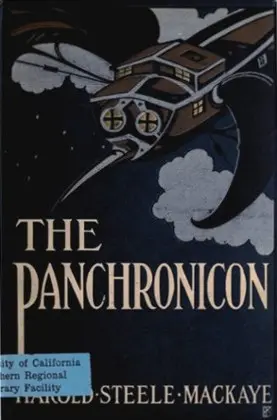
THE CLASSIC COLLECTION · 1904
"The Panchronicon" by Harold Steele MacKaye is a fictional novel written in the early 20th century. The story revolves around two sisters, Rebecca and Phoebe Wise, who find themselves entangled in the eccentric ideas of Copernicus Droop, a village reprobate with a fantastical theory about time travel. As the narrative unfolds, the characters explore themes of ambition, the passage of time, and the desire for second chances, set against the backdrop of whimsical science fiction. The opening portion of the book introduces the two sisters at their home in Peltonville Center, New Hampshire, where they engage in ordinary tasks and daily life. Rebecca, the older sister, is practical and nurturing, while Phoebe, the younger, is filled with curiosity and ambition, especially regarding her Shakespeare class. Their interactions are light yet revealing, setting the stage for the arrival of Copernicus Droop, who proposes a ludicrous plan to travel back in time using a machine he calls the Panchronicon. As their conversation unfolds, humor and absurdity intertwine, foreshadowing the extraordinary journey the characters are about to embark on. The combination of everyday life with the extraordinary speed of time travel creates a fascinating tension right from the start.
Introduction adapted from the source catalogue; source summaries may be automatically generated.
Free to read · English · 76,361 words · No account needed
MAKE TIME FOR A GOOD BOOK
On by default. Untick to stop anonymous reading totals. Each page counts after 10 seconds in view. How this works.
Anonymous counting is on unless you have switched it off.
"Oh, when you've done it once it'll be all easy and clear," said Droop,
soothingly.
Phoebe looked hopefully into his face.
"Will you take us, Mr. Droop?" she asked.
"Oh, I s'pose I'll hev to."
"An' only unwind six years?"
"Yes--jest six years."
She jumped up excitedly.
"Then I'll be off to my packin'!"
She ran to the door and, pausing here, turned again to their visitor.
"Can we start to-night, Mr. Droop?"
"Yes, indeed!" he replied. "The sooner the better."
"That's splendid!" she cried, and ran quickly up the stairs.
The two older people sat for a while in melancholy silence, looking down. Each had hoped for more than this. Copernicus tried to convince himself that the profit from the cough syrup would comfort him for his disappointment. Rebecca dismissed with a sigh the dreams which she had allowed herself to entertain--those bright fictions centering on Joe Chandler--not the subdued old bachelor of 1898, but the jolly young fellow of the famous Centennial year.
At length Rebecca looked up and said:
"After all, Mr. Droop, come to think of it, you've no call to take us with ye. I can't do ye any good--goin' back only six years."
"Yes ye can," said Droop. "I'll need somebody to help me keep house in the Panchronicon. I ain't no hand at cookin' an' all, an' besides, it'll be mighty lonely without anybody in there."
"Well," she rejoined, rising, "I'll jest go up an' finish my packin'."
"An' I'll go tend to mine."
As they parted at the front door, it was arranged that Droop was to bring a wheelbarrow after supper and transport the sisters' belongings, preparatory to their departure.
The rest of the day was spent in preparation for the momentous voyage. Phoebe went to the little bank at Peltonville station and withdrew the entire savings of herself and sister, much to the astonishment and concern of the cashier. She walked all the way to the bank and back alone, for it was obviously necessary to avoid inconvenient questions.
When the two sisters stood in their little dining-room with the heap of greenbacks on the table before them, Rebecca was attacked by another conscientious scruple.
"I don't hardly know as we're doin' right, Phoebe," she said, shaking her head dubiously. "When we get back to 1892 we'd ought to find some money in the bank already. Ef we hev this with us, too, seems to me we'll hev more'n we're entitled to. Ain't it a good deal like cheatin' the bank?"
"Mercy, no!" Phoebe exclaimed, pettishly. "You're forever raisin' some trouble like that! Ain't this our money?"
"Yes--but----"
Your reading position is saved on this browser. Take it to another device with a library code. Reading pages adapt to text, rather than matching a printed edition.
BEHIND THE BOOK
This eBook is for the use of anyone anywhere in the United States and most other parts of the world at no cost and with almost no restrictions whatsoever. You may copy it, give it away or re-use it under the terms of the Project Gutenberg License included with this eBook or online at www.gutenberg.org. If you are not located in the United States, you will have to check the laws of the country where you are located before using this eBook. Read the source licence.
The original source file, including credits and licence, is retained by this library. Request an original-format copy at no charge. Please include the book title and Project Gutenberg identifier #27682.
KEEP YOUR CURIOSITY GOING
Wilfrid Scawen Blunt
Wilfrid Scawen Blunt

E. W. (Edgar Watson) Howe
Coulson Kernahan

Maurice Baring
Frances Wright