THE CLASSIC COLLECTION✦My diaries, being a personal narrative of events 1888-1914, Part 2 (1900-1914)CLASSIC FREE BOOKS
My diaries, being a personal narrative of events 1888-1914, Part 2 (1900-1914)
Wilfrid Scawen Blunt
THE CLASSIC COLLECTION · 1904
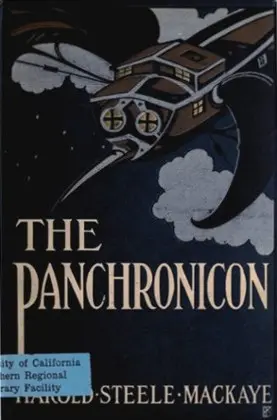
"The Panchronicon" by Harold Steele MacKaye is a fictional novel written in the early 20th century. The story revolves around two sisters, Rebecca and Phoebe Wise, who find themselves entangled in the eccentric ideas of Copernicus Droop, a village reprobate with a fantastical theory about time travel. As the narrative unfolds, the characters explore themes of ambition, the passage of time, and the desire for second chances, set against the backdrop of whimsical science fiction. The opening portion of the book introduces the two sisters at their home in Peltonville Center, New Hampshire, where they engage in ordinary tasks and daily life. Rebecca, the older sister, is practical and nurturing, while Phoebe, the younger, is filled with curiosity and ambition, especially regarding her Shakespeare class. Their interactions are light yet revealing, setting the stage for the arrival of Copernicus Droop, who proposes a ludicrous plan to travel back in time using a machine he calls the Panchronicon. As their conversation unfolds, humor and absurdity intertwine, foreshadowing the extraordinary journey the characters are about to embark on. The combination of everyday life with the extraordinary speed of time travel creates a fascinating tension right from the start.
Introduction adapted from the source catalogue; source summaries may be automatically generated.
Free to read · English · 76,361 words · No account needed
MAKE TIME FOR A GOOD BOOK
On by default. Untick to stop anonymous reading totals. Each page counts after 10 seconds in view. How this works.
Anonymous counting is on unless you have switched it off.
But he broke off in horror, for there flashed past him, as silent as the wind and swifter, a dark, bent figure, with flying cloak, under which, as the moonlight struck him, there whirled a web of glittering tissue whereon he seemed to ride. That uncanny tinkling floated back from this strange vision, confirming to the ear what otherwise might have appeared a mere trick of the vision.
As for Sir Isaac and his band, the distant bell had early brought them to a wondering stand; and now, as this rushing phantom--trilling--trilling--trilling--swept down on a living moonbeam, with one accord they put spurs to their steeds, and with cries of horror fled in all directions.
"Forward!" cried Phoebe, exultantly. "Why, what now!" she exclaimed, as she saw her lover still sitting petrified with fear. "How now, my knight! Why sit you here amazed? Is not the way clear? Come--follow--follow!" and she started forward on a trot.
But her lover did not move, and she was obliged to turn back. Laying her
hand on his arm:
"Why, what ails thee, dear heart?" she asked.
"The spectre--the ghostly steed!" he stammered.
"Oh--oh!" laughed Phoebe. "Why, this was but some venturous bicyclist
on his wheel!"
"A bicyclist!" exclaimed Sir Guy. "Can you thus give a name to this
black phantom, Mary?"
"'Tis naught, dear Guy, believe me!" she said. Then, in pleading tones, she continued: "Didst not agree to trust thy lady, dear?"
The young knight passed his hand over his eyes and straightened himself resolutely in his saddle.
"E'en to the death, love. Lead on! I shall not falter!"
They trotted forward through a now silent street to the bridge, and soon found themselves enveloped in the darkness and assailed by the countless odors of London Bridge. From time to time they crossed a path of moonlight, and here Phoebe would smile into the eyes of her still much-puzzled lover and murmur words of encouragement.
Before they reached Southwark, there rang out behind them the sound of hoofs upon the stones of the bridge.
"Can these be your father's minions, think you?" said Sir Guy.
"Nay!" Phoebe exclaimed. "Rest assured, they were scattered too far to dog our steps again to-night."
They emerged some moments later on the Southwark side and saw the pillory towering ahead of them.
"How far shall we fare to-night, love?" asked the knight.
"To Newington on horseback," Phoebe replied, "and then--well, then
shalt thou see more faring."
There was a loud cry from the bridge, startling the pair from their
fancied security.
"There they ride! The watch, ho! Stop the traitor! Stop him! For the
Queen! For the Queen!"
Your reading position is saved on this browser. Take it to another device with a library code. Reading pages adapt to text, rather than matching a printed edition.
BEHIND THE BOOK
This eBook is for the use of anyone anywhere in the United States and most other parts of the world at no cost and with almost no restrictions whatsoever. You may copy it, give it away or re-use it under the terms of the Project Gutenberg License included with this eBook or online at www.gutenberg.org. If you are not located in the United States, you will have to check the laws of the country where you are located before using this eBook. Read the source licence.
The original source file, including credits and licence, is retained by this library. Request an original-format copy at no charge. Please include the book title and Project Gutenberg identifier #27682.
KEEP YOUR CURIOSITY GOING
Wilfrid Scawen Blunt
Wilfrid Scawen Blunt

E. W. (Edgar Watson) Howe
Coulson Kernahan

Maurice Baring
Frances Wright