THE CLASSIC COLLECTION✦My diaries, being a personal narrative of events 1888-1914, Part 2 (1900-1914)CLASSIC FREE BOOKS
My diaries, being a personal narrative of events 1888-1914, Part 2 (1900-1914)
Wilfrid Scawen Blunt
THE CLASSIC COLLECTION · 1904
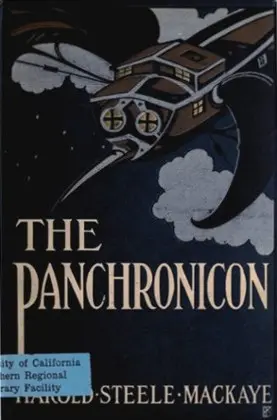
"The Panchronicon" by Harold Steele MacKaye is a fictional novel written in the early 20th century. The story revolves around two sisters, Rebecca and Phoebe Wise, who find themselves entangled in the eccentric ideas of Copernicus Droop, a village reprobate with a fantastical theory about time travel. As the narrative unfolds, the characters explore themes of ambition, the passage of time, and the desire for second chances, set against the backdrop of whimsical science fiction. The opening portion of the book introduces the two sisters at their home in Peltonville Center, New Hampshire, where they engage in ordinary tasks and daily life. Rebecca, the older sister, is practical and nurturing, while Phoebe, the younger, is filled with curiosity and ambition, especially regarding her Shakespeare class. Their interactions are light yet revealing, setting the stage for the arrival of Copernicus Droop, who proposes a ludicrous plan to travel back in time using a machine he calls the Panchronicon. As their conversation unfolds, humor and absurdity intertwine, foreshadowing the extraordinary journey the characters are about to embark on. The combination of everyday life with the extraordinary speed of time travel creates a fascinating tension right from the start.
Introduction adapted from the source catalogue; source summaries may be automatically generated.
Free to read · English · 76,361 words · No account needed
MAKE TIME FOR A GOOD BOOK
On by default. Untick to stop anonymous reading totals. Each page counts after 10 seconds in view. How this works.
Anonymous counting is on unless you have switched it off.
With his heart in his mouth, Droop leaped to the chandelier and turned out the lights; then rushed to the state-rooms and was about to turn their switches as well, when a familiar voice greeted their ears from below--
"Don't be scared--it's only Phoebe."
"What ever possessed--" began Rebecca, in a low tone.
But at that moment Phoebe's head appeared over the stair rail in the light shed from the two state-rooms.
"Won't you light up again, Mr. Droop?" she said, merrily, smiling the while into her sister's crestfallen face. "I heard you two leavin' the house, an' I just guessed what you'd be up to. So I followed you down here."
She dropped into one of the chairs beside the table just as Droop
relighted the lamps.
With one slender hand resting upon the table, she looked up into Droop's
face and went on:
"I was havin' a dreadful time, stumbling over stocks an' stones at every step, till suddenly there was quite a light struck my face, and first I knew I was lookin' right into your lighted windows. I guess we'll have a pleasant meetin' here of all the folks in town pretty soon--not to mention the skeeters, which are comin' right early this year!"
"Lands sakes!" cried Rebecca.
"There now!" exclaimed Copernicus, bustling toward the windows, "I must
be a nateral born fool!"
Phoebe laughed in high spirits at thought of her prank, while Droop closed the tight iron shutters at each window, thus confining every ray of light.
Rebecca seated herself opposite Phoebe and looked severely straight before her with her hands folded in her lap. She was ashamed of her curiosity and much chagrined at being discovered in this unconventional situation by her younger sister.
Phoebe gazed about her and, having taken in the general aspect of the antechamber in which they were assembled, she explored the two state-rooms. Thence she returned for a more detailed survey. Droop followed her about explaining everything, but Rebecca remained unmoved.
"What's all those dials on the wall, Mr. Droop?" asked the younger
sister.
"I wish't you'd call me Cousin Copernicus," said Droop, appealingly.
Phoebe ran up very close to a large steel dial-plate covered with
figures.
"Now what the land is this for?" she exclaimed.
"Thet," said Droop, slowly, "is an indicator of height above ground and
tells yer direction."
"And what d'ye do with this little handle?"
"Why, you set that for north or west or any other way, an' the hull machine keeps headed that way until ye change it."
"Oh, is that the rudder?"
Your reading position is saved on this browser. Take it to another device with a library code. Reading pages adapt to text, rather than matching a printed edition.
BEHIND THE BOOK
This eBook is for the use of anyone anywhere in the United States and most other parts of the world at no cost and with almost no restrictions whatsoever. You may copy it, give it away or re-use it under the terms of the Project Gutenberg License included with this eBook or online at www.gutenberg.org. If you are not located in the United States, you will have to check the laws of the country where you are located before using this eBook. Read the source licence.
The original source file, including credits and licence, is retained by this library. Request an original-format copy at no charge. Please include the book title and Project Gutenberg identifier #27682.
KEEP YOUR CURIOSITY GOING
Wilfrid Scawen Blunt
Wilfrid Scawen Blunt

E. W. (Edgar Watson) Howe
Coulson Kernahan

Maurice Baring
Frances Wright