THE CLASSIC COLLECTION✦My diaries, being a personal narrative of events 1888-1914, Part 2 (1900-1914)CLASSIC FREE BOOKS
My diaries, being a personal narrative of events 1888-1914, Part 2 (1900-1914)
Wilfrid Scawen Blunt
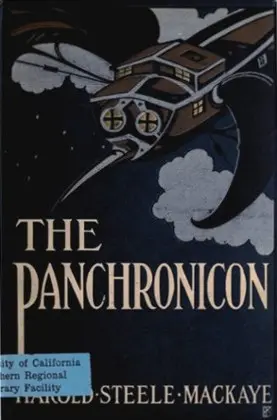
THE CLASSIC COLLECTION · 1904
"The Panchronicon" by Harold Steele MacKaye is a fictional novel written in the early 20th century. The story revolves around two sisters, Rebecca and Phoebe Wise, who find themselves entangled in the eccentric ideas of Copernicus Droop, a village reprobate with a fantastical theory about time travel. As the narrative unfolds, the characters explore themes of ambition, the passage of time, and the desire for second chances, set against the backdrop of whimsical science fiction. The opening portion of the book introduces the two sisters at their home in Peltonville Center, New Hampshire, where they engage in ordinary tasks and daily life. Rebecca, the older sister, is practical and nurturing, while Phoebe, the younger, is filled with curiosity and ambition, especially regarding her Shakespeare class. Their interactions are light yet revealing, setting the stage for the arrival of Copernicus Droop, who proposes a ludicrous plan to travel back in time using a machine he calls the Panchronicon. As their conversation unfolds, humor and absurdity intertwine, foreshadowing the extraordinary journey the characters are about to embark on. The combination of everyday life with the extraordinary speed of time travel creates a fascinating tension right from the start.
Introduction adapted from the source catalogue; source summaries may be automatically generated.
Free to read · English · 76,361 words · No account needed
MAKE TIME FOR A GOOD BOOK
On by default. Untick to stop anonymous reading totals. Each page counts after 10 seconds in view. How this works.
Anonymous counting is on unless you have switched it off.
"Nay, Brother Droop," said the Englishman, "this custom hath its origin in the necessary precaution of our sovereign. Who knows but that poison be in this food! Have not a score of scurvy plots been laid against her life? 'Tis well to test what is meant for the use of majesty."
Droop whistled low.
"Thet's the wrinkle, eh?" he said. "I don't guess I'd be much tempted to take a job here as a taster, then! Hello!" he said. "Why, they're takin' the victuals out o' the room. What's that fer? Did they find p'ison in 'em?"
Sir Percevall did not reply. His attention had been caught by the arrival of a strangely dressed woman, apparently attended by six maids of honor.
Turning to a gentleman at his elbow:
"Can you tell me, sir," he said, "who is yonder stranger in outlandish
apparel?"
Following the speaker's eyes, the gentleman stared for a few moments and
then replied:
"Marry, sir, it can but be the American princess with her retinue. They say that her Majesty much affects this strange new-comer."
It was, indeed, Rebecca who, in response to an invitation brought by a page in the Queen's livery, was on the way to take supper with Elizabeth. On her arrival at the anteroom door, an attendant went in before the Queen to announce her presence; and, while awaiting admission, Rebecca gazed about her with a curiosity still unsatisfied.
"There, now," she was saying, "'twas suttenly too bad to send you off on a wild-goose chase, Miss Margaret. Ef you could hev found the man, I'd hev ben glad, though."
At that very moment, a voice close beside her made her start violently.
"Well--well! I declare! Rebecca Wise, how do you do!"
She turned and saw him of whom she was at that moment speaking, and lo! to her amazement, it was Copernicus Droop who held out his right hand.
"Copernicus Droop!" she gasped. Then, remembering her adventure of the previous day, she went on coldly, without noticing the proffered hand: "Ye seem right glad to see me now, Mr. Droop."
Droop was taken aback at her manner and at the sarcastic emphasis laid
upon the word "now."
"Why--why--of course," he stammered. "I thought you was lost."
"Lost!" she cried, indignantly. "Lost! Why, you know right well I chased you up one street and down the other all the mornin' yesterday. You tried to lose me, Mr. Droop--and now you find me again, you see. Oh, yes, you must be glad to see me!"
Your reading position is saved on this browser. Take it to another device with a library code. Reading pages adapt to text, rather than matching a printed edition.
BEHIND THE BOOK
This eBook is for the use of anyone anywhere in the United States and most other parts of the world at no cost and with almost no restrictions whatsoever. You may copy it, give it away or re-use it under the terms of the Project Gutenberg License included with this eBook or online at www.gutenberg.org. If you are not located in the United States, you will have to check the laws of the country where you are located before using this eBook. Read the source licence.
The original source file, including credits and licence, is retained by this library. Request an original-format copy at no charge. Please include the book title and Project Gutenberg identifier #27682.
KEEP YOUR CURIOSITY GOING
Wilfrid Scawen Blunt
Wilfrid Scawen Blunt

E. W. (Edgar Watson) Howe
Coulson Kernahan

Maurice Baring
Frances Wright