THE CLASSIC COLLECTION✦My diaries, being a personal narrative of events 1888-1914, Part 2 (1900-1914)CLASSIC FREE BOOKS
My diaries, being a personal narrative of events 1888-1914, Part 2 (1900-1914)
Wilfrid Scawen Blunt
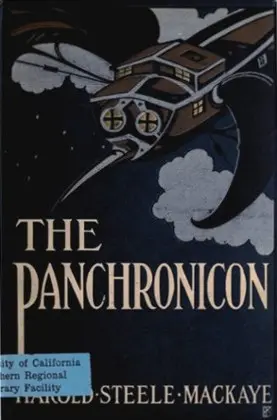
THE CLASSIC COLLECTION · 1904
"The Panchronicon" by Harold Steele MacKaye is a fictional novel written in the early 20th century. The story revolves around two sisters, Rebecca and Phoebe Wise, who find themselves entangled in the eccentric ideas of Copernicus Droop, a village reprobate with a fantastical theory about time travel. As the narrative unfolds, the characters explore themes of ambition, the passage of time, and the desire for second chances, set against the backdrop of whimsical science fiction. The opening portion of the book introduces the two sisters at their home in Peltonville Center, New Hampshire, where they engage in ordinary tasks and daily life. Rebecca, the older sister, is practical and nurturing, while Phoebe, the younger, is filled with curiosity and ambition, especially regarding her Shakespeare class. Their interactions are light yet revealing, setting the stage for the arrival of Copernicus Droop, who proposes a ludicrous plan to travel back in time using a machine he calls the Panchronicon. As their conversation unfolds, humor and absurdity intertwine, foreshadowing the extraordinary journey the characters are about to embark on. The combination of everyday life with the extraordinary speed of time travel creates a fascinating tension right from the start.
Introduction adapted from the source catalogue; source summaries may be automatically generated.
Free to read · English · 76,361 words · No account needed
MAKE TIME FOR A GOOD BOOK
On by default. Untick to stop anonymous reading totals. Each page counts after 10 seconds in view. How this works.
Anonymous counting is on unless you have switched it off.
Short as was the time allowed, it had sufficed for Rebecca to compose a form of words which should not wound her conscience by direct falsehood, while not undeceiving her hearers as to her rank.
"Why, to tell ye the truth," she said, in a semi-confidential manner, "all the queens and princesses there are in America wash the dishes after dinner."
There was some whispering among the girls at this, and Rebecca's ears caught the expressions "passing strange" and "most wonderful" more than once.
She waited until the first excitement thus produced had subsided and
then proceeded.
"Of course Cousin Ann hadn't no objection, an' so I went into the kitchen. When we got through, blest ef she didn't ask me to wash out the dish-towels while she filled the lamps! Now----"
The growing amazement in the round, open eyes and shaking curls of her audience brought Rebecca once more to a standstill. Evidently some further explanation of this unwonted state of things would be expected. To gain time for further invention, Rebecca rose and carried her knitting to the window as though to pick up a stitch. Mechanically she glanced down into the court-yard, where there was now a large assemblage, and uttered an exclamation of astonishment.
"Gracious alive!" she cried. "If there ain't a bicycle! Well, well, don't that look nat'ral, now! Makes me feel homesick."
She turned to her companions, each of whom was ceremoniously standing,
but all showing clearly in their faces the curiosity which consumed
them.
"Come 'long!" said Rebecca, smiling. "Come one and all! I'm blest ef ye don't make me think of Si Pray's dog waitin' to be whistled fer when Si goes out to walk."
The obedience to this summons was prompt and willing, and Rebecca turned again to observe those who came with the mysterious bicycle.
"Land o' sunshine!" she exclaimed, "did ye ever see sech a fat man as that! Do any of you girls know who 'tis?"
"'Tis Sir Percevall Hart, harbinger to the Queen, I ween," Clarissa
replied.
"Gracious!" said Rebecca, anxiously. "I do hope now he ain't bringin'
any very bad news!"
"Wherefore should he, your Highness?" said Clarissa.
"Why, if he's a harbinger of woe--ain't that what they call 'em?" she
spoke, with some timidity.
"Nay," said the Lady Margaret. "Sir Percevall is reputed a wit and a pleasant companion, your Highness. He is harbinger to the Queen."
"An' who's the man with him in black togs an' rumpled stockin's?" said Rebecca. "The one holdin' the bicycle?"
"Mean you him holding the two bright wheels, your Highness?"
"Yes."
Your reading position is saved on this browser. Take it to another device with a library code. Reading pages adapt to text, rather than matching a printed edition.
BEHIND THE BOOK
This eBook is for the use of anyone anywhere in the United States and most other parts of the world at no cost and with almost no restrictions whatsoever. You may copy it, give it away or re-use it under the terms of the Project Gutenberg License included with this eBook or online at www.gutenberg.org. If you are not located in the United States, you will have to check the laws of the country where you are located before using this eBook. Read the source licence.
The original source file, including credits and licence, is retained by this library. Request an original-format copy at no charge. Please include the book title and Project Gutenberg identifier #27682.
KEEP YOUR CURIOSITY GOING
Wilfrid Scawen Blunt
Wilfrid Scawen Blunt

E. W. (Edgar Watson) Howe
Coulson Kernahan

Maurice Baring
Frances Wright