THE CLASSIC COLLECTION✦My diaries, being a personal narrative of events 1888-1914, Part 2 (1900-1914)CLASSIC FREE BOOKS
My diaries, being a personal narrative of events 1888-1914, Part 2 (1900-1914)
Wilfrid Scawen Blunt
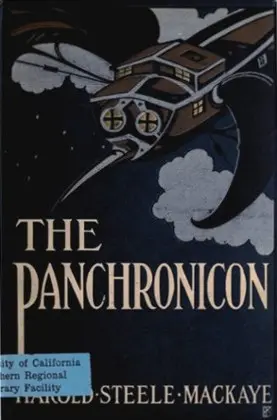
THE CLASSIC COLLECTION · 1904
"The Panchronicon" by Harold Steele MacKaye is a fictional novel written in the early 20th century. The story revolves around two sisters, Rebecca and Phoebe Wise, who find themselves entangled in the eccentric ideas of Copernicus Droop, a village reprobate with a fantastical theory about time travel. As the narrative unfolds, the characters explore themes of ambition, the passage of time, and the desire for second chances, set against the backdrop of whimsical science fiction. The opening portion of the book introduces the two sisters at their home in Peltonville Center, New Hampshire, where they engage in ordinary tasks and daily life. Rebecca, the older sister, is practical and nurturing, while Phoebe, the younger, is filled with curiosity and ambition, especially regarding her Shakespeare class. Their interactions are light yet revealing, setting the stage for the arrival of Copernicus Droop, who proposes a ludicrous plan to travel back in time using a machine he calls the Panchronicon. As their conversation unfolds, humor and absurdity intertwine, foreshadowing the extraordinary journey the characters are about to embark on. The combination of everyday life with the extraordinary speed of time travel creates a fascinating tension right from the start.
Introduction adapted from the source catalogue; source summaries may be automatically generated.
Free to read · English · 76,361 words · No account needed
MAKE TIME FOR A GOOD BOOK
On by default. Untick to stop anonymous reading totals. Each page counts after 10 seconds in view. How this works.
Anonymous counting is on unless you have switched it off.
"See where he hath carved letters four," he continued. "Wi' love-links, too. A watched un yestre'en, whiles the play was forward. A do but carve a heart wi' an arrow in't."
She blushed suddenly, wondering if it were Guy who had done this. Stepping to the side of the stable-boy, she examined the post.
The letters were in pairs. They were M. B. and G. F.
Her feeling bubbled over in a little half-stifled laugh.
"Silly!" she exclaimed. Then to the boy: "Know you him who cut the letters?" she asked, with affected indifference.
"Nay, mistress," he replied, falling again to his work, "but he be a
rare un wi' the bottle."
"The bottle!" Phoebe exclaimed, in amazement. Then quite sternly: "Thou beliest him, knave! No more sober--" She checked herself, suddenly conscious of her indiscretion.
"Why, how knowest his habits?" she asked, more quietly.
"A saw un, mistress, sitting in the kitchen wi' two bottles o' Spanish wine. Ask the player else."
"The player! What player?"
"Him as was drinking wi' him. Each cracked his bottle, and 'twas nip and tuck which should call first for the second."
So Guy had spent the evening--those hours when she was tenderly dreaming of him with love renewed--drinking and carousing with some dissolute actor!
Within her Phoebe Wise and Mary Burton struggled for mastery of her
opinion.
What more natural than that a poor lad, tired with waiting on his feet for hours for one look from the mistress who disdained him, should seek to forget his troubles quaffing good wine in the company of some witty player? This was Mary's view.
What! To leave the presence of his sweetheart--the girl to whom he had just written that penitent letter--to go fresh from the inspiration of all that should uplift a lover, and befuddle his brains with "rum," gossiping with some coarse-grained barn-stormer! So Phoebe railed.
"Who was the player?" she asked, sharply.
"Him as wore the long white beard," said the boy. "The Jew, to wit. Eh, but a got his cess, the runnion!"
"Shylock!" she cried, in spite of herself.
So this was the gossiping barn-stormer, the dissolute actor. Will Shakespeare it was with whom her Guy had spent the evening! Phoebe Wise could but capitulate, and Mary Burton took for a time triumphant possession of the heart that was Guy Fenton's.
"Have the players left the Peacock?" she asked, eagerly.
"Nay, mistress, know you not that they play to-night at the home of Sir
William Percy?"
"Then they are here, at the inn, boy?"
Your reading position is saved on this browser. Take it to another device with a library code. Reading pages adapt to text, rather than matching a printed edition.
BEHIND THE BOOK
This eBook is for the use of anyone anywhere in the United States and most other parts of the world at no cost and with almost no restrictions whatsoever. You may copy it, give it away or re-use it under the terms of the Project Gutenberg License included with this eBook or online at www.gutenberg.org. If you are not located in the United States, you will have to check the laws of the country where you are located before using this eBook. Read the source licence.
The original source file, including credits and licence, is retained by this library. Request an original-format copy at no charge. Please include the book title and Project Gutenberg identifier #27682.
KEEP YOUR CURIOSITY GOING
Wilfrid Scawen Blunt
Wilfrid Scawen Blunt

E. W. (Edgar Watson) Howe
Coulson Kernahan

Maurice Baring
Frances Wright