THE CLASSIC COLLECTION✦My diaries, being a personal narrative of events 1888-1914, Part 2 (1900-1914)CLASSIC FREE BOOKS
My diaries, being a personal narrative of events 1888-1914, Part 2 (1900-1914)
Wilfrid Scawen Blunt
THE CLASSIC COLLECTION · 1904
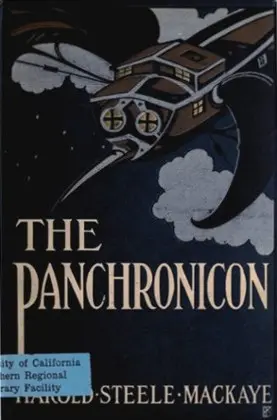
"The Panchronicon" by Harold Steele MacKaye is a fictional novel written in the early 20th century. The story revolves around two sisters, Rebecca and Phoebe Wise, who find themselves entangled in the eccentric ideas of Copernicus Droop, a village reprobate with a fantastical theory about time travel. As the narrative unfolds, the characters explore themes of ambition, the passage of time, and the desire for second chances, set against the backdrop of whimsical science fiction. The opening portion of the book introduces the two sisters at their home in Peltonville Center, New Hampshire, where they engage in ordinary tasks and daily life. Rebecca, the older sister, is practical and nurturing, while Phoebe, the younger, is filled with curiosity and ambition, especially regarding her Shakespeare class. Their interactions are light yet revealing, setting the stage for the arrival of Copernicus Droop, who proposes a ludicrous plan to travel back in time using a machine he calls the Panchronicon. As their conversation unfolds, humor and absurdity intertwine, foreshadowing the extraordinary journey the characters are about to embark on. The combination of everyday life with the extraordinary speed of time travel creates a fascinating tension right from the start.
Introduction adapted from the source catalogue; source summaries may be automatically generated.
Free to read · English · 76,361 words · No account needed
MAKE TIME FOR A GOOD BOOK
On by default. Untick to stop anonymous reading totals. Each page counts after 10 seconds in view. How this works.
Anonymous counting is on unless you have switched it off.
"What's here!" he exclaimed. "This direction is to my Lord Burleigh."
"Yep--oh, yes, yea!" said Droop, confusedly. "But you was to read it--peruse it, you wot--Bacon said as much. He said you knew the lord and could take me around, forsooth, and sorter interduce me, ye see."
With leisurely gravity, Sir Percevall slowly read the note, and then, returning it with a polite gesture:
"This letter hath reference to certain monopolies," he said. "My cousin Bacon doth write in high terms of your skill and high merit, Master--Master----"
"Droop, sir. Copernicus Droop's my name."
"Ah, yes! And the service you require--? I beg your indulgence, but, sooth to say, being nigh starved of late in this tavern of ill repute, my poor wits have grown fat. I am slow of apprehension, Master Wither----"
"Droop, sir--Droop."
"Nay--cry you mercy--Master Droop."
"Why, now, Sir Percy," said Copernicus, with oily grace, "ef you wouldn't mind, I'd be proud ef you'd set down over yonder, perchance, and have a glass with me. We'd be more private then, and I could make this hull business clear to ye. What say ye, sir?"
"Why, there's my hand, Master Dupe--Droop," said the knight, his face brightening mightily. "Five yards are a mile for a man of my girth, Master Droop, but praise God such words as these of yours cheer my heart to still greater deeds than faring a mile afoot."
Slowly and painfully the corpulent knight drew himself to his feet, and with one hand bearing affectionately but heavily on Droop's shoulder, he shuffled over to the recess and seated himself.
"What ho, there! Drawer!" he shouted, as soon as they were comfortably
disposed face to face.
"Anon, sir, anon!" came the familiar reply, and the drawer, who had just served two new guests at the long table, now hurried over to the nook behind the casks.
"A quart of sack, villain!" said Sir Percevall.
"And for you, sir?" said the drawer, turning to Droop.
"Yes, yea, bring me the same." He had no idea what sack was, but he felt that in all probability it was a mild beverage, or no one would order a quart at once.
"And this same letter, now," Sir Percevall began. "To warn you truly, friend, this matter of monopolies hath something of an ill savor in the public mind. What with sweet wines, salt, hides, vinegar, iron, oil, lead, yarn, glass, and what not in monopoly, men cry out that they are robbed and the Queen's advisers turn pale at the very word."
He interrupted himself to give his attention to the wine which had just
been placed before him.
Your reading position is saved on this browser. Take it to another device with a library code. Reading pages adapt to text, rather than matching a printed edition.
BEHIND THE BOOK
This eBook is for the use of anyone anywhere in the United States and most other parts of the world at no cost and with almost no restrictions whatsoever. You may copy it, give it away or re-use it under the terms of the Project Gutenberg License included with this eBook or online at www.gutenberg.org. If you are not located in the United States, you will have to check the laws of the country where you are located before using this eBook. Read the source licence.
The original source file, including credits and licence, is retained by this library. Request an original-format copy at no charge. Please include the book title and Project Gutenberg identifier #27682.
KEEP YOUR CURIOSITY GOING
Wilfrid Scawen Blunt
Wilfrid Scawen Blunt

E. W. (Edgar Watson) Howe
Coulson Kernahan

Maurice Baring
Frances Wright