THE CLASSIC COLLECTION✦My diaries, being a personal narrative of events 1888-1914, Part 2 (1900-1914)CLASSIC FREE BOOKS
My diaries, being a personal narrative of events 1888-1914, Part 2 (1900-1914)
Wilfrid Scawen Blunt
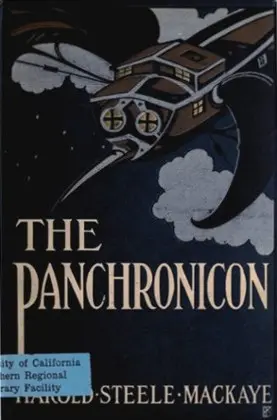
THE CLASSIC COLLECTION · 1904
"The Panchronicon" by Harold Steele MacKaye is a fictional novel written in the early 20th century. The story revolves around two sisters, Rebecca and Phoebe Wise, who find themselves entangled in the eccentric ideas of Copernicus Droop, a village reprobate with a fantastical theory about time travel. As the narrative unfolds, the characters explore themes of ambition, the passage of time, and the desire for second chances, set against the backdrop of whimsical science fiction. The opening portion of the book introduces the two sisters at their home in Peltonville Center, New Hampshire, where they engage in ordinary tasks and daily life. Rebecca, the older sister, is practical and nurturing, while Phoebe, the younger, is filled with curiosity and ambition, especially regarding her Shakespeare class. Their interactions are light yet revealing, setting the stage for the arrival of Copernicus Droop, who proposes a ludicrous plan to travel back in time using a machine he calls the Panchronicon. As their conversation unfolds, humor and absurdity intertwine, foreshadowing the extraordinary journey the characters are about to embark on. The combination of everyday life with the extraordinary speed of time travel creates a fascinating tension right from the start.
Introduction adapted from the source catalogue; source summaries may be automatically generated.
Free to read · English · 76,361 words · No account needed
MAKE TIME FOR A GOOD BOOK
On by default. Untick to stop anonymous reading totals. Each page counts after 10 seconds in view. How this works.
Anonymous counting is on unless you have switched it off.
Elizabeth gripped the arm of her chair and leaned forward angrily, while two or three gentlemen advanced, watching their mistress for the first sign of a command. At the same moment, a triumphant thought occurred to Rebecca, and, dropping her umbrella, she opened her satchel with both hands.
"Ye needn't to get mad, Mrs. Tudor," she said. "I didn't mean any offence, but I guess you wouldn't like to be called a lunatic yerself. See here," she continued, dragging forth a section of the newspaper which she had brought with her, "ef you folks won't believe my word, jest look at this! It's all here in the newspaper--right in print. There!"
She held the paper high where all might see, and with one accord Queen and courtiers craned forward eagerly, burning with curiosity at sight of the printed columns interspersed with nineteenth-century illustrations.
Rebecca stepped forward and handed the paper to the Queen, and then, drawing forth another section from her bag, she carried it to the bewildered Raleigh, who took it like one in a trance.
For some time no one spoke. Elizabeth turned the paper this way and that, reading a bit here and a bit there, and gazing spellbound upon the enigmatic pictures.
Having completely mastered the situation, Rebecca now found time to consider her comfort. Far on one side, near the door through which she had entered, there stood a youth of perhaps sixteen, clad in the somewhat fantastic garb of a page. Having picked up her umbrella, Rebecca approached this youth and said in a sharp whisper:
"Couldn't you get me a chair, sonny?"
The lad disappeared with startling promptitude, but he did not return. It was an agony of perplexity and shyness which had moved him, not a willingness to serve.
Rebecca gazed about at the etiquette-bound men and women around her and muttered, with an indignant snort and toss of the head:
"Set o' decorated haystacks!"
Then, with head held high and a frigid "Beg pardon, mister!" she elbowed her way through the dense throng of gentlemen-in-waiting and seated herself on the bench arranged along the side of the cabin.
"Oof!" she exclaimed. "Feels though my legs would drop clear off!"
At length the Queen looked up.
"Why, what now!" she exclaimed. "Whither hath the strange woman gone?"
A tall man dressed in black and gold stepped forward and dropped upon one knee. He had a long, humorous face, with high cheek bones, a straight, good-humored mouth, with a high mustache well off the lip and a pointed beard. The eyes, set far apart, twinkled with the light of fun as he awaited permission to speak.
Your reading position is saved on this browser. Take it to another device with a library code. Reading pages adapt to text, rather than matching a printed edition.
BEHIND THE BOOK
This eBook is for the use of anyone anywhere in the United States and most other parts of the world at no cost and with almost no restrictions whatsoever. You may copy it, give it away or re-use it under the terms of the Project Gutenberg License included with this eBook or online at www.gutenberg.org. If you are not located in the United States, you will have to check the laws of the country where you are located before using this eBook. Read the source licence.
The original source file, including credits and licence, is retained by this library. Request an original-format copy at no charge. Please include the book title and Project Gutenberg identifier #27682.
KEEP YOUR CURIOSITY GOING
Wilfrid Scawen Blunt
Wilfrid Scawen Blunt

E. W. (Edgar Watson) Howe
Coulson Kernahan

Maurice Baring
Frances Wright