THE CLASSIC COLLECTION✦My diaries, being a personal narrative of events 1888-1914, Part 2 (1900-1914)CLASSIC FREE BOOKS
My diaries, being a personal narrative of events 1888-1914, Part 2 (1900-1914)
Wilfrid Scawen Blunt
THE CLASSIC COLLECTION · 1904
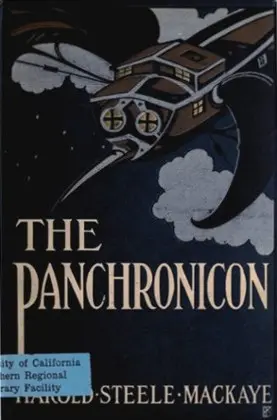
"The Panchronicon" by Harold Steele MacKaye is a fictional novel written in the early 20th century. The story revolves around two sisters, Rebecca and Phoebe Wise, who find themselves entangled in the eccentric ideas of Copernicus Droop, a village reprobate with a fantastical theory about time travel. As the narrative unfolds, the characters explore themes of ambition, the passage of time, and the desire for second chances, set against the backdrop of whimsical science fiction. The opening portion of the book introduces the two sisters at their home in Peltonville Center, New Hampshire, where they engage in ordinary tasks and daily life. Rebecca, the older sister, is practical and nurturing, while Phoebe, the younger, is filled with curiosity and ambition, especially regarding her Shakespeare class. Their interactions are light yet revealing, setting the stage for the arrival of Copernicus Droop, who proposes a ludicrous plan to travel back in time using a machine he calls the Panchronicon. As their conversation unfolds, humor and absurdity intertwine, foreshadowing the extraordinary journey the characters are about to embark on. The combination of everyday life with the extraordinary speed of time travel creates a fascinating tension right from the start.
Introduction adapted from the source catalogue; source summaries may be automatically generated.
Free to read · English · 76,361 words · No account needed
MAKE TIME FOR A GOOD BOOK
On by default. Untick to stop anonymous reading totals. Each page counts after 10 seconds in view. How this works.
Anonymous counting is on unless you have switched it off.
"America!" exclaimed the Queen, as a new thought struck her. "America! Tell me, dame, come you from the New World?"
"That's what it's sometimes called in the geographies," Rebecca stiffly replied. "I come from Peltonville, New Hampshire, myself. Perhaps I'd ought to introduce myself. My name's Rebecca Wise, daughter of Wilmot and Nancy Wise, both deceased."
She concluded her sentence with more of graciousness than she had shown in the beginning, and the Queen, now fully convinced of the innocent sincerity of her visitor, showed a countenance of half-amused, half-eager interest.
"Why, Sir Walter," she cried, "this cometh within your province, methinks. If that this good woman be an American, you should be best able to parley with her and learn her will."
A dark-haired, stern-visaged man of middle height, dressed less extravagantly than his fellows, acknowledged this address by advancing and bending one knee to the deck. Here was no longer the gay young courtier who so gallantly spoiled a handsome cloak to save his sovereign's shoes, but the Raleigh who had fought a hundred battles for the same mistress and had tasted the bitterness of her jealous cruelty in reward.
There was in his pose and manner, however, much of that old grace which had first endeared him to Elizabeth, and even now served to fix her fickle favor.
"Most fair and gracious Majesty," he said in a low, well-modulated voice, turning upward a seeming fascinated eye, "what Walter Raleigh hath learned of any special knowledge his sovereign hath taught him, and all that he is is hers of right."
"'Tis well, my good knight," said Elizabeth, beckoning with her slender finger that he might rise. "We know your true devotion and require now this service, that you question this stranger in her own tongue concerning her errand here and her quality and estate at home."
As Raleigh rose and advanced toward Rebecca, without turning away from the Queen, the half-bewildered American brought the end of her umbrella sharply down upon the floor with a gesture of impatience.
"What everlastin' play-actin' ways!" she snapped. Then, addressing Sir Walter: "Say, Mr. Walter," she continued, "ef you can't walk only sideways, you needn't trouble to travel clear over here to me. I'll come to you."
Suiting the action to the word, Rebecca stepped briskly forward until she stood in front of the rather crestfallen courtier.
He rallied promptly, however, and marshalling by an effort all he could remember of the language of the red man, he addressed the astonished Rebecca in that tongue.
"What's that?" she said.
Again Sir Walter poured forth an unintelligible torrent of syllables which completed Rebecca's disgust.
Your reading position is saved on this browser. Take it to another device with a library code. Reading pages adapt to text, rather than matching a printed edition.
BEHIND THE BOOK
This eBook is for the use of anyone anywhere in the United States and most other parts of the world at no cost and with almost no restrictions whatsoever. You may copy it, give it away or re-use it under the terms of the Project Gutenberg License included with this eBook or online at www.gutenberg.org. If you are not located in the United States, you will have to check the laws of the country where you are located before using this eBook. Read the source licence.
The original source file, including credits and licence, is retained by this library. Request an original-format copy at no charge. Please include the book title and Project Gutenberg identifier #27682.
KEEP YOUR CURIOSITY GOING
Wilfrid Scawen Blunt
Wilfrid Scawen Blunt

E. W. (Edgar Watson) Howe
Coulson Kernahan

Maurice Baring
Frances Wright