THE CLASSIC COLLECTION✦My diaries, being a personal narrative of events 1888-1914, Part 2 (1900-1914)CLASSIC FREE BOOKS
My diaries, being a personal narrative of events 1888-1914, Part 2 (1900-1914)
Wilfrid Scawen Blunt
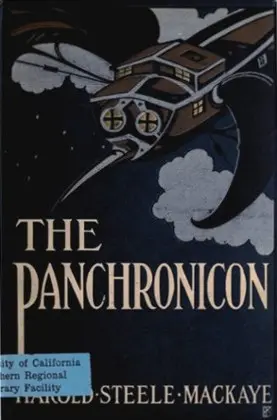
THE CLASSIC COLLECTION · 1904
"The Panchronicon" by Harold Steele MacKaye is a fictional novel written in the early 20th century. The story revolves around two sisters, Rebecca and Phoebe Wise, who find themselves entangled in the eccentric ideas of Copernicus Droop, a village reprobate with a fantastical theory about time travel. As the narrative unfolds, the characters explore themes of ambition, the passage of time, and the desire for second chances, set against the backdrop of whimsical science fiction. The opening portion of the book introduces the two sisters at their home in Peltonville Center, New Hampshire, where they engage in ordinary tasks and daily life. Rebecca, the older sister, is practical and nurturing, while Phoebe, the younger, is filled with curiosity and ambition, especially regarding her Shakespeare class. Their interactions are light yet revealing, setting the stage for the arrival of Copernicus Droop, who proposes a ludicrous plan to travel back in time using a machine he calls the Panchronicon. As their conversation unfolds, humor and absurdity intertwine, foreshadowing the extraordinary journey the characters are about to embark on. The combination of everyday life with the extraordinary speed of time travel creates a fascinating tension right from the start.
Introduction adapted from the source catalogue; source summaries may be automatically generated.
Free to read · English · 76,361 words · No account needed
MAKE TIME FOR A GOOD BOOK
On by default. Untick to stop anonymous reading totals. Each page counts after 10 seconds in view. How this works.
Anonymous counting is on unless you have switched it off.
"But he hath gone into London, Master Bacon," said Phoebe. "It is most like he will not return ere to-morrow even."
Droop's hat dropped from Bacon's relaxed grasp and he seemed to wilt in
his speechless despair.
Phoebe's sympathy was awakened at once, but her anxiety to know more of the all-important question of authorship was perhaps the keenest of her emotions.
"Why," she exclaimed, "'tis a little matter that needs not my father, methinks. If ten pounds will serve you, I should deem it an honor to provide them."
Revived by hope, he drew himself up briskly as he replied:
"Why, 'twill do marvellous well, Mistress Mary--marvellous well--nor shall repayment be delayed, upon my honor!"
"Nay, call it a fee," she replied, "and give me, I beg of you, a legal
opinion in return."
Bacon stooped to pick up the hat, from which he brushed the dust with his hand as he replied, with dubious slowness, looking down:
"Why, in sooth, mistress, I am used to gain a greater honorarium. As a barrister of repute, mine opinions in writing----"
"Ah, then, I fear my means are too small!" Phoebe broke in, with a smile. "'Tis a pity, too, for the matter is simple, I verily believe."
Bacon saw that he must retract or lose all, and he went on with some
haste:
"Perchance 'tis not an opinion in writing that is required," he said.
"Nay--nay; your spoken word will suffice, Master Bacon."
"In that case, then----"
She drew ten gold pieces from her purse and dropped them into his extended palm. Then, seating herself upon a bench against the wall hard by, she said:
"The case is this: If a certain merchant borrow a large sum from a Jew in expectation of the speedy arrival of a certain argosy of great treasure, and if the merchant give his bond for the sum, the penalty of the bond being one pound of flesh from the body of the merchant, and if then the argosies founder and the bond be forfeit, may the Jew recover the pound of flesh and cut it from the body of the merchant?"
As she concluded, Phoebe leaned forward and watched her companion's face earnestly, hoping that he would betray his hidden interest in this Shakespearian problem by some look or sign.
The face into which she gazed was grave and judicial and the reply was a
ready one.
Your reading position is saved on this browser. Take it to another device with a library code. Reading pages adapt to text, rather than matching a printed edition.
BEHIND THE BOOK
This eBook is for the use of anyone anywhere in the United States and most other parts of the world at no cost and with almost no restrictions whatsoever. You may copy it, give it away or re-use it under the terms of the Project Gutenberg License included with this eBook or online at www.gutenberg.org. If you are not located in the United States, you will have to check the laws of the country where you are located before using this eBook. Read the source licence.
The original source file, including credits and licence, is retained by this library. Request an original-format copy at no charge. Please include the book title and Project Gutenberg identifier #27682.
KEEP YOUR CURIOSITY GOING
Wilfrid Scawen Blunt
Wilfrid Scawen Blunt

E. W. (Edgar Watson) Howe
Coulson Kernahan

Maurice Baring
Frances Wright