THE CLASSIC COLLECTION✦My diaries, being a personal narrative of events 1888-1914, Part 2 (1900-1914)CLASSIC FREE BOOKS
My diaries, being a personal narrative of events 1888-1914, Part 2 (1900-1914)
Wilfrid Scawen Blunt
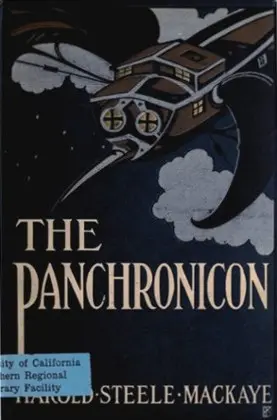
THE CLASSIC COLLECTION · 1904
"The Panchronicon" by Harold Steele MacKaye is a fictional novel written in the early 20th century. The story revolves around two sisters, Rebecca and Phoebe Wise, who find themselves entangled in the eccentric ideas of Copernicus Droop, a village reprobate with a fantastical theory about time travel. As the narrative unfolds, the characters explore themes of ambition, the passage of time, and the desire for second chances, set against the backdrop of whimsical science fiction. The opening portion of the book introduces the two sisters at their home in Peltonville Center, New Hampshire, where they engage in ordinary tasks and daily life. Rebecca, the older sister, is practical and nurturing, while Phoebe, the younger, is filled with curiosity and ambition, especially regarding her Shakespeare class. Their interactions are light yet revealing, setting the stage for the arrival of Copernicus Droop, who proposes a ludicrous plan to travel back in time using a machine he calls the Panchronicon. As their conversation unfolds, humor and absurdity intertwine, foreshadowing the extraordinary journey the characters are about to embark on. The combination of everyday life with the extraordinary speed of time travel creates a fascinating tension right from the start.
Introduction adapted from the source catalogue; source summaries may be automatically generated.
Free to read · English · 76,361 words · No account needed
MAKE TIME FOR A GOOD BOOK
On by default. Untick to stop anonymous reading totals. Each page counts after 10 seconds in view. How this works.
Anonymous counting is on unless you have switched it off.
Phoebe's worthy step-mother was a dame of middle age, ruddy, black-haired, and stout. Her loud voice and sudden movements betrayed a great fund of a certain coarse energy, and, as her step-daughter now entered the parlor, she was fanning her flushed face with an open letter. Her expression was one of triumph only half-concealed by ill-assumed commiseration.
"Aha, lass!" she cried, as she caught sight of Phoebe, "art here, then? Here are news in sooth--news for--" She broke off and turned sharply upon Betty, who stood by the door with mouth and ears wide open.
"Leave the room, Betty!" she exclaimed. "Am I to have every lazy jade in London prying and eavesdropping? Trot--look alive!"
She strode toward the reluctant maid and, with a good-natured push, hastened her exit. Then, closing the door, she turned again toward Phoebe, who had seated herself by the fire.
"Well, Polly," she resumed, "art still bent on thy foppish lover, lass? Not mended since yesternight--what?"
A cool slow inclination of Phoebe's head was the sole response.
"Out and alas!" the dame continued, tossing her head with mingled pique and triumph. "'Tis a sad day for thee and thine, then! This Sir Guy of thine is as good as dead, girl! Thy popinjay is a traitor, and his crimes have found him out!"
"A traitor!"
Phoebe stood erect with one hand on her heart.
Dame Burton repressed a smile and continued with a slow shake of the
head:
"Ay, girl; a traitor to her blessed Majesty the Queen. His brother hath been discovered in traitorous correspondence with the rebel O'Neill, and is on his way to the Tower. Sir Guy's arrest hath been ordered, and the two brothers will lose their heads together."
Very pale, Phoebe stood with hands tight clasped before her.
"Where have you learned this, mother?" she said.
"Where but here!" the dame replied, shaking the open sheet she held in her hand. "Thy Cousin Percy, secretary to my good Lord Burleigh, he hath despatched me this writing here, which good Master Portman did read to me but now."
"Let me see it."
As Phoebe read the confirmation of her step-mother's ill news, she tried to persuade herself that it was but the fabrication of a jealous rival, for this Percy was also an aspirant to her hand. But it proved too circumstantial to admit of this construction, and her first fears were confirmed.
"Ye see," said Dame Burton, as she received the note again, "the provost guard is on the lad's track, and with a warrant. I told thee thy wilful ways would lead but to sorrow, Poll!"
Your reading position is saved on this browser. Take it to another device with a library code. Reading pages adapt to text, rather than matching a printed edition.
BEHIND THE BOOK
This eBook is for the use of anyone anywhere in the United States and most other parts of the world at no cost and with almost no restrictions whatsoever. You may copy it, give it away or re-use it under the terms of the Project Gutenberg License included with this eBook or online at www.gutenberg.org. If you are not located in the United States, you will have to check the laws of the country where you are located before using this eBook. Read the source licence.
The original source file, including credits and licence, is retained by this library. Request an original-format copy at no charge. Please include the book title and Project Gutenberg identifier #27682.
KEEP YOUR CURIOSITY GOING
Wilfrid Scawen Blunt
Wilfrid Scawen Blunt

E. W. (Edgar Watson) Howe
Coulson Kernahan

Maurice Baring
Frances Wright