THE CLASSIC COLLECTION✦An outlaw’s diary: the CommuneCLASSIC FREE BOOKS
An outlaw’s diary: the Commune
Cécile Tormay
THE CLASSIC COLLECTION · 1896
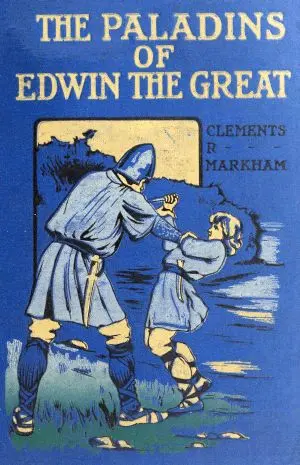
"The Paladins of Edwin the Great" by Sir Clements R. Markham is a historical novel written in the late 19th century. The story is set in the early medieval period during the time of King Edwin of Northumbria, exploring themes of heroism, mythology, and the early struggles of the English people. The narrative introduces a vibrant cast of characters, focusing on the young warriors Coelred, Porlor, and Hereric as they embark on adventures characterized by both camaraderie and danger. At the start of the novel, the serene life of young boys at the Stillingfleet homestead is depicted as they enjoy play and innocence, surrounded by family and friends. Their carefree existence is abruptly shattered when they encounter ominous and supernatural elements, such as the nixy, leading them to a fateful decision that results in their kidnapping by sea-thieves. This perilous turn sets the stage for a thrilling adventure, exploring themes of friendship, bravery, and the harsh realities they will face as they seek to escape their captors and return home. The blurring of childhood innocence with the dangers of the adult world unfolds compellingly, promising readers a blend of excitement and deeper reflections on fate and loyalty.
Introduction adapted from the source catalogue; source summaries may be automatically generated.
Free to read · English · 68,044 words · No account needed
MAKE TIME FOR A GOOD BOOK
On by default. Untick to stop anonymous reading totals. Each page counts after 10 seconds in view. How this works.
Anonymous counting is on unless you have switched it off.
The sea was like molten silver. The burning sun blazed pitilessly down on the little vessel, which was motionless. The northerly breeze reckoned upon by Monas had failed him. They had been becalmed for days, and the water was running short. All day the boys were stretched out under a rough awning of palm leaves, panting for breath. The sky was like a dome of burnished steel. One night Porlor watched the northern horizon, and saw a bank of clouds rising, which he pointed out to the old pilot and to his brother. Soon cat's-paws were seen along the surface of the sea. Monas said there would be a breeze in the morning. But their water would not last them, unless they replenished at some well on the Arabian coast; yet this was a very perilous proceeding, for the eastern side of the Red Sea was infested by savage robbers. There was, however, no alternative, and as soon as the breeze filled his sails, Monas steered for a port called Jidda, 320 miles south of Myos Hormos. They came to off a grove of palm trees, which denoted the presence of wells, on a bright moonlight night. A short distance to the south there were a few scattered huts. When dawn broke they could see that the wells were in possession of armed men. Monas feared to land, but the boys declared they would die fighting rather than die of thirst. Well armed, and accompanied by half a dozen of the crew, Coelred and Porlor took the boat, landed, and boldly advanced towards the wells. They were met half-way by a solitary Arab, who stood in the path uttering the word "Bismillah." He was a powerful young man, about five years older than Coelred, in a long camel's-hair cloth, with the hood secured round his head by a green band. His complexion was bronzed, nose aquiline, lips rather thick, and he had piercing black eyes. He held a long spear in his right hand. Coelred said in Greek that they must have water. The young Arab replied in the same language that the wells were in his possession. He said that he was Muhammad, the son of Abdallah, servant of Abu Taleb, one of the chiefs of the Koraish of Mekka. He was commanding an expedition against the robbers who attacked the caravans of Mekka, and had defeated them and driven them from the wells of Jidda. They should have water if they paid for it--let the master of the ship come to him. Coelred sent the boat back for old Monas, and the English lads stood facing the Arab youth, all leaning on their spears. Few more words passed between them. The Arab gazed at the young Englishmen with unconcealed admiration, and the lads scanned the features of the strange being before them with feelings of curiosity and interest which they could not have explained. Monas was very agreeably surprised to find a law-maintaining force at the wells, instead of the cut-throats he expected. It was soon arranged that the vessel should be watered and replenished with some provisions, in exchange for six bales of cloth. This occupied the rest of the day. Young Muhammad and the English lads rested under the shade. The Arab's knowledge of Greek merely enabled him to strike bargains, and he could not converse, so that the time was passed, for the most part, in friendly silence. The undefinable feeling of interest which took possession of the boys when they first encountered this extraordinary man was increased as they sat near him. The expression of his countenance changed frequently, but was always remarkable. His eyes were bright and eager while he bargained with Monas; they had a soft and gentle look when they rested on the truthful faces of his companions; then again they once or twice flashed a look of fierce anger, apparently without cause. But what the boys noticed with most interest was that far-away, abstracted look which came into the Arab's eyes as he rested under the trees, as if he saw things invisible to all besides himself; and when this strange look came it lasted long. They had seen something like it in the Princess Alca, and once or twice in old Monas. But there was something in the Arab's look which was peculiar to himself: it was as if madness mingled in his strange abstraction; and when he shook it off, it was with a glance of fury. The boys were quite absorbed by their companion, and when Monas called them away the sun was already on the horizon. They took leave of each other with solemn courtesy, and an hour afterwards the vessel was under weigh and sailing down the Red Sea with a fresh northerly breeze. The boys talked long over their encounter with this strange being, and never forgot it. The makers of England and the false prophet had this wonderful meeting before the serious work of their lives was begun. It taught the English boys to recognise a man with deep convictions, and to distinguish between real fanaticism and fraud. It elevated the fanciful conceptions of the Arab, and when he dreamt of angels he saw the faces of Coelred and of Porlor.
Your reading position is saved on this browser. Take it to another device with a library code. Reading pages adapt to text, rather than matching a printed edition.
BEHIND THE BOOK
This eBook is for the use of anyone anywhere in the United States and most other parts of the world at no cost and with almost no restrictions whatsoever. You may copy it, give it away or re-use it under the terms of the Project Gutenberg License included with this eBook or online at www.gutenberg.org. If you are not located in the United States, you will have to check the laws of the country where you are located before using this eBook. Read the source licence.
The original source file, including credits and licence, is retained by this library. Request an original-format copy at no charge. Please include the book title and Project Gutenberg identifier #45543.
KEEP YOUR CURIOSITY GOING
Cécile Tormay

Moritz Busch
Coulson Kernahan
John L. Ransom

Maurice Baring
Frances Wright