
Marie Tarnowska
Annie Vivanti
THE CLASSIC COLLECTION · 1918
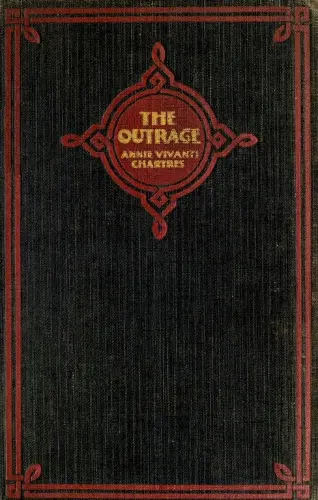
"The Outrage" by Annie Vivanti is a novel written in the early 20th century. The story follows a young girl named Chérie and her younger sister Mireille, along with their German governess Frieda, as they navigate the carefree joys of a summer holiday by the sea, which is soon disrupted by the impending threat of war. Through the eyes of these characters, the book delves into themes of innocence, the loss of childhood, and the impact of external conflict on personal lives. At the start of the novel, Chérie is excitedly preparing for a day at the beach, demonstrating her youthful exuberance. The opening chapters introduce the dynamics between the girls and Frieda, showcasing their playfulness and contrasting perspectives on their vacation. The narrative quickly shifts as they receive news of a looming war that brings an ominous change in their reality. Tensions rise as they prepare to leave their idyllic seaside retreat, highlighting their innocence in the face of a changing world. The budding friendships and the carefree existence of the children intensify the sense of upheaval when the conflict begins encroaching upon their lives, setting the stage for a dramatic exploration of survival and resilience.
Introduction adapted from the source catalogue; source summaries may be automatically generated.
Free to read · English · 54,043 words · No account needed
MAKE TIME FOR A GOOD BOOK
On by default. Untick to stop anonymous reading totals. Each page counts after 10 seconds in view. How this works.
Anonymous counting is on unless you have switched it off.
The Vicar of Maylands, the Reverend Ambrose Yule, was in his study writing his monthly contribution to the Northern Ecclesiastical Review. He was interested in his subject--"Our Sinful Sundays"--and his thoughts flowed smoothly on the topic of drink, frivolous talk and open kinematograph theatres. He wrote quickly and fluently in his neat small handwriting. A knock at the door interrupted him.
"Yes? What is it?" he asked somewhat impatiently.
"A lady to see you, sir," said Parrot, the comely maid.
"A lady? Who is it? I thought every one knew that I do not receive
today."
"It is one of the foreign ladies staying with Mrs. Whitaker, sir."
"Oh, well. Show her into the drawing-room, and tell your mistress."
"I beg your pardon, sir, but----" a smile flickered over Parrot's mild face--"she asked specially for you. She said she wished to speak to 'Mr. the Clergyman' himself. First she said, 'Mr. the Cury' and then she said, 'Mr. the Clergyman.'"
"Well," sighed the vicar, "show her in." He placed a paper-weight on his neatly written sheets, rose and awaited his visitor standing on the hearthrug with his back to the fire.
Parrot ushered in a tall figure in black and then withdrew. The vicar stepped forward and found himself gazing into the depths of two resplendent dark eyes set in a very white face.
"Pray sit down," he said, "and tell me in what way I can be of service
to you."
"May I speak French?" asked the lady in a low voice.
"Mais certainement, Madame," said the courtly clergyman, who twenty or thirty years ago had studied Sinful Sundays abroad with intelligence and attention.
The lady sat down and was silent. She wore black cotton gloves and held in her hands a small handkerchief, which she clutched and crumpled nervously into a little ball.
The kindly vicar with his head on one side waited a little while and then spoke. "You are staying in Maylands? In Mrs. Whitaker's house, I believe? Have I not seen you, with two young girls?"
"Yes. My daughter and my sister-in-law." Louise's voice was so low that he had to bend forward to catch her words.
"Indeed. Yes." The vicar joined his finger-tips together, then disjoined them, then clapped them lightly together, waiting for further enlightenment. As it was not forthcoming he inquired: "May I know your name, Madame?"
"Louise Brandès."
"And ... er--monsieur your husband----?" the vicar's face was interrogative and prepared for sympathy.
"He is wounded, in hospital, at Dunkirk."
"Sad, sad," said the vicar, gently shaking his handsome grey head. "And ... you wish me to help you to go and see him?"
Your reading position is saved on this browser. Take it to another device with a library code. Reading pages adapt to text, rather than matching a printed edition.
Annie Vivanti
Annie Vivanti
BEHIND THE BOOK
This eBook is for the use of anyone anywhere in the United States and most other parts of the world at no cost and with almost no restrictions whatsoever. You may copy it, give it away or re-use it under the terms of the Project Gutenberg License included with this eBook or online at www.gutenberg.org. If you are not located in the United States, you will have to check the laws of the country where you are located before using this eBook. Read the source licence.
The original source file, including credits and licence, is retained by this library. Request an original-format copy at no charge. Please include the book title and Project Gutenberg identifier #40949.
KEEP YOUR CURIOSITY GOING
Coulson Kernahan

Maurice Baring
Frances Wright
Cécile Tormay

Frederic Jesup Stimson

W. H. P. (William Henry Pope) Jarvis