
Marie Tarnowska
Annie Vivanti
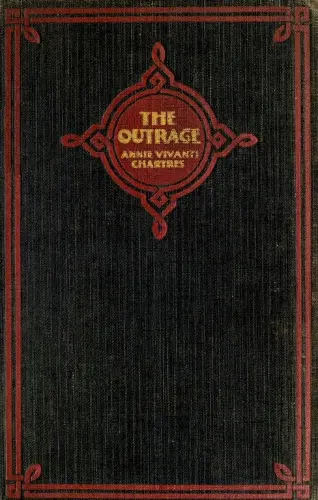
THE CLASSIC COLLECTION · 1918
"The Outrage" by Annie Vivanti is a novel written in the early 20th century. The story follows a young girl named Chérie and her younger sister Mireille, along with their German governess Frieda, as they navigate the carefree joys of a summer holiday by the sea, which is soon disrupted by the impending threat of war. Through the eyes of these characters, the book delves into themes of innocence, the loss of childhood, and the impact of external conflict on personal lives. At the start of the novel, Chérie is excitedly preparing for a day at the beach, demonstrating her youthful exuberance. The opening chapters introduce the dynamics between the girls and Frieda, showcasing their playfulness and contrasting perspectives on their vacation. The narrative quickly shifts as they receive news of a looming war that brings an ominous change in their reality. Tensions rise as they prepare to leave their idyllic seaside retreat, highlighting their innocence in the face of a changing world. The budding friendships and the carefree existence of the children intensify the sense of upheaval when the conflict begins encroaching upon their lives, setting the stage for a dramatic exploration of survival and resilience.
Introduction adapted from the source catalogue; source summaries may be automatically generated.
Free to read · English · 54,043 words · No account needed
MAKE TIME FOR A GOOD BOOK
On by default. Untick to stop anonymous reading totals. Each page counts after 10 seconds in view. How this works.
Anonymous counting is on unless you have switched it off.
"Yes, but the Davidsons ..." said Miss Marshall. "Surely they cannot
afford it."
"They have dismissed their maid," explained Mrs. Mulholland, "and this poor Belgian woman has to do all their housework."
"Yes; and Molly Davidson says that she is really a countess," added Kitty, "and that she makes the beds very badly."
"Poor soul!" said Miss Jane.
"I certainly think," continued Mrs. Mulholland, "that the Davidsons of all people should not be putting on side with a foreign countess to make their beds for them, while others who have good houses and decent incomes simply look on. In fact," she added, "I have already written to the Committee in Kingsway offering hospitality to a family of two or three."
"That is very generous of you," said Miss Jane; and Miss Julia shyly
patted the complacent white-gloved hands reposing in Mrs. Mulholland's
lap.
"We had not thought of it ourselves, so far," said Miss Jane. "But if it is our duty to help these unfortunates, we shall certainly do so."
"Of course you will. You are such angels," exclaimed the impulsive Kitty, throwing a muscular arm around Miss Jane's prim shoulders and kissing her cheek. And Miss Jane liked it.
"How does one set about it?" asked Miss Marshall; "I might find room for one, too. In fact I should rather like it. The evenings are so lonely and I used to love to speak French."
Mrs. Mulholland, to whom she had turned, did not answer at once. Then she replied drily: "You can write to the Refugee Committee or the Belgian Consulate. The Davidsons got theirs from the Woman's Suffrage League."
Then there was a brief pause.
"But I hear that the committee is frightfully particular," she went on. "They don't send them just to any one who asks. One must give all sorts of references. In fact," she added, with a chilly little laugh, "it is almost as if one were asking for a situation oneself. They want to know all about you."
There was another brief silence, and then Mrs. Mulholland and Kitty took
their leave.
To Miss Julia, who accompanied them to the gate, Mrs. Mulholland remarked, "The idea! Miss Marshall wanting a refugee! With her past!"
"What past?" inquired Miss Julia, wide-eyed and wondering.
"Oh," snapped Mrs. Mulholland, tossing her head, and the white lace veil floating round her sailor-hat waved playfully in the breeze, "when people live abroad so long, there is always something behind it."
She stepped into her motor, followed by the pink-faced, smiling Kitty, and they drove away to pay some other calls.
Your reading position is saved on this browser. Take it to another device with a library code. Reading pages adapt to text, rather than matching a printed edition.
Annie Vivanti
Annie Vivanti
BEHIND THE BOOK
This eBook is for the use of anyone anywhere in the United States and most other parts of the world at no cost and with almost no restrictions whatsoever. You may copy it, give it away or re-use it under the terms of the Project Gutenberg License included with this eBook or online at www.gutenberg.org. If you are not located in the United States, you will have to check the laws of the country where you are located before using this eBook. Read the source licence.
The original source file, including credits and licence, is retained by this library. Request an original-format copy at no charge. Please include the book title and Project Gutenberg identifier #40949.
KEEP YOUR CURIOSITY GOING
Coulson Kernahan

Maurice Baring
Frances Wright
Cécile Tormay

Frederic Jesup Stimson

W. H. P. (William Henry Pope) Jarvis