THE CLASSIC COLLECTION✦An outlaw’s diary: the CommuneCLASSIC FREE BOOKS
An outlaw’s diary: the Commune
Cécile Tormay
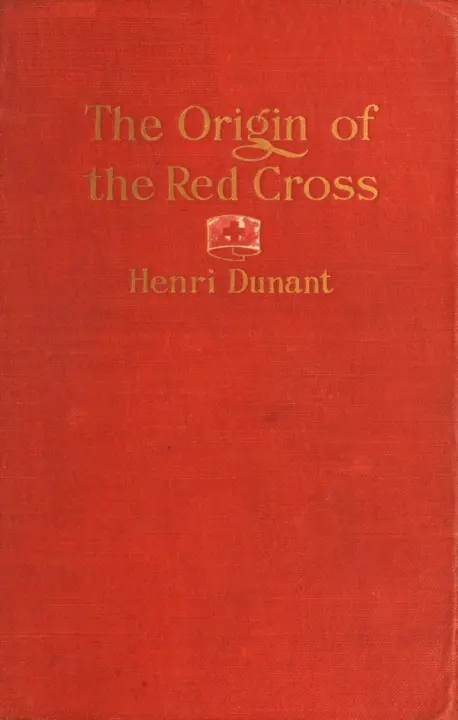
THE CLASSIC COLLECTION · 1911
"The Origin of the Red Cross: 'Un souvenir de Solferino'" by Henri Dunant is a historical account written in the mid-19th century. It presents a poignant examination of the brutal realities of war, specifically following the battle of Solferino, and highlights the dire need for humanitarian efforts to care for those wounded in conflict. The book details Dunant's experiences as he witnessed the suffering of soldiers and the public's subsequent response, leading to the establishment of the Red Cross movement. The opening of the book recounts the lead-up to the battle of Solferino, setting the stage for the ensuing chaos and carnage. Dunant describes the military preparations and the eventual collision of the Austrians and Franco-Sardinian armies. As the battle unfolds, vivid imagery captures the horror of war, with descriptions of the suffering of wounded soldiers and the lack of adequate medical attention. The narrative shifts from the battlefield to the immediate aftermath, where Dunant reflects on the overwhelming need for organized medical aid and voluntary nursing, ultimately sparking his vision for a more systematic humanitarian response during conflicts.
Introduction adapted from the source catalogue; source summaries may be automatically generated.
Free to read · English · 18,994 words · No account needed
MAKE TIME FOR A GOOD BOOK
On by default. Untick to stop anonymous reading totals. Each page counts after 10 seconds in view. How this works.
Anonymous counting is on unless you have switched it off.
The ORIGIN of
the RED CROSS
"Un Souvenir
de Solferino"
Translated from the French by
MRS. DAVID H. WRIGHT,
of the Philadelphia Chapter of the American
Red Cross, Independence Hall.
Philadelphia, Pa.
Copyright, 1911,
By MRS. DAVID H. WRIGHT.
AMERICAN RED CROSS.
WASHINGTON, D. C., November 9, 1910.
Mrs. David H. Wright,
Philadelphia, Pa.
I appreciate and thank you for your courtesy in dedicating to me, as President of the American Red Cross, this recent translation of Henri Dunant's "Un Souvenir de Solferino."
Whoever calls attention of the people to the sufferings and misery caused by war so that men realizing its results become loath to undertake it, performs a public service.
President American Red Cross.
So far as is known, this book of such far-reaching influence has never before been translated or published in English.
Henri Dunant, the famous author of "A Souvenir of Solferino," was born
in Geneva in 1828.
The instruction and philanthropic principles received by him in his youth, together with his natural energy and power of organization, were a good foundation for the unfolding of the ideas and inclinations which led to his fertile acts.
In 1859 occurred the event which definitely impelled him to a course of action which did not discontinue during his whole life. A course of action for the mitigation of the sufferings caused by war, or from a broader point of view, for the commencement of the reign of peace.
This event was the battle of Solferino, when he first organized, in Castiglione, corps of volunteers to search for and nurse the wounded.
Having thus started the idea of a permanent organization of these voluntary bands of compassionate workers, and also of an international treaty agreement in regard to the wounded, he presented himself to Marshal MacMahon and afterwards to Napoleon III, who became interested in the project of Dunant and immediately ordered his army no longer to make prisoners of the physicians and nurses of the enemy.
Soon Dunant organized an Aid Committee in Geneva, and shortly afterwards he published his "Souvenir of Solferino," which was enthusiastically received and greatly applauded.
He met, however, opposition and obstacles, principally from the French
Minister of War.
The philanthropic ideas of this book were received with interest by many European sovereigns with whom Dunant had intercourse, either by correspondence or by conversation; he always propagated persistently his ideas in regard to the organization of a national permanent committee for the wounded, his International Treaty, and the neutralization of those injured in war (he developed in separate works his ideas which were outlined only in the "Souvenir").
Your reading position is saved on this browser. Take it to another device with a library code. Reading pages adapt to text, rather than matching a printed edition.
BEHIND THE BOOK
This eBook is for the use of anyone anywhere in the United States and most other parts of the world at no cost and with almost no restrictions whatsoever. You may copy it, give it away or re-use it under the terms of the Project Gutenberg License included with this eBook or online at www.gutenberg.org. If you are not located in the United States, you will have to check the laws of the country where you are located before using this eBook. Read the source licence.
The original source file, including credits and licence, is retained by this library. Request an original-format copy at no charge. Please include the book title and Project Gutenberg identifier #50968.
KEEP YOUR CURIOSITY GOING
Cécile Tormay

Moritz Busch
John L. Ransom
Frances Wright
Cécile Tormay

Mabel Potter Daggett