Lady Kilpatrick
Robert Williams Buchanan
THE CLASSIC COLLECTION · 1884
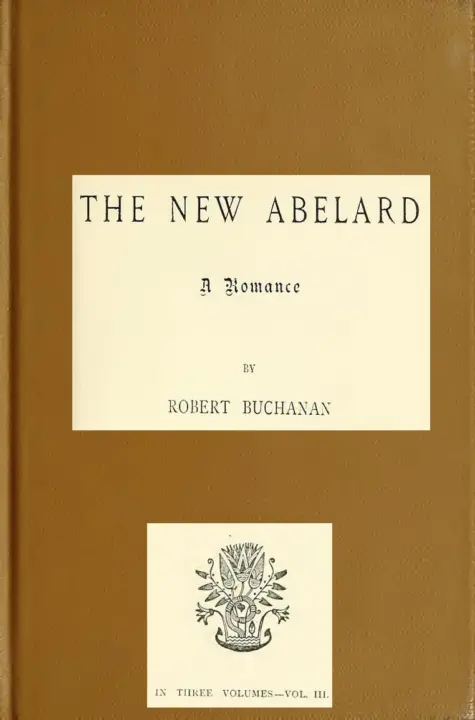
"The New Abelard: A Romance, Volume 1" by Robert Williams Buchanan is a novel written in the late 19th century. The book delves into themes of love, faith, and intellectual struggle, focusing primarily on the character of Ambrose Bradley, a clergyman grappling with his skepticism and the pressures of his role in the church. As he faces challenges from his congregation regarding his beliefs, the story hints at a romantic relationship with Alma Craik, entwined in the backdrop of existential questions regarding spirituality and morality. At the start of the narrative, readers are introduced to the atmospheric setting of Mossleigh Abbey, where the restless spirits of nature seem to echo the tumultuous emotions of the characters. Ambrose Bradley and Alma Craik share intimate moments, revealing their deep connection as they discuss abstract notions of faith and doubt. However, as Bradley faces accusations of heresy from his parishioners, his internal conflict intensifies. The opening portion sets the stage for the unfolding drama as it invites readers to contemplate the intertwining of love and conviction in the lives of its characters, particularly against the backdrop of Bradley's tumultuous past involving his estranged wife, Mary Goodwin, whose unexpected return threatens to precipitate his moral downfall.
Introduction adapted from the source catalogue; source summaries may be automatically generated.
Free to read · English · 31,774 words · No account needed
MAKE TIME FOR A GOOD BOOK
On by default. Untick to stop anonymous reading totals. Each page counts after 10 seconds in view. How this works.
Anonymous counting is on unless you have switched it off.
A priest he was, not over-merry,
Who loved sound doctrine and good sherry;
Who wound his mind up every morning
At the sedate cathedral’s warning,
And found it soberly keep time,
In a pocket, to each hourly chime;
“Who, church’s clock-face dwelling under,
Knew ’twas impossible to blunder,
If Peter’s self at’s door should knock,
And roundly ask him--What’s o’clock?
The Hermitage.
On the morning of June 2 the Rev. Ambrose Bradley left Fensea by the early market train, and arrived at Darkdale just in time for his interview with the Bishop of his diocese.
Seen in broad daylight, as he quickly made his way through the narrow streets to the episcopal residence, Bradley looked pale and troubled, yet determined. He was plainly drest, in a dark cloth suit, with broad felt hat; and there was nothing in his attire, with the exception of his white clerical necktie, to show that he held a sacred office. His dress, indeed, was careless almost to slovenliness, and he carried a formidable walking-stick of common wood. With his erect and powerful frame and his closely shaven cheeks he resembled an athlete rather than a clergyman, for he had been one of the foremost rowers and swimmers of his time. He wore no gloves, and his hands, though small and well formed, were slightly reddened by the sun.
Arrived at his destination, an old-fashioned residence, surrounded by a large garden, he rang the gate bell, and was shown by a footman into the house, where his card was taken by a solemn-looking person clerically attired. After waiting a few moments in the hall, he was ushered into a luxuriously furnished study, where he found the Bishop, with his nether limbs wrapt in rugs, seated close to a blazing fire.
Bishop -------- was a little spare man of about sixty, with an aquiline nose, a slightly receding forehead, a mild blue eye, and very white hands. He was said to bear some facial likeness to Cardinal Newman, and he secretly prided himself upon the resemblance. He spoke slowly and with a certain precision, never hurrying himself in his utterance, and giving full force to the periods of what was generally considered a beautiful and silvery voice.
‘Good morning, Mr. Bradley,’ he said, without noticing the other’s extended hand. ‘You will excuse my rising? The rheumatism in my knees has been greatly increased by this wretched weather. Pray take a chair by the fire.’
Bradley, however, found a seat as far from the fire as possible; for the weather was far from cold, and the room itself was like a vapour bath.
Your reading position is saved on this browser. Take it to another device with a library code. Reading pages adapt to text, rather than matching a printed edition.
Robert Williams Buchanan
Robert Williams Buchanan
Robert Williams Buchanan
Robert Williams Buchanan
BEHIND THE BOOK
This eBook is for the use of anyone anywhere in the United States and most other parts of the world at no cost and with almost no restrictions whatsoever. You may copy it, give it away or re-use it under the terms of the Project Gutenberg License included with this eBook or online at www.gutenberg.org. If you are not located in the United States, you will have to check the laws of the country where you are located before using this eBook. Read the source licence.
The original source file, including credits and licence, is retained by this library. Request an original-format copy at no charge. Please include the book title and Project Gutenberg identifier #54855.
KEEP YOUR CURIOSITY GOING
Coulson Kernahan

Maurice Baring
Frances Wright
Cécile Tormay

Frederic Jesup Stimson

W. H. P. (William Henry Pope) Jarvis